Eat Like You Train Like You Mean It.
Eat Like You
Train Like You
Mean It.
You wouldn't skip your working sets. So why skip the fuel that makes them count? What you eat around training — and especially during injury — decides whether the work you put in actually turns into results.
Everybody at Root Strength knows the training part. Show up, put in the work, progress the load. But there's a piece that quietly makes or breaks your results — and it's the one most people wing: what you eat, especially when you're banged up.
Here's the thing nobody tells you. If you train hard enough, you're going to get dinged up eventually — a tweaked shoulder, a cranky knee, a strain that sidelines you for a couple weeks. And how you eat during those weeks decides whether you come back in two weeks or two months.
This isn't bro-science. It's what the research actually says about fueling recovery — and it applies whether you're rehabbing an injury or just trying to recover between hard sessions.
Why Recovery Burns More Fuel, Not Less
When you're hurt or coming off surgery, your body is doing two expensive jobs at once: rebuilding the damaged tissue and fighting to hold onto the muscle you've already built. Both cost energy. Both need protein. Skip the inputs and both slow down.
Look at what happens on a timeline when you stop moving:
All of that is happening while your body is cranking up its demand for healing. So the instinct to eat less "because you're not training" is exactly backwards.
The Mistake Everyone Makes
You get hurt, you stop training, and you cut your food because you're worried about getting soft. Makes sense on paper. In reality, you just pulled the fuel out from under the exact process that's trying to repair you.
If you normally eat 2,200 calories, aim for 2,400–2,500 during recovery — about a 10–15% bump, not a cut. You're feeding repair, not bulking. The small surplus goes toward healing, not your waistline.
What to Cut Back On
Protein: How Much, How Often
Protein is the whole game when it comes to recovery. Every stage of repair — from calming inflammation to rebuilding tissue — runs on amino acids. Here's the target:
Spread it out
Don't cram it into one giant dinner. You want 35–40g per meal across 4–5 meals. When you're injured, your muscles get "anabolic resistance" — basically they stop listening to protein as well — so you need a bigger dose per meal than usual to get the same rebuild signal.
Injured muscle needs more protein per meal, not less — 35–40g versus the 20–30g you'd get away with normally. This is the single most important nutrition move for coming back strong.
Best sources
Go for leucine-heavy protein — leucine is the amino acid that flips the muscle-building switch: whey, eggs, chicken, fish, Greek yogurt, and cottage cheese.
The Micronutrients That Actually Matter
Protein and calories are the big rocks, but a handful of micronutrients do real work in tissue repair. Come up short on any of these and healing drags.
The Timing Trick
Here's a low-cost move backed by real research: pair collagen with vitamin C right before you load the tissue you're trying to heal.
Mix 15–20g of collagen peptides into orange juice and drink it 30–60 minutes before you train or do your rehab work. It puts the building blocks in your bloodstream right when the loading tells your body to rebuild (Shaw et al., 2017). Cheap, easy, and it works.
What a Recovery Day Looks Like
Here's roughly 180g of protein, spread over five meals, loaded with the micronutrients above. No blender full of powder required:
- Don't cut calories. Bump them 10–15% above your normal.
- 1.5–2g protein per kg per day, across 4–5 meals at 35–40g each.
- Collagen + Vitamin C 30–60 min before training or rehab.
- Zinc, Omega-3s, Vitamin D daily for repair and inflammation.
- Ease off the alcohol — it directly blocks healing.
- Hydrate and sleep — both do more for recovery than any supplement.
Why We Care About This at Root Strength
Most gyms hand you a program and never mention food. We think that's leaving results on the table. You can train perfectly and still stall out if you're under-eating protein and running on empty — especially when you're trying to come back from an injury.
And when something does go wrong, you don't have to figure it out alone. Root Physical Therapy is on-site in the same building — our PTs can assess an injury, build your return-to-training plan, and yes, talk through the nutrition side of healing. Same roof, same team.
This is general guidance based on current research, not individualized dietary advice. If you've got specific medical or dietary needs, talk to a registered dietitian — our team can point you to one.
Train With Us
Coached strength classes, open gym, Hyrox, and on-site physical therapy when you need it. Two weeks unlimited to see if Root Strength is your place.
START YOUR 2-WEEK TRIAL →- Tipton KD, Witard OC. Nutritional considerations and strategies to facilitate injury recovery and rehabilitation. Journal of Athletic Training. 2020;55(9):918–930.
- Kilroe SP, et al. Short-term muscle disuse induces a rapid and sustained decline in daily myofibrillar protein synthesis rates. American Journal of Clinical Nutrition. 2020;112(4):862–875.
- Papadopoulou SK, et al. Rehabilitation nutrition for injury recovery of athletes: the role of macronutrient intake. Nutrients. 2020;12(8):2449.
- Shaw G, et al. Vitamin C-enriched gelatin supplementation before intermittent activity augments collagen synthesis. American Journal of Clinical Nutrition. 2017;105(1):136–143.
- Hughes DC, et al. The effect of protein or amino acid provision on immobilization-induced muscle atrophy: a systematic review and meta-analysis. Experimental Physiology. 2024;109(4):505–528.
PUT THE ICE DOWN
PUT THE
ICE DOWN.
You tweaked something under the bar — ice it, right? Not so fast. The old rulebook on ice and heat got rewritten, and grabbing the wrong one at the wrong time can stall the comeback you're chasing. Here's what the research actually says — and how to train around it.
It's one of the most common questions we get at Root Physical Therapy: "Should I ice it or heat it?" For decades the answer seemed simple — ice for injuries, heat for stiffness. But the research has shifted, and some of what you grew up believing is now considered outdated, or even counterproductive.
For 40 years, the reflex was RICE — Rest, Ice, Compression, Elevation. It came from a 1978 book by Dr. Gabe Mirkin and became gospel in every locker room and training room. There's just one problem: in 2015, Dr. Mirkin himself walked it back.
Here's why the thinking changed. When you ice, blood vessels constrict — that numbs pain and limits swelling, which feels like progress. But the inflammatory response you're shutting down isn't a malfunction. It's your body's repair crew clocking in. Inflammation is how white blood cells, growth factors, and satellite cells reach the injury to rebuild it. Suppress it too hard, too long, and you can slow the very healing you're chasing.
Yes — but with a purpose and a timer. Ice is genuinely useful for short-term pain relief in the first day or two after an acute injury. The mental shift is understanding what it's for: managing symptoms, not accelerating repair.
Apply for 10–20 minutes, wrapped in a towel (never bare on skin), during the first 24–48 hours after an acute injury. Use it for pain, then move. Most people should transition from ice to gentle active rehab within 48–72 hours.
The framework that has largely taken over is PEACE & LOVE (introduced in the BJSM in 2019). It moves the focus from passively resting and icing toward protecting early, then loading and moving — because movement, not cold, is what drives recovery.
Heat runs the opposite direction from ice: it opens blood vessels, lifts circulation, relaxes muscle, and improves tissue elasticity. Wrong for a fresh, swollen injury — right for stiffness and chronic aches.
Never put heat on a fresh injury that's actively swelling. Heat drives more blood to the area, which makes swelling and inflammation worse in the acute phase. Wait until the initial swelling settles — usually after 72 hours.
Heat is at its best for chronic muscle tightness, arthritis stiffness, and warming up before activity or rehab. A common clinical move: heat before your exercises, when stiffness is the thing holding you back. The warmth lowers pain sensitivity and quiets muscle guarding, so you can move through the work that actually helps.
Use warm — not hot — heat for 15–20 minutes. Moist heat (a damp warm towel or moist pad) penetrates deeper than dry. Apply before movement or to unwind at day's end. Skip it on open wounds, numb areas, or anything actively swollen.
Standing at the freezer, unsure? Run these three questions.
Neither ice nor heat is a healing shortcut. Both are tools for managing symptoms so you can do the thing that genuinely drives recovery: move. Ice buys early pain relief. Heat loosens you up to work. But the real medicine is loading the tissue, restoring movement, and rebuilding strength — which is exactly what physical therapy is built to do.
Ice and heat are fine for everyday tweaks. But if pain is significant, isn't improving after a few days, changes how you move, or keeps coming back — that's the tissue telling you it needs more than a heating pad. Pushing through it under load usually makes it worse, not tougher.
That's the advantage of training at Root Strength: when something goes sideways, Root Physical Therapy is on-site in the same building. Our PTs can assess the injury, get you loading again safely, and build the return-to-training plan — no referral needed in Washington. Same roof, same team, straight back to the bar.
General guidance based on current research — not individualized medical advice. If you have a serious injury or a condition affecting circulation or sensation, check with a healthcare professional before using ice or heat.
Train Where Recovery Lives
Coached strength, open gym, Hyrox, and on-site PT when you need it. Two weeks unlimited to see if Root Strength is your room.
START YOUR 2-WEEK TRIAL →- Dubois B, Esculier JF. Soft-tissue injuries simply need PEACE and LOVE. British Journal of Sports Medicine. 2020;54(2):72–73.
- Critical review of cryotherapy and tissue regeneration. British Journal of Sports Medicine. 2024.
- Mirkin G. Revised position statement on ice and injury recovery, 2015.
- Wang ZR, Ni GX. Is it time to put traditional cold therapy in soft-tissue rehab out to pasture? World Journal of Clinical Cases. 2021;9(17):4116–4122.
- Malanga GA, Yan N, Stark J. Mechanisms and efficacy of heat and cold therapies for musculoskeletal injury. Postgraduate Medicine. 2015;127(1):57–65.
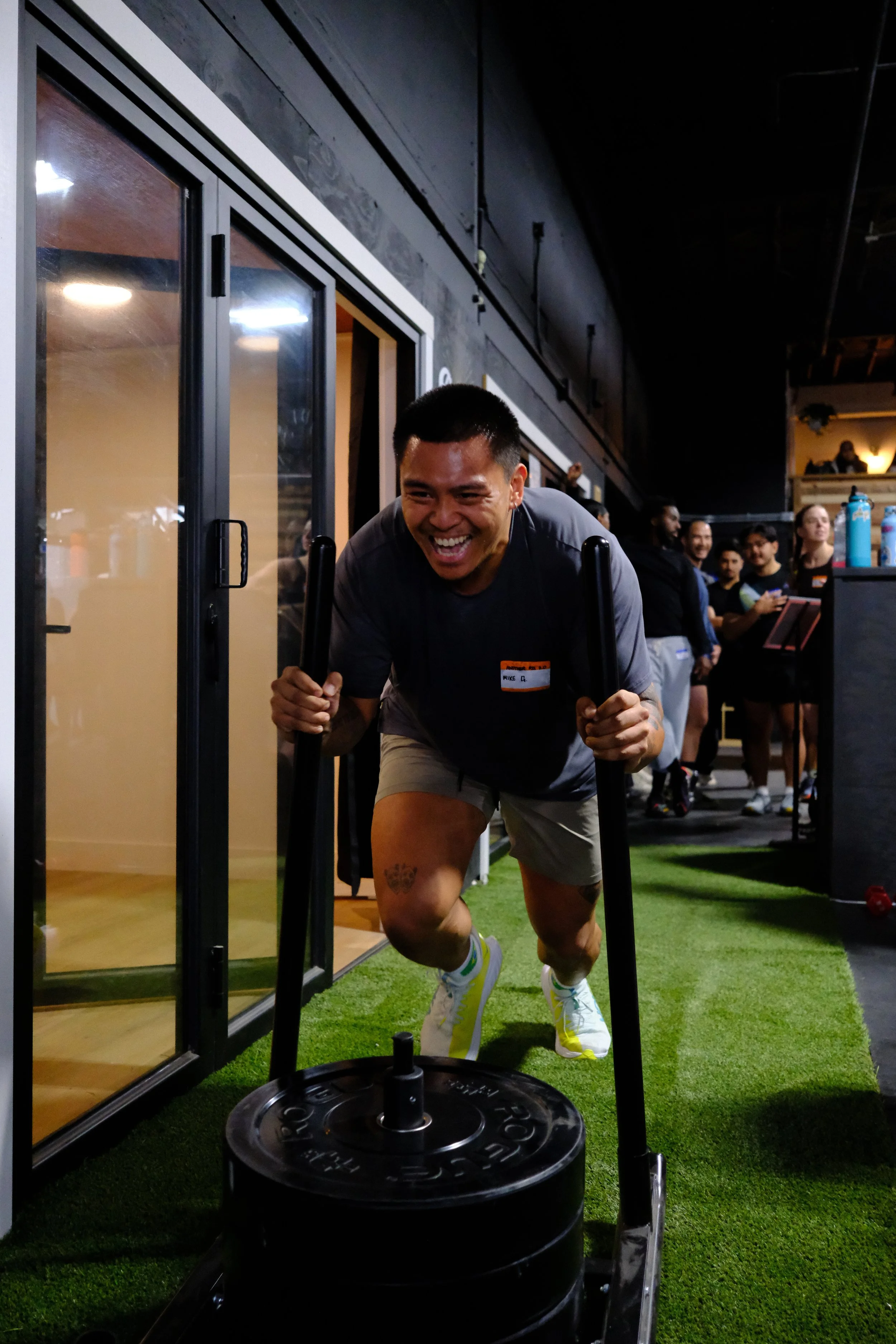
What it means to train at a gym where your coach and your PT share a floor.
What it means to train at a gym where your coach and your PT share a floor.

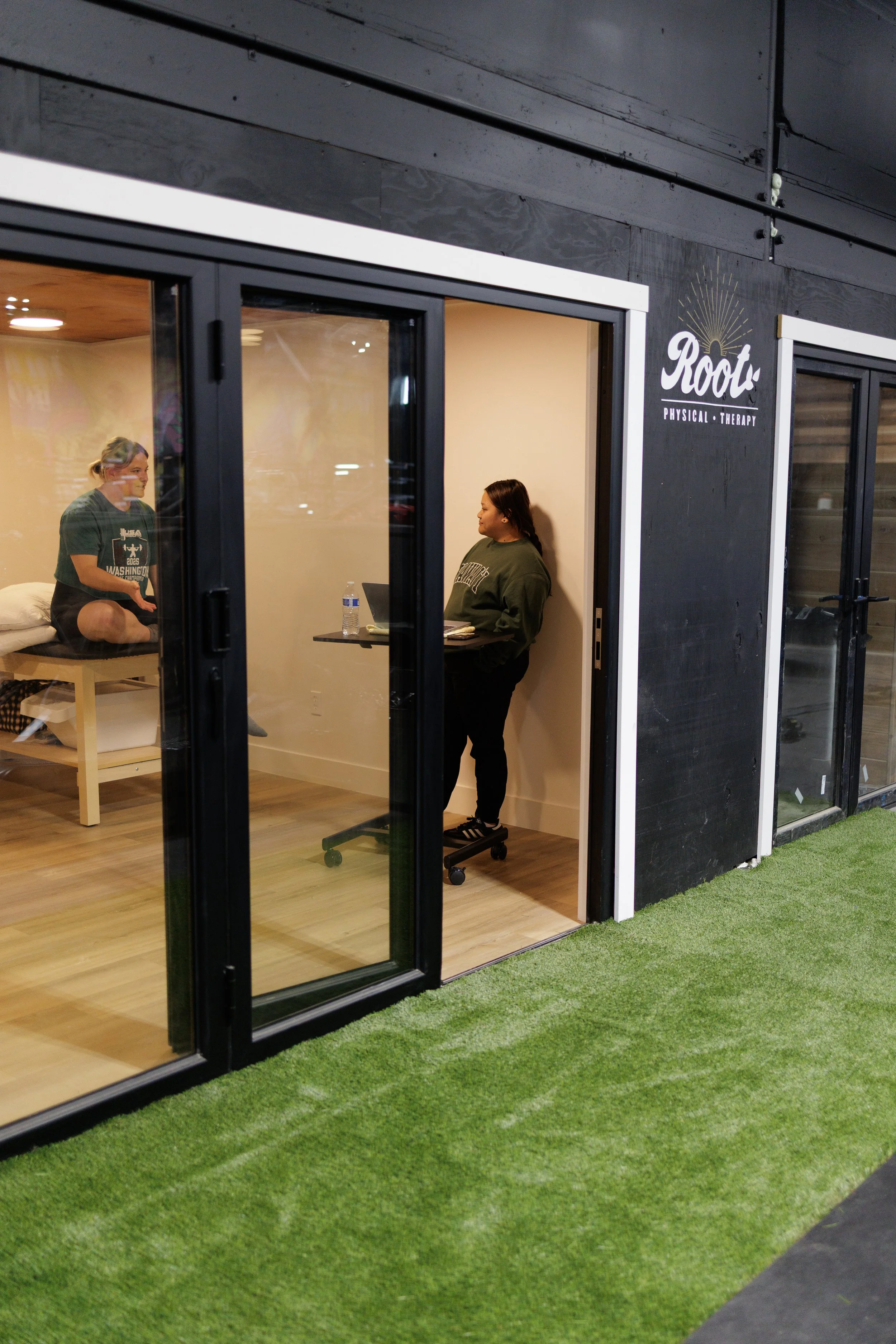
Every gym says they care about your longevity. Here is what that actually looks like at Root Strength: when a member tweaks their shoulder on a Tuesday, they do not disappear for three months. They walk twenty feet to Root Physical Therapy — inside our building — get evaluated by a Doctor of Physical Therapy, and start a structured path back to the exact barbell they left. Often, they never fully stop training at all.
This is not a partnership with a clinic across town. Root PT is our physical therapy department. Our coaching staff includes Doctors of Physical Therapy who teach classes on our floor. And the system that connects rehab to training has a name: the PT-to-Performance Bridge.
The problem with "go rest and come back when you're better"
Traditional gyms have exactly one answer to injury: stop training. Traditional PT clinics have exactly one endpoint: discharge when the pain is gone. Between those two systems is a canyon — the deconditioned, unsupervised, "am I allowed to squat yet?" months where most reinjuries happen and most training habits die.
Research backs this up. Athletes who return to sport after meeting objective strength and movement criteria have dramatically lower reinjury rates — 5.6% versus 38.2% in the landmark Delaware-Oslo cohort — than those who come back on a calendar schedule alone (Grindem et al., 2016). The question is not whether you rest long enough. It is whether your body has demonstrably rebuilt the capacity your training demands.
How the Bridge works for members
If you get injured — training with us or anywhere else — your path looks like this:
1-on-1 Physical Therapy
Dedicated sessions: assessment, clinical diagnosis, hands-on treatment, and a progressive plan built around your condition and goals. From day one, we establish the objective benchmarks you will need to meet to progress.
"This is where it starts."PT-to-Performance Bridge
Your care expands from one provider to a coordinated team on the gym floor. More complex movements, real weight, two providers on one plan. Entry is earned — the Bridge is a benchmark, not a timeline.
"Where rehab becomes training."Continuation Period
Full access to all Root Strength classes and open gym. You already know the coaches, the equipment, and the routine — the habit is built during the Bridge, not after it.
"Your work doesn't stop — and neither do we."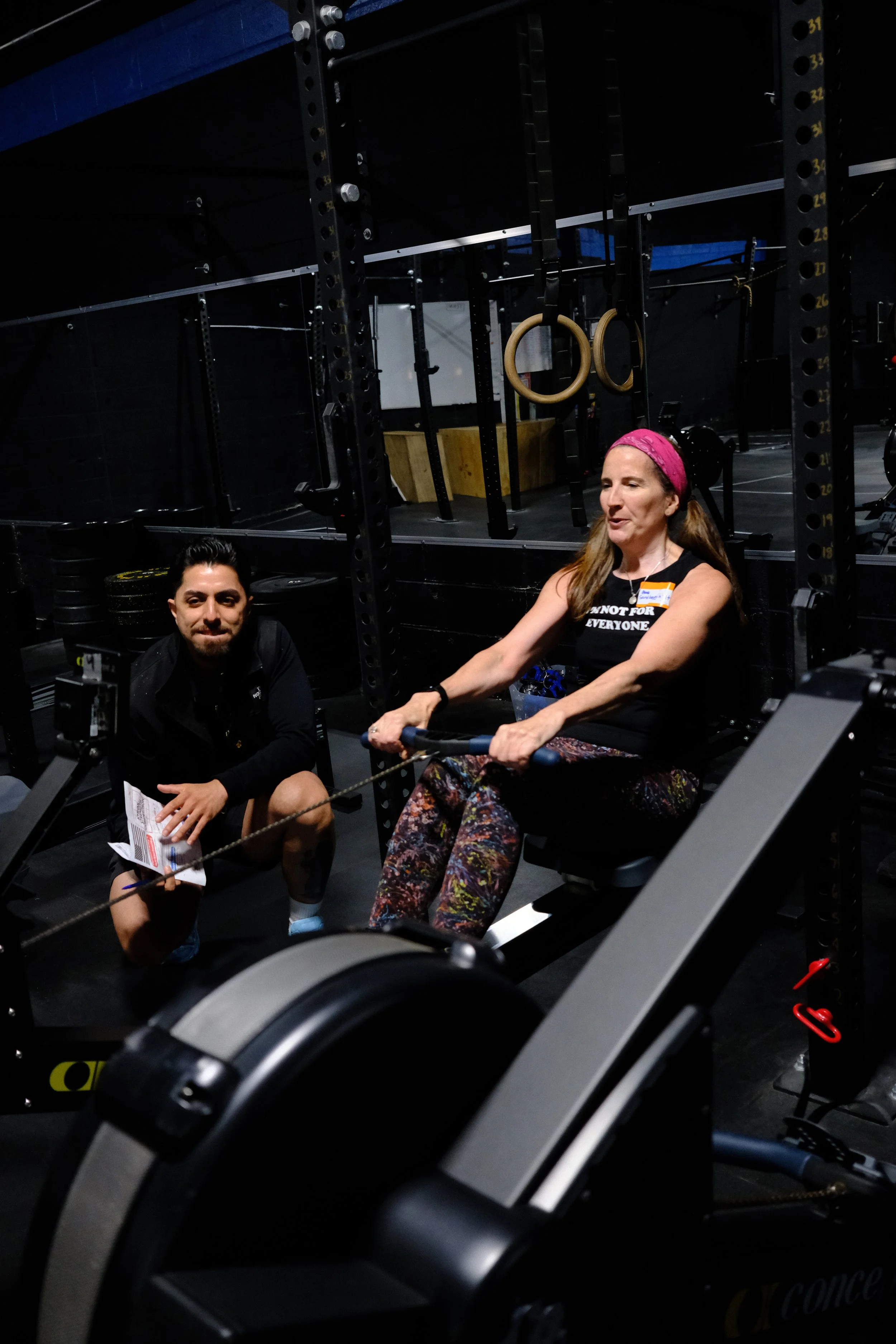
For our current members: the Bridge means an injury is a detour, not an exit. Your coach and your PT literally talk in person, on the same floor, about the same plan. Your programming gets modified — not abandoned — and your return to full training is measured, tested, and earned.
Why this makes you a better athlete even if you never get injured
Having Doctors of Physical Therapy embedded in a strength facility changes the coaching everyone receives. Movement standards are informed by clinical assessment. Load progressions respect tissue physiology. Class programming accounts for the postpartum member, the fifty-five-year-old with a knee replacement, and the powerlifter peaking for a meet — because the people writing it treat all three.
And when your PT is also a strength coach, "rehab exercises" and "training" stop being different categories. The goal was never just to get you out of pain. It is to build you stronger than you were before the injury — with better movement, greater capacity, and habits that protect you going forward.
Train somewhere that plans for the long run.
Coached programs, open gym, 28 classes a week, sauna — and a full physical therapy department under the same roof. Come see the facility.
Start your 2-week trialSources
- Grindem H, Snyder-Mackler L, Moksnes H, Engebretsen L, Risberg MA. Simple decision rules can reduce reinjury risk by 84% after ACL reconstruction: the Delaware-Oslo ACL cohort study. British Journal of Sports Medicine. 2016;50(13):804–808.
- Losciale JM, et al. The association between passing return-to-sport criteria and second ACL injury risk: a systematic review with meta-analysis. JOSPT. 2019;49(2):43–54.
Why We Built a Physical Therapy Clinic Inside Our Gym
If you train long enough, you're going to get hurt. Not catastrophically — but a shoulder that doesn't feel right, a knee that flares after squats, a low back that tightens up during deadlifts. It happens. The question is what you do about it.
At most gyms, the answer is: stop training, go find a PT clinic somewhere across town, do 6 weeks of rehab in a medical office with resistance bands and a therapy table, get discharged, come back to the gym, and hope you don't re-injure yourself trying to figure out how to bridge the gap between "cleared" and "actually ready."
That model doesn't work. The research confirms it. And we decided to do something different.
The Discharge Gap — The Problem Nobody Talks About
Here's what the data says about what happens after physical therapy ends:
The first number is the one that matters most for our members. More than a third of people who go through PT stop doing their exercises once they're discharged. Not because they don't care — because the environment changes. They go from a supervised clinical setting where someone is guiding them through their program to being alone with a printout of exercises they're supposed to do at home or at a gym they may not feel confident in.
That's the discharge gap. Rehab ends in a clinic. Training lives in a gym. And the bridge between them — the phase where you transition from "recovering" to "training again" — is where most people fall off. It's the most important phase, and it's the one with the least support.
Why We Put the PT Clinic Inside the Gym
Root Physical Therapy operates inside Root Strength. Same building. Same floor. The treatment rooms are here, the barbells are here, and the coaches are here. That wasn't an accident — it was the entire point.
Your PT and your coach actually talk to each other
When one of our members is working with a Root PT clinician, that clinician can walk onto the gym floor and talk to the coach who programs their training. They can coordinate what movements to avoid, what to progress, and when someone is ready to return to full loading. This doesn't happen when your PT is in a medical office park 20 minutes away and your gym is somewhere else entirely.

Late-stage rehab uses real equipment
Most PT clinics have therapy tables, resistance bands, and maybe a cable machine. That's fine for early rehab. But late-stage rehab — the phase that actually prepares you to train again — needs the equipment you're going to train with. Barbells, sleds, kettlebells, pull-up bars, rowing machines. Root PT has access to our entire gym floor. When you're ready for heavier loading, you're doing it on the same equipment you'll use when you're back in class.
The transition from rehab to training is seamless
When a Root PT patient finishes their plan of care, they don't get handed a printout and sent home. They're already in the building where they'll continue training. Their PT can introduce them to a coach, their program can transition from rehab to strength training without a gap, and the 37% dropout rate that plagues the traditional model doesn't apply — because the environment never changes.
What the Research Actually Says
This isn't just a model we think makes sense. The evidence supports it directly.
A 2025 systematic review and meta-analysis published in the American Journal of Sports Medicine (Chen et al.) analyzed 16 randomized controlled trials and found that strength training reduces overall sport injury risk by 30%. For specific injuries, the numbers are even more striking: hamstring injuries were reduced by 63% in athletes who followed strength-based injury prevention programs.
Separately, research on exercise adherence after PT discharge consistently shows that patients who have access to a supervised exercise environment after discharge maintain their gains at significantly higher rates than those who are sent home with a printout. The problem has never been that people don't want to do their exercises — it's that the traditional model removes all the structure and support at exactly the moment they need it most.
And a meta-analysis on exercise-based rehabilitation across musculoskeletal conditions found that active, exercise-based rehab produces better long-term outcomes than passive treatment for virtually every condition studied — low back pain, knee injuries, shoulder dysfunction, post-surgical recovery. The gym isn't just where you train. For rehab purposes, it's the most effective clinical environment available.
The gym isn't just where you train. For rehab purposes, it's the most effective clinical environment available — and having your PT in the same building as your coach is how you close the gap between "cleared" and "actually ready."
What This Means for You as a Root Strength Member
Injury prevention is built into your membership
Because Root PT is on-site, you don't have to wait until something becomes a serious problem before getting it looked at. That shoulder that's been bothering you for two weeks? Walk over and talk to a PT between classes. Catching things early — before they become injuries that require time off — is one of the biggest advantages of having PT in the same building.
If you do get hurt, you don't have to leave
Your rehab happens in the same building as your training. You don't need to find a clinic, figure out scheduling, or navigate a completely separate system. Root PT accepts most major insurance (Premera, Regence, BCBS, Aetna, Anthem), and Washington state has direct access — no doctor's referral required.
Your return to training is coached, not guessed
The hardest part of coming back from an injury isn't the rehab. It's figuring out what you can do in the gym when you're cleared but not fully confident. When your PT is in the same building as your coach, that transition is managed collaboratively. You don't have to guess what's safe — the people who treated you and the people who train you are coordinating your return.
Root Physical Therapy + Root Strength + Muok Boxing — all in the same building at 6332 6th Ave S, Georgetown. Your PT talks to your coach. Your rehab uses real training equipment. Your return to activity happens where you actually train.
The PT Team on Site
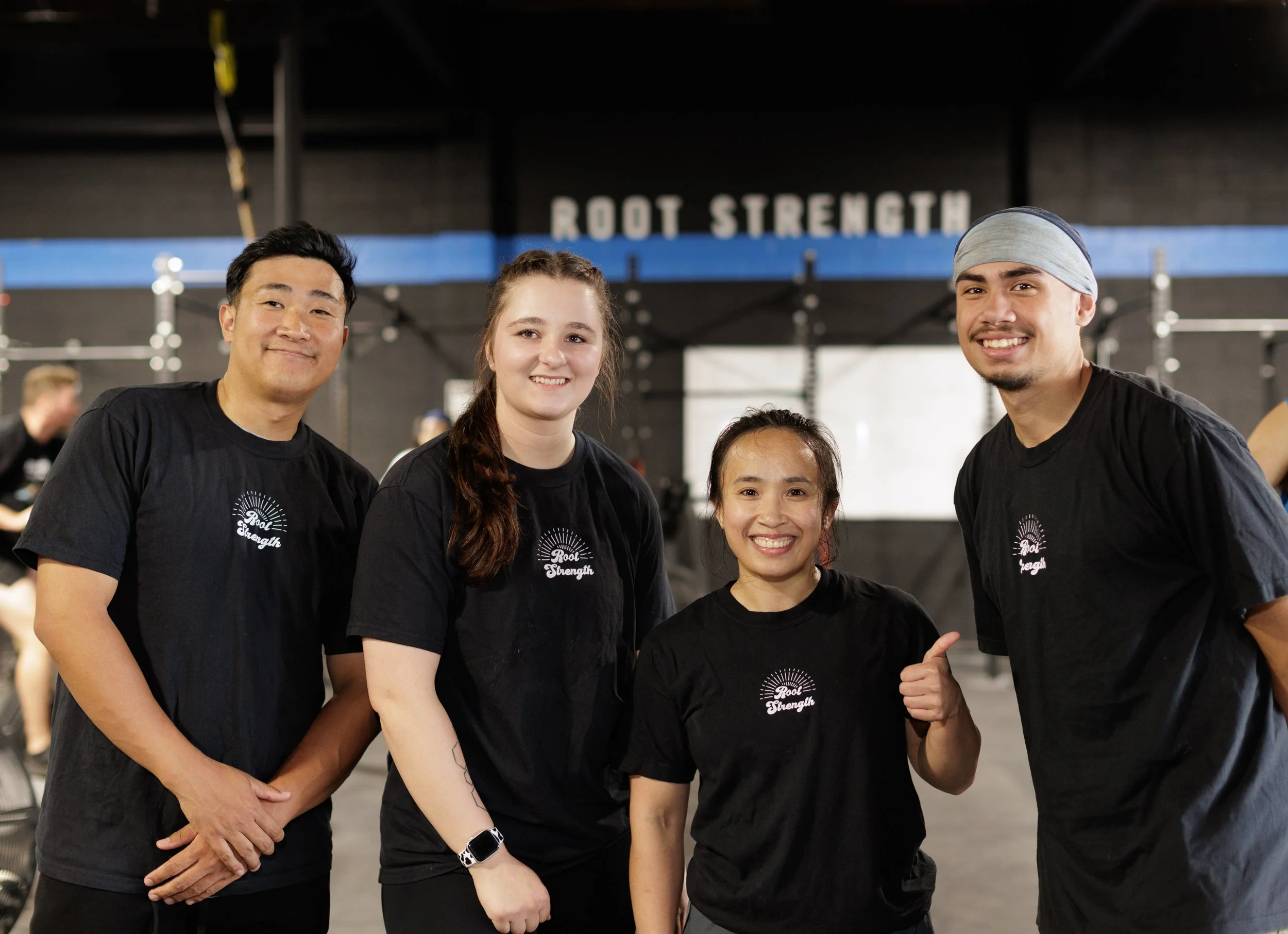
Root Physical Therapy has four clinicians on staff — all with specializations that directly serve active adults and athletes:
Dr. Joe Rellora, PT, DPT — 10+ years of clinical experience. Dr. Andy Le, PT, DPT — sports and combat athlete rehabilitation, also a Muay Thai coach at Muok Boxing. Dr. Lorrainne Dizon, PT, DPT — orthopedic residency trained, pelvic health, and pain science. Bobby Green, PTA — sports and orthopedic rehabilitation, Muay Thai coach, MET/PRI/PNF certified.
Two of the four clinicians are also Muay Thai coaches in the same building. They don't just understand sport demands in theory — they coach contact sports and treat the injuries that come with them.
The Bigger Picture
We didn't put a PT clinic in our gym because it's convenient. We did it because the evidence says this is how rehab should work. The discharge gap is real. The dropout rates are real. The re-injury rates are real. And the solution — integrating physical therapy with the environment where people actually train — produces better outcomes across every metric that matters.
If you're a Root Strength member who's been dealing with pain and wondering whether you should get it looked at, the answer is yes — and you don't have to go anywhere else to do it. If you're not a member but you're looking for a PT clinic that understands what it means to train seriously, Root Physical Therapy is accepting new patients.
No referral required. Most major insurance accepted — Premera, Regence, BCBS, Aetna, Anthem. On-site at Root Strength Georgetown. Learn more about our PT department.
Want to Train With Us?
Two weeks of unlimited access to our full schedule — coached classes, open gym, and on-site physical therapy when you need it. Georgetown, Seattle.
Start 2-Week Trial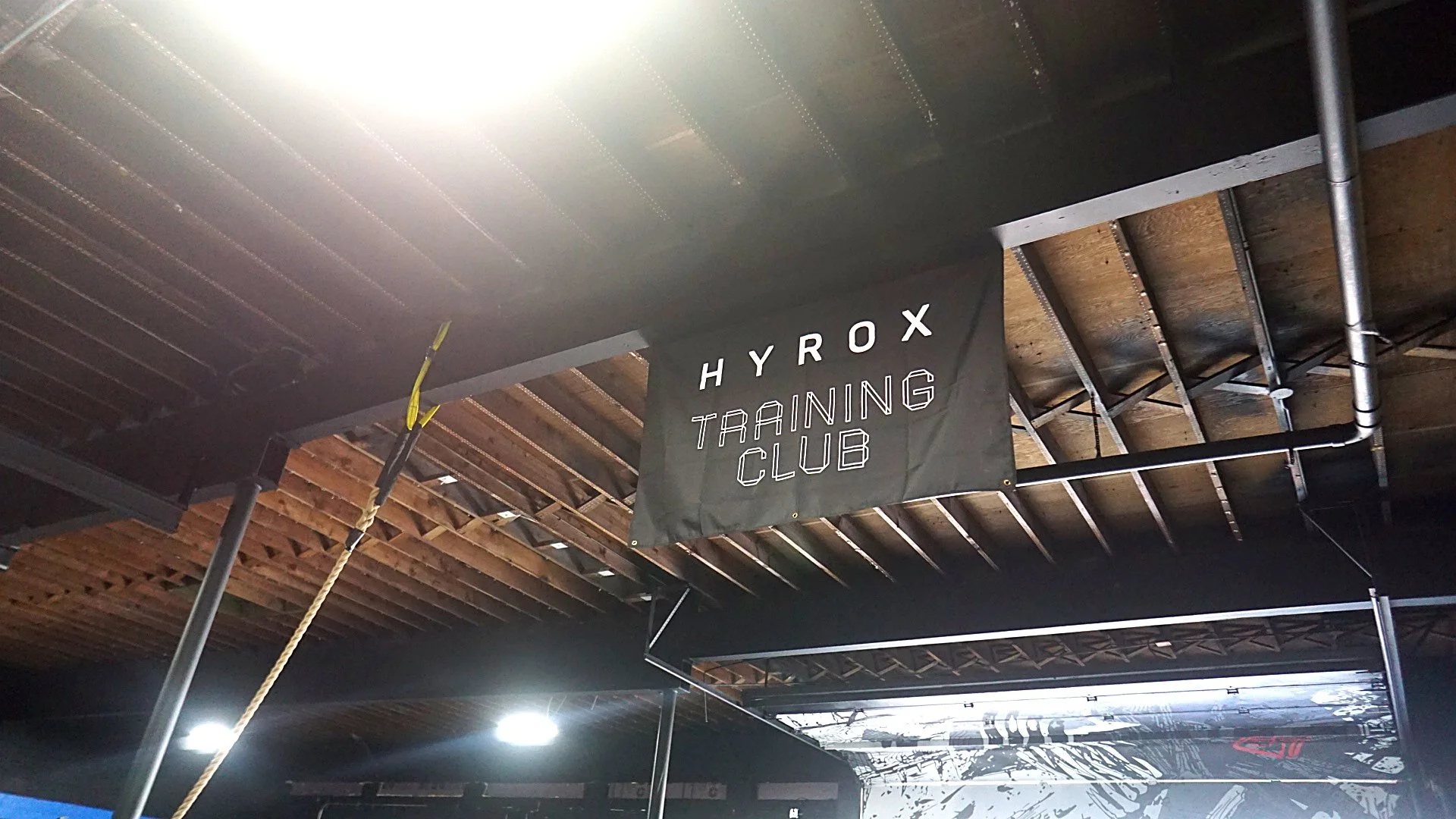
Root Strength Is Now an Official Hyrox Affiliate — Here's What That Means for You
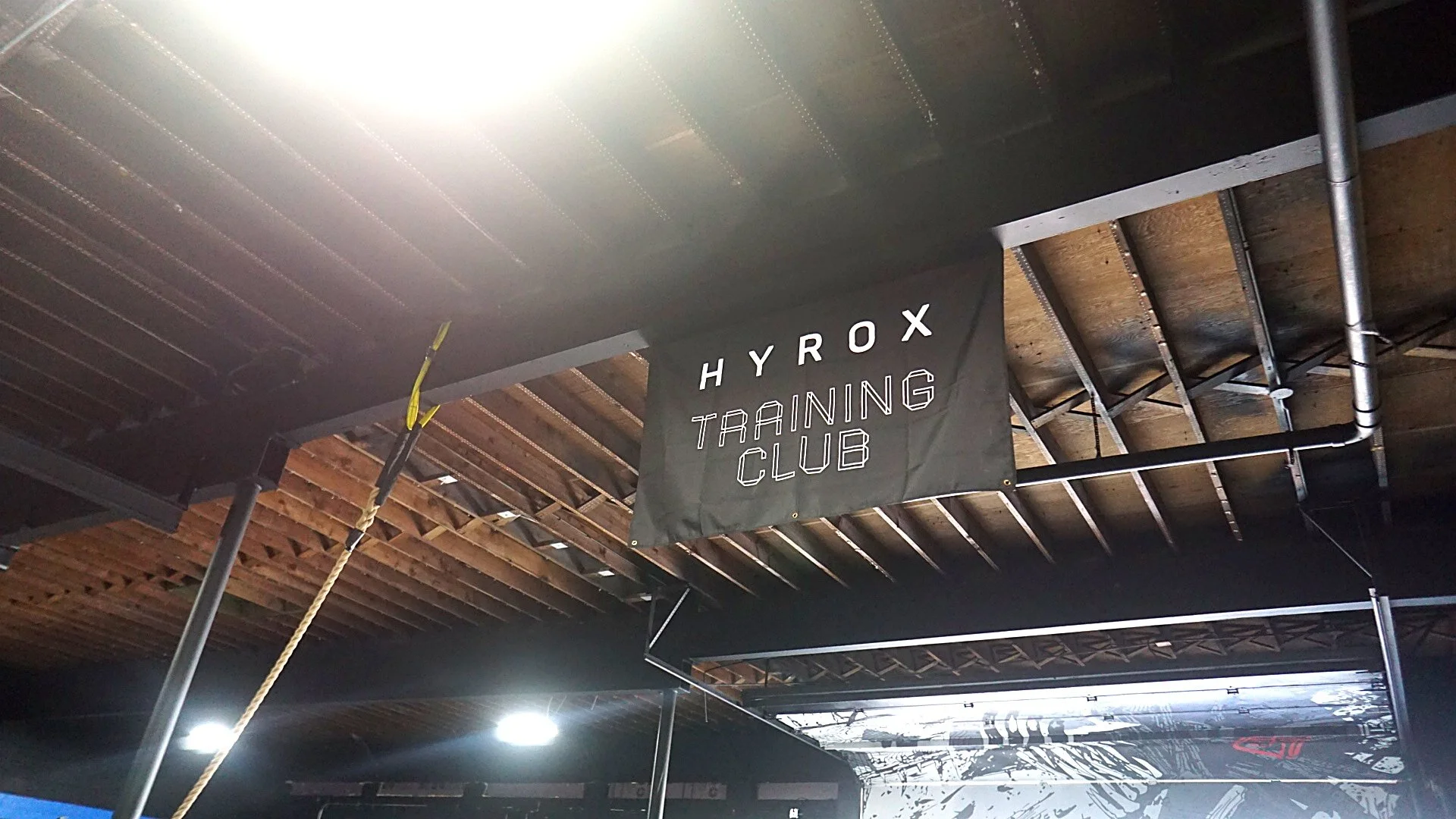
Root Strength Georgetown is now an official Hyrox affiliated training facility — one of a growing number of gyms worldwide recognized by Hyrox as a destination for structured race-day preparation. This isn't a branding exercise. It means our programming, equipment, and coaching meet the standard Hyrox sets for facilities that prepare athletes to compete in the world's largest fitness racing series.
If you've heard of Hyrox but aren't sure what it actually is, or if you've been curious about competing but assumed it wasn't for you — this post is the complete breakdown. What the race looks like, what every station involves, why the format works for people at every fitness level, and how to start training for it here.
What Hyrox Actually Is
Hyrox is a standardized fitness race. Every Hyrox event — in every city, in every country — follows the exact same format: eight 1-kilometer running segments, each followed by one functional workout station. The stations are always the same, always in the same order, and always use the same weights and distances. Whether you race in Seattle, New York, London, or Berlin, the course is identical.
That standardization is the entire point. Unlike CrossFit, where the workout changes every day and you find out what you're doing when you show up, Hyrox is completely predictable. You know exactly what race day looks like months in advance. That means you can train specifically for it, track your progress against a fixed benchmark, and compare your results globally against every other person who's ever raced the same format.
The race takes most participants between 75 and 150 minutes to complete, depending on fitness level and division. Elite athletes finish in around 60 minutes. The format is demanding but achievable — it's designed so that anyone who trains for it can finish, while still being challenging enough that the best athletes in the world compete in it seriously.
The divisions
Open — lighter weights at each station. Designed for the majority of participants, including first-time competitors. This is where most people start. Pro — heavier weights at each station. For experienced athletes looking for a greater challenge. Doubles — two-person teams alternating stations. A great entry point if you want a partner. Relay — four-person teams, each member completing two stations plus running. The most accessible format for groups. Age group categories are available across all divisions.
The 8 Stations — In Order, Every Time
Every Hyrox race follows this sequence. After each station, you run another 1km before hitting the next one.
Why Hyrox Works for Every Fitness Level
The most common reaction from people who haven't done Hyrox is some version of: "That's not for me — I'm not fit enough." This is the same thing people say about their first day at any gym, and it's wrong for the same reasons. The format is designed to be inclusive by structure, not just by marketing.
The format is predictable
You know exactly what you're training for. There are no surprise elements, no skills you haven't seen, no movements that require years of practice. Every station uses fundamental functional movements — pushing, pulling, carrying, squatting, running, rowing. If you can do these movements at any level, you can train for Hyrox. The weights scale by division, and the Open division is genuinely designed for everyday athletes.
You compete against yourself first
Your Hyrox time is your benchmark. You race against the clock, not against the person next to you. Your first race establishes a baseline. Every race after that is a chance to beat your own time. The leaderboard exists for people who want it, but the primary competition is internal — and that's what makes it sustainable as a long-term training goal.
Every station is scalable through training
Sled push too heavy? You build leg strength. Row too slow? You build cardiovascular capacity. Wall balls breaking you? You build squat endurance. Every weakness the race exposes has a clear, trainable solution. That's the beauty of a standardized format — the race tells you exactly where to focus your training, and the next race shows you whether it worked.
Doubles and Relay lower the entry barrier further
Not ready to race solo? Doubles splits the work between two people — you alternate stations while your partner rests. Relay splits it across four. These divisions exist specifically so that more people can experience race day without needing to complete the entire event alone. Many of our members plan to start with Doubles before racing solo.
Hyrox is CrossFit without the unpredictability and running without the monotony. You know exactly what you're training for, the movements are fundamental, and the format rewards consistency over talent. That's why it's the fastest-growing fitness competition in the world.
What Being an Official Affiliate Means
Not every gym can call itself a Hyrox affiliate. The designation means Root Strength has been recognized by Hyrox as a facility with the equipment, programming, and coaching to prepare athletes for competition. Specifically:
We have the equipment. Sleds, SkiErgs, rowers, wall ball targets, sandbags, farmers carry implements — the actual race-day equipment, not substitutes. When you train at Root Strength, you're training on the same tools you'll use on race day.
We have Hyrox-specific programming. Our Hyrox class isn't a generic conditioning session with the word "Hyrox" on it. It's structured around race-day demands — station-specific work, running capacity, pacing strategy, and the transitions between stations that most first-timers underestimate.
We have coached instruction — from two former collegiate athletes. Our Hyrox program is led by Creole Walker (Head Coach) and Payton Kessler — and what makes this pairing work is how closely their backgrounds align with what Hyrox demands.
Creole Walker is Root Strength's Head Coach and General Manager. She holds a B.S. in Exercise and Physiological Science, has 5+ years of coaching experience across all fitness levels, and competed in six sports — including strongman, wrestling, basketball, track, fastpitch softball, and powerlifting. Her specialties in MetCon, HIIT, and functional fitness map directly onto Hyrox's combination of running and functional stations. She also served as a strength and conditioning coach for high school rugby and football — the kind of multi-sport S&C background that Hyrox preparation genuinely benefits from.
Payton Kessler is a former collegiate softball athlete at Central Washington University with a B.S. in Exercise Science and strength and conditioning experience through CWU Athletics. She brings four years of competitive athletics, a practicum in athlete testing and data-driven programming, and two seasons coaching youth softball. She's currently pursuing her NSCA CSCS certification.
Both coaches share an athletic foundation: Exercise Science degrees, multi-sport competitive backgrounds, and hands-on S&C experience. Hyrox is a hybrid event — it rewards both endurance and strength, and it rewards the kind of well-rounded athletic capacity that both Creole and Payton built through years of competing across multiple sports. They don't just understand the programming — they understand the competitive mindset that race day requires.
The affiliate designation matters because it means you're not guessing. The programming is aligned with what Hyrox expects from a preparation facility, the equipment matches race day, and the coaching is informed by the actual demands of the event. When you show up on race day, nothing should be unfamiliar.
How to Start Training for Hyrox at Root Strength
Whether you're planning to compete this season or just curious about the format, here's how to get started.
- Each session is built around Hyrox race demands — station work, running intervals, transitions, and pacing
- You don't need to be "Hyrox ready" to attend. The class is designed to build you up to race fitness, not assume you're already there
- Included in your Root Strength membership — no additional fee
- Athletic Training (Mon/Wed/Fri 9:00 AM) — explosive movement, sport-informed conditioning, functional strength
- Strength classes — the sled push, farmers carry, and sandbag lunges all reward raw strength. Our strength programming builds the capacity that makes those stations faster
- Running — 8km of running in a Hyrox race means running capacity matters. Our strength training for runners post covers how to build both simultaneously
- Hyrox events are scheduled throughout the year across the US and internationally — check the Hyrox event calendar for upcoming races
- A solid preparation period is 12–16 weeks of consistent training. Start the Hyrox class now and you'll be race-ready within one season
- First race? Start with Open division. Want a partner? Enter Doubles. Want to bring a team? Relay is built for groups of four
Who Hyrox Is For (Honestly)
Hyrox works for a broader range of people than most competitive fitness formats. Specifically:
Runners who want more than running. If you've been running races and want a new challenge that tests both your endurance and your strength, Hyrox is the natural next step. You already have the cardiovascular base — the stations add the strength component that makes the format compelling.
Gym members who want a goal. Training is easier when you have something to train for. A Hyrox race on the calendar turns "I should go to the gym" into "I'm preparing for a specific event on a specific date." The structure and urgency change everything about consistency.
Former athletes who miss competing. If you played sports in high school or college and miss the feeling of game day, Hyrox brings that back. The nerves, the adrenaline, the crowd, the finish line. It's competition in a format that doesn't require a team or a league — just you and the clock.
People who tried CrossFit but wanted something more predictable. CrossFit's constantly-varied model works for some people. Others find it frustrating to never know what they're training for. Hyrox solves that — same format, every time, with clear training targets and measurable progress.
Complete beginners who want a structured target. If you're new to fitness and want a clear, achievable goal to work toward, "finish a Hyrox race" is one of the best ones available. The Open division with lighter weights is genuinely accessible to anyone who commits to 12–16 weeks of consistent preparation.
Race-specific training with Head Coach Creole Walker and Coach Payton Kessler. All fitness levels welcome. Included in your Root Strength membership. See the full schedule.
The Bigger Picture — Why We Pursued This
We didn't become a Hyrox affiliate because it's trendy. We pursued it because the format aligns with what we already believe about training: that structure produces results, measurable benchmarks drive consistency, and competition — even competition against yourself — brings out better effort than training without a target.
Hyrox gives our members something concrete to train for. It gives our programming a competitive framework to build around. And it gives the broader Seattle fitness community a reason to walk through our doors and see what coaching-led strength training actually looks like.
If you've been looking for a training goal that's more than "go to the gym and hope for the best" — this is it. The race format is clear, the preparation is structured, the equipment is here, and the coaching is on the schedule. All that's left is showing up.
Ready to Start Training for Hyrox?
Two weeks of unlimited access to our full schedule — including Hyrox class on Mondays at 5:00 PM. Real programming, real coaching, real race preparation. All fitness levels.
Start 2-Week Trial