How Much Does a Gym Cost in Seattle? An Honest Breakdown
Gym pricing is one of the most frustrating things to research in Seattle. Most gyms refuse to publish their rates, the ones that do publish make you decode bundles and add-ons, and the difference between a $20-a-month chain gym and a $250-a-month coaching facility looks — at first glance — completely irrational. It isn't. The price difference is real and it tracks something specific. But you have to know what you're actually paying for.
This post breaks down what gym pricing in Seattle actually looks like across every tier, what's included at each one, and — more importantly — how to figure out which tier matches what you're trying to accomplish. We'll be direct about where Root Strength fits in this landscape and where we don't.
Why Gym Pricing Is So Confusing
Three things make gym pricing harder to compare than it should be.
First, gyms sell different products under the same name. A "gym membership" at Planet Fitness gives you access to equipment in a room. A "gym membership" at a CrossFit affiliate gives you a coach, a programmed workout, a community, and a class schedule. Calling both of these "gym memberships" is technically accurate and practically misleading.
Second, most coaching-tier gyms don't publish their pricing. This is partly a sales tactic — they want you on a phone call where they can explain the value before you see the price — and partly a structural reality, because pricing depends on which programs you use, how often, and what's bundled. The result is that you can't easily comparison shop.
Third, the cost of a gym is not the same as the cost of getting in shape. The monthly membership is one input. The harder questions are: how often will I actually use it, will I make progress, will I get injured, and what does "getting in shape" actually cost me when I factor all of that in. We'll come back to this.
The Four Tiers of Gym Pricing in Seattle
Just about every gym in Seattle falls into one of four tiers. The price differences track the level of guidance, programming, and accountability you receive — not the quality of the equipment.
Access to a facility with equipment. Locker rooms. Sometimes group classes that are mostly cardio-based and run by part-time instructors. No programming, no coaching, no accountability. Examples in Seattle: Planet Fitness, LA Fitness, 24 Hour Fitness, your apartment building gym.
Best for: people who already know exactly what to do, can write their own programs, and stay motivated without external structure. A small fraction of the population.
Group classes — Pilates, yoga, spin, barre, HIIT — with instructors leading scripted workouts. Programming is class-by-class rather than progressive. Cost varies by drop-in vs. unlimited membership. Examples: SoulCycle, Pure Barre, [solidcore], Orangetheory, F45.
Best for: people who want a structured workout without thinking about it, and who enjoy the class-format experience. Cardio and conditioning skews. Strength development is limited at this tier.
Small-group classes (typically 6–15 people) led by coaches who watch your form, modify exercises for your body, and progress you over time. Programming is structured — not random. Coaches know your name, your goals, your history. Examples in Seattle include CrossFit affiliates, MADabolic, and dedicated strength training facilities. Root Strength is in this tier.
Best for: people who want real strength and conditioning progress, want coach attention, and value not having to figure out programming themselves.
A private coach designing a program specifically for you and supervising every rep. Most personalized option. Highest accountability. Highest cost. Typically billed per session rather than monthly. Two sessions per week at $100 each is $800/month.
Best for: people with very specific needs (rehab, sport-specific prep, post-injury return), people who can afford the cost, or people who genuinely won't show up without 1-on-1 accountability.
The right tier is the one that matches what you're actually trying to accomplish — not the cheapest one, and not the most expensive one. Most people who quit the gym in 6 weeks were in the wrong tier from day one.
What Each Tier Actually Costs You — Beyond the Sticker Price
The membership fee is the visible cost. The hidden costs vary by tier, and they often dominate the math.
The hidden cost of Tier 1 (cheap gyms)
The number that doesn't make it onto the marketing materials: roughly 50% of memberships at chain gyms go unused after the first six months. If you're paying $20/month and never going, you're paying $20/month for guilt. The other hidden cost is injury — without coaching, beginners frequently develop technique habits that lead to avoidable injuries, which then cost you in rehab fees, time off, and sometimes a complete restart. A $20/month gym membership is an excellent value if you use it. It's a much worse value if you don't.
The hidden cost of Tier 2 (boutique studios)
Drop-in pricing often makes Tier 2 look comparable to Tier 3 on paper. The hidden cost is per-class pricing models. A $35 drop-in class twice per week is $280/month — and that's at the low end. An unlimited membership at a boutique studio is often $200+ already. The other hidden cost is plateau: most Tier 2 classes don't progress you systematically, which means after the initial 8–12 weeks of fitness gains, your body adapts and you stop changing. People in this tier often switch between studios chasing novelty rather than building cumulative strength.
The hidden cost of Tier 3 (coaching gyms)
The sticker shock is real — paying $200/month is meaningfully different from paying $30. The actual hidden cost here is under-utilization. If your gym offers 100+ classes a month and you go twice a week, you're paying for capacity you're not using. People who get the most out of Tier 3 are people who attend 3–5 times per week. That said, the tradeoff is that Tier 3 typically includes things Tier 1 and Tier 2 don't: a coach who knows your body, programming that builds over time, and (in our case) on-site physical therapy access that prevents and addresses issues before they become injuries.
The hidden cost of Tier 4 (1-on-1)
The visible cost is the per-session fee. The hidden cost is scheduling rigidity — your training is locked to your trainer's availability, and missed sessions are often non-refundable. The other hidden cost: most personal training clients don't actually need 1-on-1 attention. They need some attention, programming structure, and accountability — which Tier 3 provides at a fraction of the cost. 1-on-1 is excellent for specific needs. It's overkill as a default.
What "Worth It" Actually Means
"Is this gym worth it?" is the wrong question. The right question is: does the cost match what I'm actually going to use, given how I actually behave?
Three honest filters that will tell you which tier fits:
If you've signed up at a chain gym in the past and stopped going within three months, the cheapest option is not actually the cheapest option. You're paying for unused capacity. Tier 3 with coach accountability is a better fit even though the monthly is higher.
If yes, Tier 1 might genuinely work — you're paying for equipment access and that's all you need. If no, you'll either flounder at Tier 1 or chase scripted workouts at Tier 2 without making real progress. Tier 3 solves this directly.
"Move my body and feel better" — Tier 1 or 2 is fine. "Get measurably stronger over time" — Tier 3. "Recover from injury or specific sport prep" — Tier 4 or Tier 3 with PT. Pricing without a goal target is just guessing.
If you're new to lifting and unsupervised, the probability of self-coached injury is meaningful. PT visits in Seattle without insurance run $150–$250 each. Six weeks of rehab can cost more than a year of Tier 3 coaching. It's worth doing this math honestly.
Where Root Strength Fits
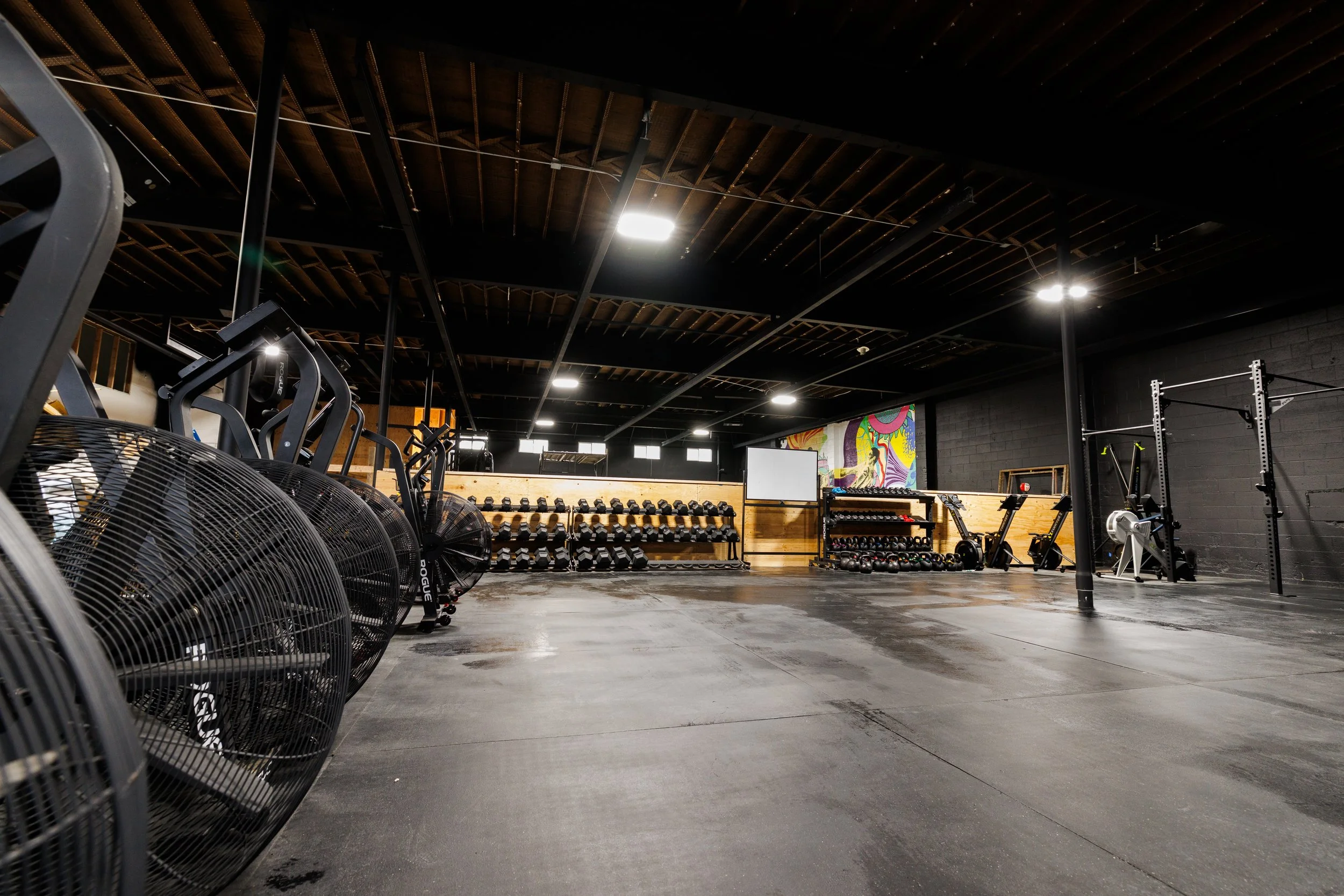
We're a Tier 3 coaching-led gym in Georgetown Seattle. Our model is built around small-group classes (capped at 12 athletes per coach), structured progressive programming, and on-site physical therapy in the same building. We aren't trying to compete on price with Planet Fitness — we couldn't, and we don't want to. We compete on outcomes: members who get measurably stronger, train consistently, and don't get injured. See our full program list.
What's specifically included in a Root Strength membership:
- – 120+ small-group classes per month — strength training, conditioning, mobility
- – Coaching attention — coaches know your name, your goals, your form
- – Structured programming that progresses over time, not random workouts
- – On-site Root Physical Therapy — most major insurance accepted
- – Member access to Muók Boxing options for cross-training in Muay Thai
- – Free parking — Georgetown, not downtown
For current pricing, see our pricing page. We publish what we charge — there's no phone-call sales process to find out.
The most useful thing we can tell anyone shopping gyms in Seattle: the gym you'll succeed at is not always the cheapest one or the closest one. It's the one whose model actually matches how you train and what you need. If you've quit gyms before, that's data — it usually means you needed more structure than the gym provided. If you've stuck with a routine on your own for years, you might genuinely just need equipment access. Match the tool to the job.
How to Test Before You Commit
Almost every Tier 3 gym in Seattle offers some kind of trial. The reason isn't marketing — it's that the model only works when members actually use what they're paying for, and a trial is the only honest way for both sides to find out.
What to look for during a trial
Do the coaches know your name by the third class? If not, you're at a gym where the coaching attention isn't real. Move on.
Are corrections happening in real time? A coach who watches you do a deadlift and says "good job" without addressing your form is not coaching. They're supervising. Different product.
Is the programming structured? Ask what cycle the gym is currently running and what it's building toward. If the coach can't answer, the programming is improvised — you'll plateau.
How crowded are the classes? 6–12 athletes per coach is the sweet spot. 20+ means coaching attention is diluted. 4 or fewer might mean the gym doesn't have enough members to sustain its model long-term.
Does the trial actually let you try the real product? Some gyms run "intro classes" that don't reflect what real classes are like. A real trial gets you into the actual schedule with the actual members.
Two weeks of unlimited classes. The actual product, on the actual schedule, with the actual members. No phone-call sales process. See our pricing first if you want →
The Bottom Line on Gym Pricing in Seattle
Gym memberships in Seattle range from $20 a month to $300+ a month, and the price difference is real — but it's not about equipment. It's about coaching, programming, accountability, and whether the gym's model matches how you actually behave.
If you're disciplined, can write your own program, and have a track record of showing up consistently without external structure — Tier 1 is fine and probably the best value for you. If you've quit gyms before, want real strength progress, or know you train better with structure — the cost of Tier 3 is meaningfully lower than the cost of cycling through Tier 1 and Tier 2 memberships you don't end up using. And if you have specific needs that warrant 1-on-1, Tier 4 exists for a reason.
The most expensive gym membership in Seattle is the one you don't use. The cheapest one is the one that matches what you actually need.
Want to See What Tier 3 Actually Looks Like?
Two weeks. Full access. The real schedule, the real coaches, the real product. No sales call required to find out the price — see our pricing page first if that's what you'd like.
Start 2-Week Trial →