Most people who return to training after an injury make one of two mistakes. They come back too fast and reinjure themselves within weeks. Or they come back so cautiously that they lose months of fitness and develop a subtle fear of movement that's hard to shake.
Both are understandable. Neither is inevitable.
The difference usually comes down to one thing: whether the return to training is supervised and progressive, or whether it's a guess.
The Gap Nobody Talks About
Standard physical therapy in Seattle — like most places — ends when you're pain-free. Your PT discharges you with some home exercises and a clearance note. You're "good to go."
But pain-free and ready to train are not the same thing.
Between "cleared by PT" and "back to full training capacity" there's a gap — usually 4 to 12 weeks — where movement compensations are still present, tissue strength hasn't fully caught up to pre-injury levels, and neuromuscular patterns are still being re-established. This is the window where most reinjuries happen.
And it's a window that most gyms and most PT clinics in Seattle aren't set up to bridge. The PT has discharged you. The gym doesn't know your history. You're on your own figuring out what you can handle.
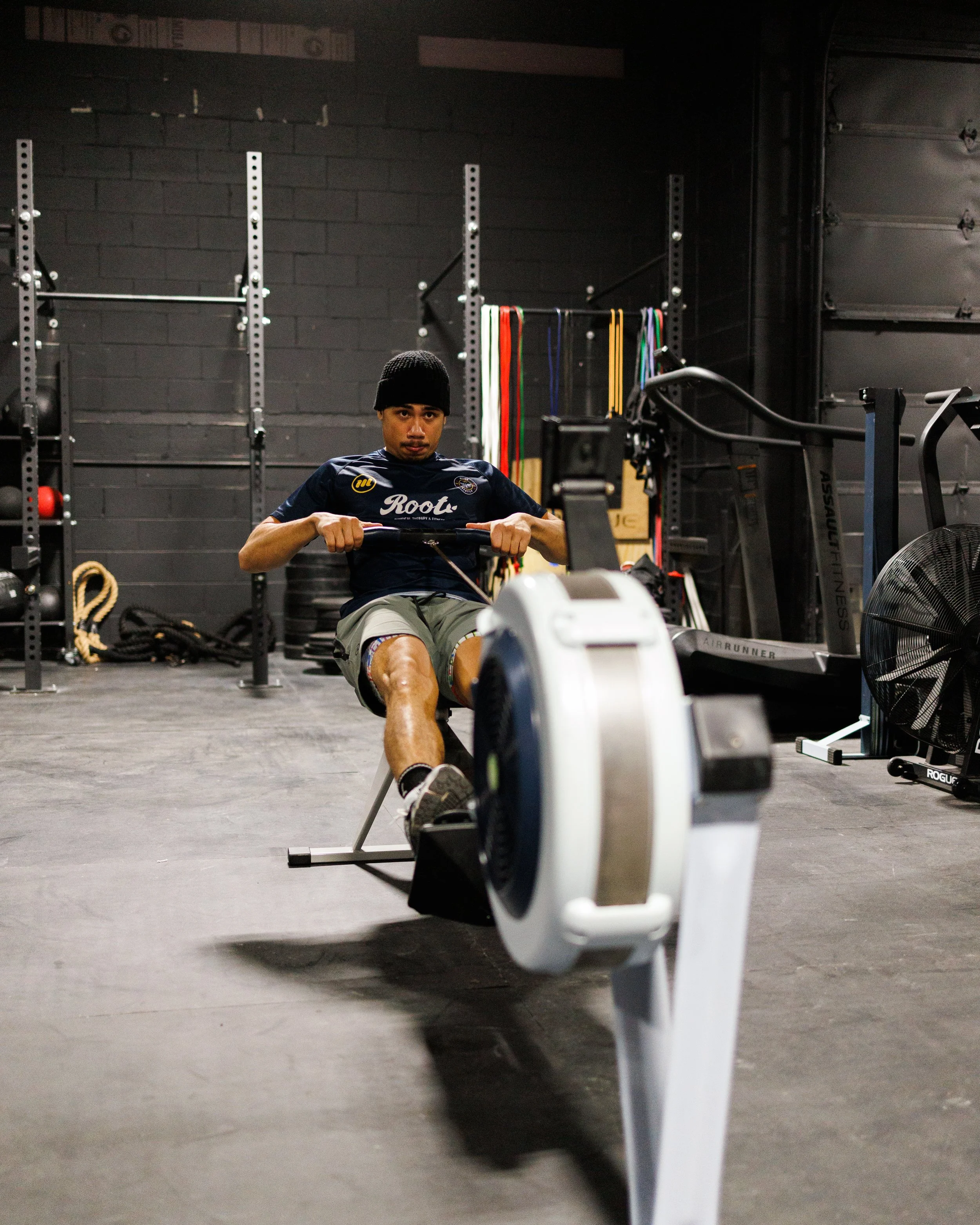
The missing piece: A supervised transition where your PT and your coaches are working together — watching you move under load in a real training environment, not just in a clinical setting.
How Root Strength Bridges the Gap
At Root Strength in Georgetown, Seattle, the physical therapist and the strength coaches are in the same building. Dr. Joe Rellora, PT, DPT coaches strength classes and provides on-site physical therapy for members. This setup makes the return-to-training process fundamentally different:
PT assessment and baseline
You start with an assessment that looks at your injury history, current movement quality, and what your training goals actually are. Not a generic intake form — a conversation about where you're at and what you're working toward.
Parallel rehab and modified training
You don't stop training while you're in rehab. You train with modifications that protect the injured area while keeping the rest of your fitness moving forward. Dr. Rellora monitors your progress in both contexts simultaneously.
Supervised progressive reloading
As the injury resolves, load is reintroduced progressively and deliberately. The coaches know your history. The modifications are removed one at a time, not all at once.
Full return to training
You get back to training at full capacity — not just pain-free, but with movement patterns that are actually better than before. Most members who go through this process say the injury forced them to fix problems they'd been ignoring for years.
Common Injuries We See at Root Strength Seattle
Dr. Rellora works with members returning from a wide range of injuries. The most common include:
- Lower back pain and disc injuries — including post-surgical returns and chronic management
- Knee injuries — ACL reconstructions, meniscus issues, patellofemoral pain
- Shoulder injuries — rotator cuff repairs, labrum issues, impingement
- Hip pain and labral tears — especially common in active people over 40
- Ankle sprains — returning to loading and single-leg work safely
- Post-surgical rehabilitation of any kind where return to strength training is the goal
Insurance is accepted for physical therapy services — Premera, Regence, Blue Cross Blue Shield, Aetna, and cash pay. Most members pay little to nothing out of pocket.
What Returning Members Say
The pattern we hear most often from members who've returned from injury at Root Strength is some version of: "I came back stronger than before." Not because the injury itself made them stronger — but because the process of supervised, deliberate rehabilitation forced them to address movement issues that had been quietly building for years before the injury happened.
A knee injury that forces you to rebuild hip stability. A shoulder issue that forces you to fix the scapular mechanics you'd been ignoring. A back injury that finally gets you to address the hip mobility you never had. The injury is the problem. The rehab is the opportunity.
How to Get Started
If you're currently recovering from an injury and looking for a physical therapy and strength training facility in Seattle that can handle both sides of your return, reach out directly.
Book a PT consultation with Dr. Rellora. He'll assess where you are, what your goals are, and build a plan that gets you back to training safely and completely. If you're also interested in joining Root Strength classes, the 2-week trial runs at the same time — you can do both simultaneously.
Root Strength is located at 6332 6th Ave S Unit A, Georgetown, Seattle — accessible from SoDo, Columbia City, Beacon Hill, and all of South Seattle with free street parking.