Why We Built a Physical Therapy Clinic Inside Our Gym
If you train long enough, you're going to get hurt. Not catastrophically — but a shoulder that doesn't feel right, a knee that flares after squats, a low back that tightens up during deadlifts. It happens. The question is what you do about it.
At most gyms, the answer is: stop training, go find a PT clinic somewhere across town, do 6 weeks of rehab in a medical office with resistance bands and a therapy table, get discharged, come back to the gym, and hope you don't re-injure yourself trying to figure out how to bridge the gap between "cleared" and "actually ready."
That model doesn't work. The research confirms it. And we decided to do something different.
The Discharge Gap — The Problem Nobody Talks About
Here's what the data says about what happens after physical therapy ends:
The first number is the one that matters most for our members. More than a third of people who go through PT stop doing their exercises once they're discharged. Not because they don't care — because the environment changes. They go from a supervised clinical setting where someone is guiding them through their program to being alone with a printout of exercises they're supposed to do at home or at a gym they may not feel confident in.
That's the discharge gap. Rehab ends in a clinic. Training lives in a gym. And the bridge between them — the phase where you transition from "recovering" to "training again" — is where most people fall off. It's the most important phase, and it's the one with the least support.
Why We Put the PT Clinic Inside the Gym
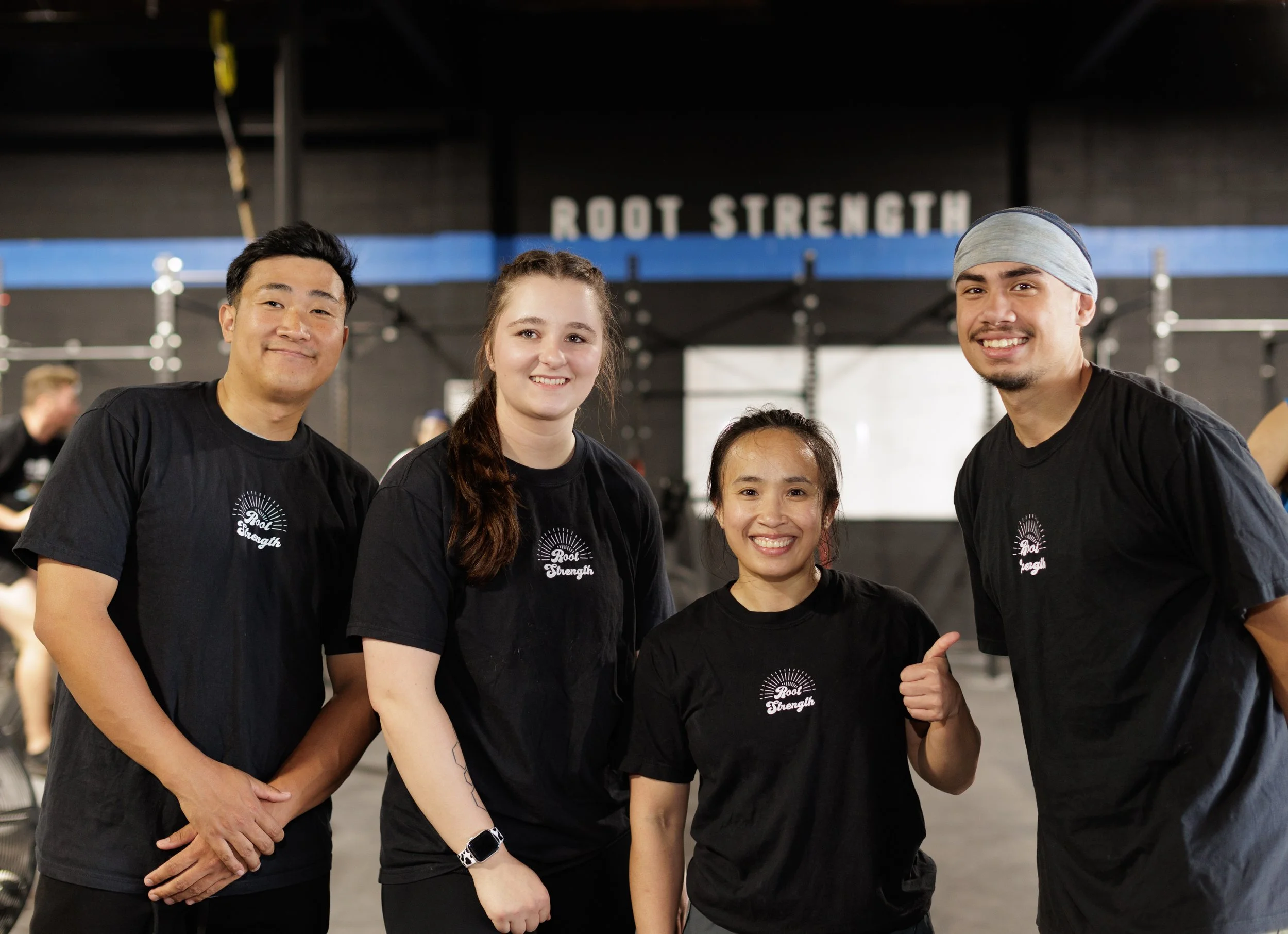
Root Physical Therapy operates inside Root Strength. Same building. Same floor. The treatment rooms are here, the barbells are here, and the coaches are here. That wasn't an accident — it was the entire point.
Your PT and your coach actually talk to each other
When one of our members is working with a Root PT clinician, that clinician can walk onto the gym floor and talk to the coach who programs their training. They can coordinate what movements to avoid, what to progress, and when someone is ready to return to full loading. This doesn't happen when your PT is in a medical office park 20 minutes away and your gym is somewhere else entirely.

Late-stage rehab uses real equipment
Most PT clinics have therapy tables, resistance bands, and maybe a cable machine. That's fine for early rehab. But late-stage rehab — the phase that actually prepares you to train again — needs the equipment you're going to train with. Barbells, sleds, kettlebells, pull-up bars, rowing machines. Root PT has access to our entire gym floor. When you're ready for heavier loading, you're doing it on the same equipment you'll use when you're back in class.
The transition from rehab to training is seamless
When a Root PT patient finishes their plan of care, they don't get handed a printout and sent home. They're already in the building where they'll continue training. Their PT can introduce them to a coach, their program can transition from rehab to strength training without a gap, and the 37% dropout rate that plagues the traditional model doesn't apply — because the environment never changes.
What the Research Actually Says
This isn't just a model we think makes sense. The evidence supports it directly.
A 2025 systematic review and meta-analysis published in the American Journal of Sports Medicine (Chen et al.) analyzed 16 randomized controlled trials and found that strength training reduces overall sport injury risk by 30%. For specific injuries, the numbers are even more striking: hamstring injuries were reduced by 63% in athletes who followed strength-based injury prevention programs.
Separately, research on exercise adherence after PT discharge consistently shows that patients who have access to a supervised exercise environment after discharge maintain their gains at significantly higher rates than those who are sent home with a printout. The problem has never been that people don't want to do their exercises — it's that the traditional model removes all the structure and support at exactly the moment they need it most.
And a meta-analysis on exercise-based rehabilitation across musculoskeletal conditions found that active, exercise-based rehab produces better long-term outcomes than passive treatment for virtually every condition studied — low back pain, knee injuries, shoulder dysfunction, post-surgical recovery. The gym isn't just where you train. For rehab purposes, it's the most effective clinical environment available.
The gym isn't just where you train. For rehab purposes, it's the most effective clinical environment available — and having your PT in the same building as your coach is how you close the gap between "cleared" and "actually ready."
What This Means for You as a Root Strength Member
Injury prevention is built into your membership
Because Root PT is on-site, you don't have to wait until something becomes a serious problem before getting it looked at. That shoulder that's been bothering you for two weeks? Walk over and talk to a PT between classes. Catching things early — before they become injuries that require time off — is one of the biggest advantages of having PT in the same building.
If you do get hurt, you don't have to leave
Your rehab happens in the same building as your training. You don't need to find a clinic, figure out scheduling, or navigate a completely separate system. Root PT accepts most major insurance (Premera, Regence, BCBS, Aetna, Anthem), and Washington state has direct access — no doctor's referral required.
Your return to training is coached, not guessed
The hardest part of coming back from an injury isn't the rehab. It's figuring out what you can do in the gym when you're cleared but not fully confident. When your PT is in the same building as your coach, that transition is managed collaboratively. You don't have to guess what's safe — the people who treated you and the people who train you are coordinating your return.
Root Physical Therapy + Root Strength + Muok Boxing — all in the same building at 6332 6th Ave S, Georgetown. Your PT talks to your coach. Your rehab uses real training equipment. Your return to activity happens where you actually train.
The PT Team on Site
Root Physical Therapy has four clinicians on staff — all with specializations that directly serve active adults and athletes:
Dr. Joe Rellora, PT, DPT — 10+ years of clinical experience. Dr. Andy Le, PT, DPT — sports and combat athlete rehabilitation, also a Muay Thai coach at Muok Boxing. Dr. Lorrainne Dizon, PT, DPT — orthopedic residency trained, pelvic health, and pain science. Bobby Green, PTA — sports and orthopedic rehabilitation, Muay Thai coach, MET/PRI/PNF certified.
Two of the four clinicians are also Muay Thai coaches in the same building. They don't just understand sport demands in theory — they coach contact sports and treat the injuries that come with them.
The Bigger Picture
We didn't put a PT clinic in our gym because it's convenient. We did it because the evidence says this is how rehab should work. The discharge gap is real. The dropout rates are real. The re-injury rates are real. And the solution — integrating physical therapy with the environment where people actually train — produces better outcomes across every metric that matters.
If you're a Root Strength member who's been dealing with pain and wondering whether you should get it looked at, the answer is yes — and you don't have to go anywhere else to do it. If you're not a member but you're looking for a PT clinic that understands what it means to train seriously, Root Physical Therapy is accepting new patients.
No referral required. Most major insurance accepted — Premera, Regence, BCBS, Aetna, Anthem. On-site at Root Strength Georgetown. Learn more about our PT department.
Want to Train With Us?
Two weeks of unlimited access to our full schedule — coached classes, open gym, and on-site physical therapy when you need it. Georgetown, Seattle.
Start 2-Week Trial