
The Sauna at Root Strength — What It Actually Does for Your Training
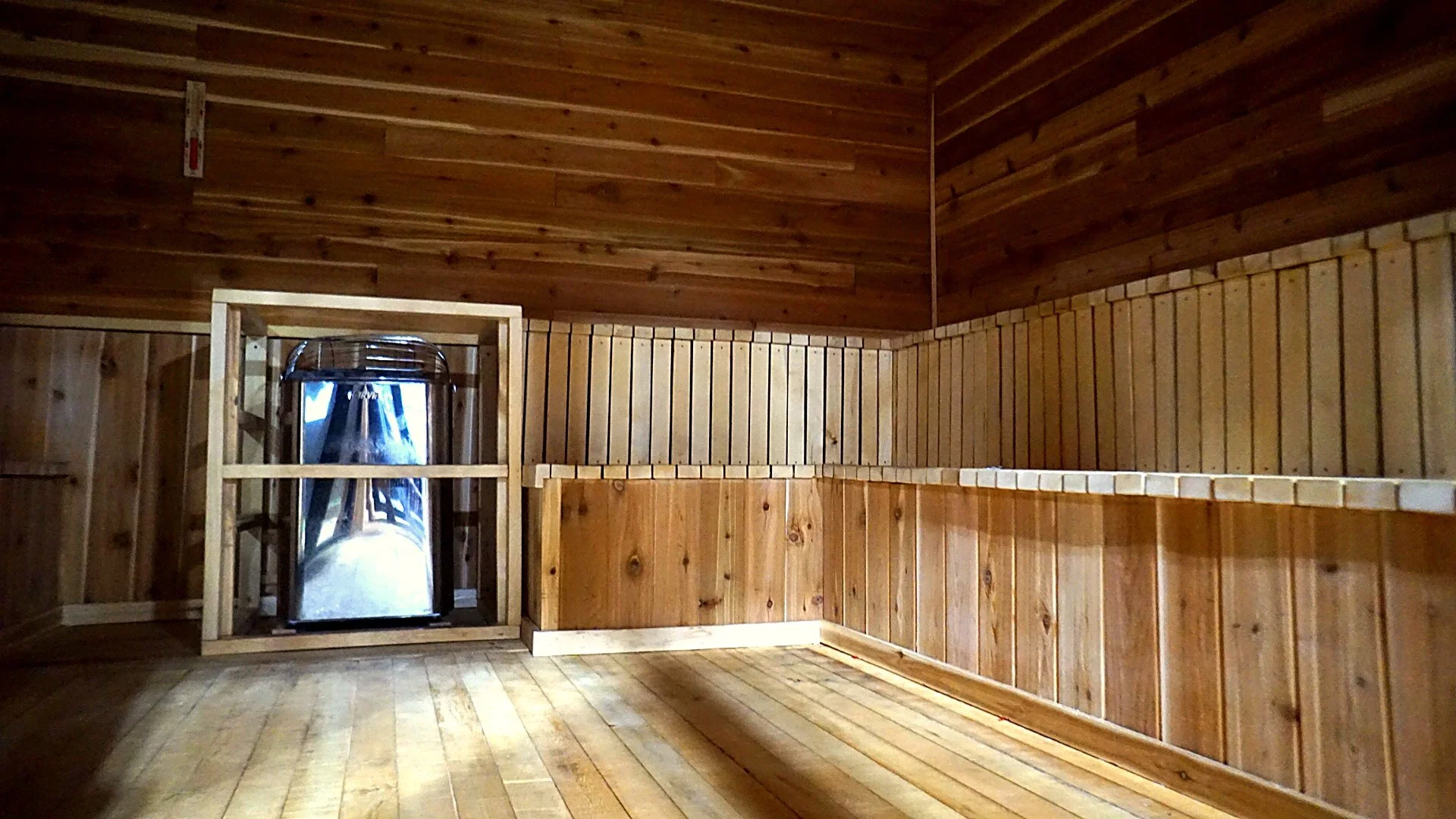
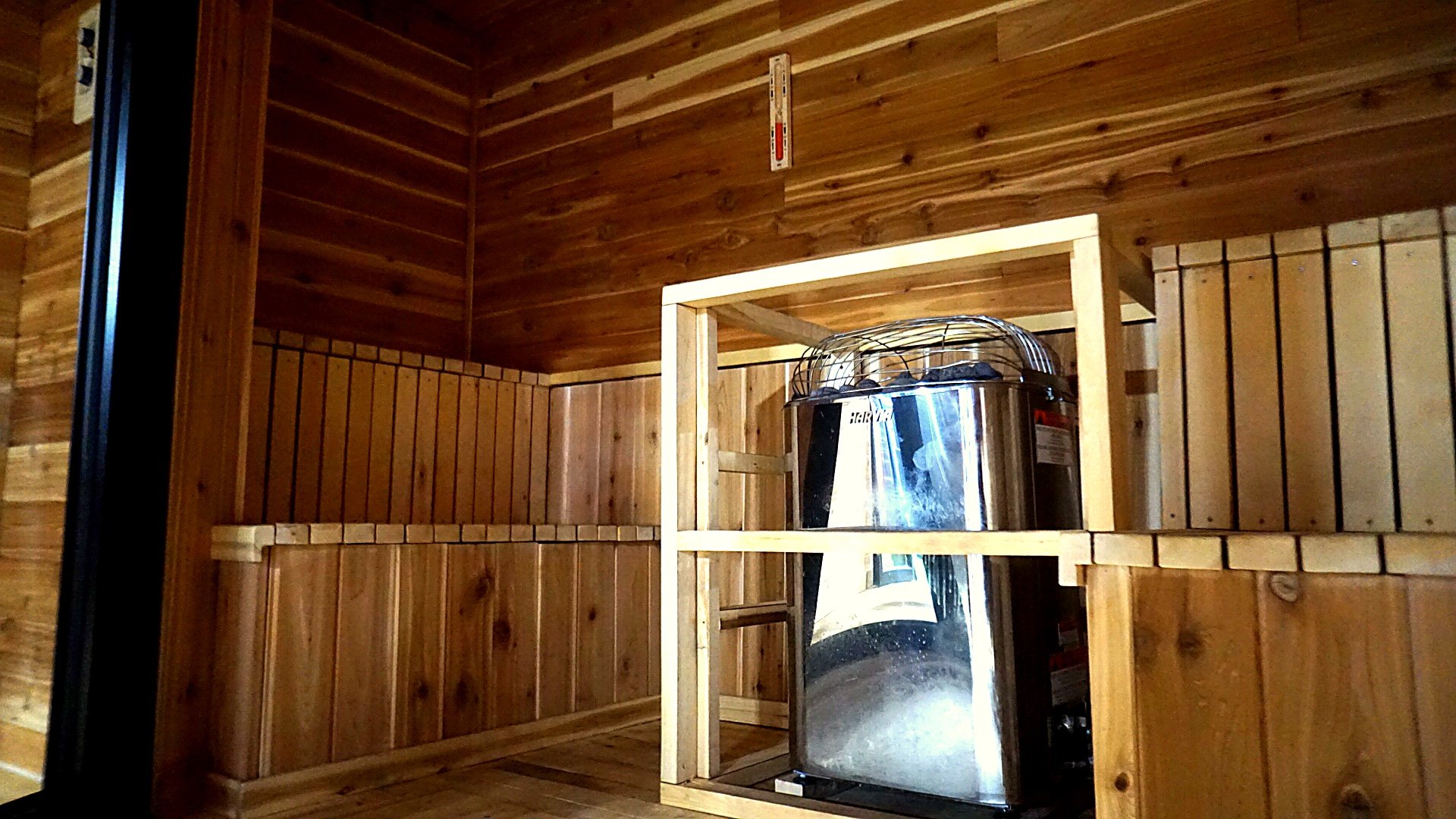
When we designed the Root Strength facility in Georgetown, the sauna wasn't an afterthought — it was part of the plan from the beginning. A custom-built, 12-person Finnish-style sauna, integrated into the gym, accessible to every member after every session. Not a single-person infrared pod in the corner. Not a steam room. A proper sauna that fits a training community.
The reason is the research. Over the past decade, the evidence on sauna use for athletic recovery, cardiovascular health, and long-term mortality risk has moved from "promising" to "substantial." The landmark Finnish cohort studies, published in JAMA Internal Medicine, followed over 2,300 adults for more than 20 years and found dose-dependent reductions in cardiovascular and all-cause mortality with regular sauna use. More recently, a 2025 systematic review in Sports Medicine — Open examined the effects of post-exercise heat exposure on recovery and training-induced performance adaptations across randomized controlled trials. The evidence is strong enough that sauna is no longer a wellness perk — it's a legitimate training tool.
Here's what it does, how to use it, and who should be cautious.

What the Sauna Actually Does — The Four Evidence-Based Benefits
1. Post-training recovery
The most immediate benefit for gym members. Sauna bathing after training produces measurable improvements in recovery markers — reduced muscle soreness, improved neuromuscular performance in subsequent sessions, and subjective recovery ratings. The 2025 systematic review in Sports Medicine — Open confirmed that post-exercise heat exposure improves both subjective recovery and objective performance markers, with benefits observed after both endurance and resistance training. The mechanism involves increased blood flow to recovering tissue, enhanced clearance of metabolic byproducts, and — notably — the stimulation of heat shock proteins, which play a role in cellular repair and muscle protein synthesis.
For our members who train 3–5 times per week, the practical takeaway is straightforward: 15–20 minutes of sauna after your training session accelerates the recovery process between sessions. You go in sore, you come out less sore, and you show up to your next session in better shape to train hard.
2. Cardiovascular conditioning
Sauna bathing produces cardiovascular responses similar to moderate-intensity exercise. Heart rate increases to 100–150 bpm during a typical session, cardiac output increases, and blood vessels dilate. Repeated exposure produces adaptations: improved endothelial function (how well your blood vessels dilate and constrict), reduced resting blood pressure, and improved cardiac efficiency. The Finnish cohort data showed that individuals with high cardiovascular fitness who used the sauna 3–7 times per week experienced a 69% lower risk of sudden cardiac death compared to those with low fitness and infrequent sauna use. The two — fitness and heat exposure — compound each other.
For our members, this means the sauna isn't just recovering you from today's session — it's contributing to the cardiovascular base that supports everything else you do in the gym.
3. Long-term health and longevity
The Laukkanen cohort studies are the most cited body of evidence here, and the findings are remarkable in their consistency and magnitude. Published in JAMA Internal Medicine with a 20+ year follow-up of 2,315 middle-aged men in Finland, the data showed a clear dose-response relationship between sauna frequency and mortality risk. Compared to those who used the sauna once per week, those who used it 4–7 times per week had a 63% lower risk of sudden cardiac death, a 50% lower risk of fatal cardiovascular disease, and a 40% lower risk of death from any cause. Subsequent studies from the same research group extended these findings to stroke risk, hypertension, and dementia.
The Mayo Clinic's 2023 review of the evidence concluded that the combination of sauna bathing with other lifestyle factors — particularly exercise — confers additional health benefits beyond either alone. For members who are already training consistently, adding regular sauna use extends the health benefits of the work they are already doing.
4. Mental health and stress reduction
Sauna bathing triggers a robust endorphin response — the same class of neurochemicals released during exercise. Research has associated regular sauna use with reduced risk of psychotic disorders and improved subjective well-being. The practical version: members who use the sauna after training consistently report sleeping better, feeling less stressed, and recovering mentally from the day — not just physically from the workout. In a community like ours, the sauna also functions as a social space — 15 minutes of decompression with training partners after a hard session is a different kind of recovery than sitting in your car.
The sauna isn't a luxury feature. It's a training tool with a deeper evidence base than most supplements, recovery gadgets, or wellness trends on the market. The difference is that the evidence comes from 20+ year cohort studies published in JAMA — not from influencer testimonials.
How to Use the Sauna Around Your Training
The research supports specific protocols — not just "sit in the sauna until you feel like getting out." Here's what we recommend for our members based on the current evidence.
- Enter the sauna within 30 minutes of finishing your training session — the sooner the better for recovery benefit
- Stay for 15–20 minutes. Longer is fine if comfortable, but the research shows diminishing returns beyond 20 minutes for recovery purposes
- Hydrate before and after — you will lose a meaningful amount of fluid through sweat. A good baseline is 16–24 oz of water before entering and another 16–24 oz after
- Cool down gradually after exiting — a few minutes of sitting in the open air before showering is enough. Cold plunge protocols have their own evidence base but are separate from the sauna recovery protocol
- The Laukkanen research found the strongest associations at 4–7 sessions per week — meaning the sauna works best as a daily or near-daily practice, not an occasional treat
- Sessions of 19+ minutes showed greater benefit than sessions under 11 minutes — duration matters
- Temperature in the studies averaged approximately 174°F (79°C) — our sauna operates in this range
- You do not need to pair every sauna session with a training session — non-training-day sauna use still provides cardiovascular and longevity benefits
- Endurance athletes competing in warm environments benefit from heat acclimation — the body adapts to manage heat more efficiently, including earlier onset of sweating, reduced core temperature during exertion, and expanded plasma volume
- Post-exercise sauna bathing for 25–30 minutes daily over 10–14 days is a well-established heat acclimation protocol
- Particularly relevant for runners and endurance athletes training in Seattle's mild climate who then compete in warmer conditions
The simplest version: use the sauna after class, 15–20 minutes, as many days per week as you train. That's the dose the evidence supports, and our facility is designed to make it easy — the sauna is steps from the training floor, it's included in your membership, and it fits 12 people so you don't have to wait in line.
Who Should Be Cautious
Sauna bathing is safe for most healthy adults. The Finnish research — conducted on a population where sauna use is culturally universal — consistently reports low rates of adverse events. That said, specific populations should exercise caution or consult a clinician.
Individuals with uncontrolled hypertension, recent cardiac event or unstable cardiovascular disease, pregnancy (sauna use during pregnancy is generally advised against due to insufficient safety data), active infection or fever, recent alcohol consumption (sauna and alcohol is a documented risk combination — do not combine them), or any condition where elevated core temperature is contraindicated. If you are unsure, our on-site PT team at Root Physical Therapy can assess whether sauna use is appropriate for you — they're in the same building.
Why We Built It Into the Gym
Most gyms in Seattle either don't have a sauna or have a small, single-occupancy unit tucked away as a token amenity. We built a 12-person custom sauna because the evidence supports making heat exposure a consistent part of training — and consistency requires accessibility. If it's hard to get to, or you have to wait, or it doesn't fit your post-class window, you won't use it. If it's 20 steps from the training floor, holds your entire class, and is included in your membership, you will.
The research is clear that the health and recovery benefits of sauna are dose-dependent — they compound with frequency. A sauna you use 4–5 times per week does fundamentally more for you than one you use once a month. We designed the facility to remove the barriers that prevent consistent use.

For the full clinical perspective on sauna and recovery — including the specific physiological mechanisms, pain management applications, and who should be cautious from a medical standpoint — see the companion post from our PT team: Sauna and Recovery — A Clinical Guide from Root Physical Therapy.
Our PT team at Root Physical Therapy — located in the same building as Root Strength — can assess whether sauna use is appropriate for your specific health situation and how to integrate it with your recovery plan.
Train. Recover. Repeat.
Two weeks of unlimited access to our classes, our coaching, our community — and our 12-person custom sauna. The full product, not an intro class.
Start 2-Week Trial →Why Most People Quit the Gym After 6 Weeks — And How to Not Be One of Them
If you've quit a gym before, you're in the majority. Industry data consistently estimates that roughly half of new gym members stop attending within the first six months — and the steepest drop-off happens in the first six weeks. January is the busiest month at every gym in Seattle. By March, it looks like December again.
The standard narrative is that these people lacked discipline, didn't want it enough, or just lost motivation. That narrative is wrong — and it's worth naming why, because understanding the actual reasons people quit is the only way to not repeat the pattern.
Here are the five reasons people actually quit, and the specific structural fix for each one.
The Five Real Reasons People Quit
The single most common reason people quit. They sign up, walk in, look around, do some machines, maybe hop on a treadmill, and leave feeling like they accomplished something. The second time is similar. By the third time, they realize they have no idea whether what they're doing is effective, can't see a path from where they are to where they want to be, and the uncertainty becomes uncomfortable enough to just stay home.
This is not a motivation problem. It's a programming problem. People who have a structured plan — a specific workout, specific exercises, specific progression — show up consistently because they know what they're doing when they get there. People without a plan rely on willpower for every single session, which is a resource that depletes.
Have a plan before you walk in the door. Either follow a structured beginner program (our beginner guide covers the options), hire a coach to write one for you, or join a gym where programming is built in — like ours. The plan removes the decision fatigue that kills consistency.
A gym membership is a passive product. Nobody notices when you don't show up. Nobody asks where you were on Wednesday. The treadmill doesn't care. Your membership fee comes out whether you go or not. For people who need external structure — which is most people — this passivity is the gap that opens the door to skipping days, then skipping weeks, then canceling.
This is why personal training retains clients better than open gym access, and why class-based gyms retain members better than equipment-access gyms. The accountability is structural, not willpower-dependent.
Choose a gym model that has built-in accountability: class schedules, coaches who know your name, training partners who notice when you're not there. At Root Strength, our coaches know every member. If you miss a week, someone notices. That's not surveillance — it's the social structure that keeps people coming back.
The January pattern. Someone who has not exercised in months signs up, commits to going five days a week, trains hard every session, is profoundly sore for a week, and by week three is physically and mentally exhausted. The body can't recover, the schedule is unsustainable, and the whole enterprise starts to feel punishing rather than rewarding.
The instinct is understandable — you want results, you're motivated, you go hard. But the body adapts to training stress over weeks and months, not days. Starting at a pace you cannot sustain is a reliable way to burn out before the adaptations have time to take hold.
Start with 2–3 sessions per week, not 5–6. Keep intensity moderate for the first month. Let your body adapt to the new demand before increasing volume. The people who train consistently for years are almost never the ones who went hardest in week one — they're the ones who started conservatively and built from there.
The first few weeks of a new exercise program produce visible, week-over-week improvement — mostly neurological, not structural, but it feels like fast progress and it's motivating. Around week 4–6, those rapid gains slow down. The scale stops moving as fast. The weights don't go up as dramatically. You look in the mirror and can't see as much change as you expected.
This is the single most dangerous moment for gym retention. The initial progress created an expectation of linear improvement, and when reality doesn't match, people interpret the plateau as evidence that the program isn't working. It is working — but the visible adaptation phase is slower and requires more patience than the neurological phase did.
Know that the plateau is coming before it arrives. Track objective metrics — weight on the bar, reps completed, measurements — rather than relying on feel. Recognize that weeks 4–8 are where the real work begins, not where it ends. If you're in a coached environment, your coach can show you the progress you can't see yourself.
Some people quit because the gym itself is wrong for them — not because they lack commitment. A beginner at a hardcore powerlifting gym feels out of place. An experienced lifter at a boutique studio feels underchallenged. An introvert in a loud, high-energy class format feels drained rather than energized. Someone who needs guidance at an open-floor gym with no coaching feels lost.
The gym industry tends to treat all gym-quitters as people who failed at commitment. Many of them failed at gym selection — they were in an environment that didn't match how they actually train, and the mismatch wore them down.
Try before you buy. Use trials — most coaching-led gyms in Seattle offer them (including ours). Pay attention to how you feel during and after class, not just during the sales pitch. The right gym should feel like a place you want to return to — not a place you have to force yourself into. For an honest breakdown of how to match gym tier to your reality, see our gym pricing guide.
People don't quit gyms because they lack discipline. They quit because the setup was wrong — no plan, no accountability, unsustainable pace, invisible progress, or the wrong environment. Fix the setup and consistency follows.
What the People Who Stay Actually Do Differently
After watching hundreds of members come through Root Strength over the years, the patterns among people who stay — the ones who are still training after 1, 2, 5 years — are remarkably consistent. They don't have more willpower. They have better structure.
They train on a schedule, not on motivation
The members who last long-term treat their training sessions like appointments — fixed in their calendar, not negotiable, not contingent on how they feel that day. Monday, Wednesday, Friday at 6 AM is a schedule. "I'll try to go this week" is not. Motivation fluctuates. Schedules don't.
They start conservatively and build
Consistently, the members who are still with us after two years are not the ones who came in the hottest in their first month. They're the ones who started at 2–3 sessions per week, added a fourth session after two months, and let intensity build gradually. Their trajectory is slow and upward. The fast starters flame out.
They find people to train with
The social component of training is underrated in fitness content and overrepresented in actual retention data. People who train with a partner, a class, or a community of regulars are dramatically more likely to stick with it than people who train alone. The obligation is social — you show up partly because people expect you to — and the reward is social too.
They address problems instead of training through them
The members who stay healthy long-term are the ones who come to a coach or to our on-site PT team when something hurts, rather than pushing through it until it becomes an injury that forces them to stop entirely. Managing a tweak in week 3 costs one modified session. Ignoring it costs weeks or months of recovery from an injury that didn't need to happen.
They redefine what "results" means
The members who stay don't typically stay because they achieved a specific physique goal. They stay because they discovered that training changes how they feel — their energy, their sleep, their confidence, their resilience. The aesthetic and performance improvements come, but the people who last are driven by the experience of training itself, not just its outputs.
The 12-Week Threshold — When It Stops Being Effort
Behavioral research on habit formation — particularly in exercise contexts — consistently identifies a threshold around 10–12 weeks of consistent practice where the behavior begins to feel automatic rather than effortful. Before this threshold, every session requires a conscious decision to go. After it, the decision is made — you just go. The default switches from "should I go?" to "of course I'm going."
This is why the first 12 weeks matter disproportionately. Everything in this post — the structured plan, the accountability, the conservative start, the plateau management, the right environment — is designed to get you through those 12 weeks. Once you're through them, the habit sustains itself.
The members who train with us for years all had a first 12 weeks. Most of them would tell you it wasn't easy. All of them would tell you it was worth it.
If you've quit a gym before, that is information about the setup — not about you. The discipline didn't fail; the structure did. If you're considering trying again, ask yourself which of the five reasons above was the real cause last time, and choose a starting point that addresses it. For most people, that means a gym where the plan, the accountability, and the community are built in — not bolted on as an optional add-on.
Where Root Strength Fits in This Picture
Our model is specifically designed around the five retention problems above. Small-group classes with capped attendance (so coaches actually know you). Structured programming that progresses over time (so you always know what to do). A schedule that builds consistency into the week rather than leaving it to chance. An on-site PT team that catches problems before they become injuries. And a community of training partners who notice when you're not there.
We're not trying to be the cheapest gym in Seattle — we've written honestly about what different gym tiers cost and why. We're trying to be the one you don't quit. That's what our model is built for, and it's the metric we care about most.
Try It Before You Commit
Two weeks of unlimited access to our schedule, our coaches, and our community. The real product, not an intro class. The best way to know if this is the right fit is to experience it — not to read about it.
Start 2-Week Trial →Strength Training for Runners in Seattle — What You're Probably Missing
Seattle is a running city. Rain, hills, and all — there is a massive running community here, and it's one of the most committed athletic populations we encounter as coaches. Runners train consistently, often year-round, and take their sport seriously.
What most Seattle runners do not do is lift. The reasons are predictable: fear of getting bulky, fear that it will slow them down, uncertainty about what to do, and — most commonly — the belief that running more will always produce more running improvement. All of these are wrong, and the evidence on this has become difficult to ignore.
This post covers what the research actually shows about strength training for runners, why the common objections don't hold up, and what a practical strength program for a runner looks like — including how to fit it around a running schedule without trashing your legs.
Why Runners Should Lift — The Evidence
The research on this has converged. Multiple systematic reviews and meta-analyses over the past decade have demonstrated consistent benefits of adding strength training to a running program. Three outcomes matter most:
Running economy improves
Running economy — how much energy it costs you to run at a given pace — is one of the strongest predictors of distance running performance, alongside VO2max and lactate threshold. Strength training improves running economy by 2–8% in trained runners. That translates directly into being able to hold a faster pace at the same effort, or the same pace at lower effort. The mechanism is improved neuromuscular coordination and tendon stiffness — your legs produce and transfer force more efficiently per stride.
Injury rates decrease
Running injuries are overwhelmingly overuse injuries — they result from repetitive loading that exceeds tissue capacity. Stronger muscles, tendons, and bones have higher load capacity. A 2018 meta-analysis found that strength training reduced sport-related overuse injuries by approximately 50%. For runners specifically, the most common injuries — runner's knee (patellofemoral pain), IT band syndrome, Achilles tendinopathy, shin splints, and plantar fasciitis — all have hip and lower leg strength deficits as identified risk factors. Build the capacity, reduce the injury.
Performance at the end of races improves
Fatigue-related pace decline in the second half of a race is partly cardiovascular and partly muscular. Stronger muscles fatigue slower under submaximal repetitive loading. Runners who strength train show less pace decline in the final third of endurance events — the part of the race where most people fall apart.
The question is no longer whether runners should strength train. The evidence is clear that they should. The question is what they should do, how much, and how to fit it around a running schedule without creating more fatigue than benefit.
Common Runner Objections — And Why They Don't Hold Up
The type of strength training recommended for runners does not produce meaningful hypertrophy. Heavy, low-rep strength work builds force production without adding mass. Runners who lift do not gain weight unless they are also eating in a significant caloric surplus.
Every meta-analysis examining strength training in runners has found improved performance without significant changes in body mass. The adaptation is neurological and structural — better force production per stride, not bigger muscles.
More running produces more running improvement — up to a point. Beyond that point, additional volume increases injury risk without proportional performance gain. Strength training fills the gap that additional running volume cannot.
Running builds cardiovascular fitness. Strength training builds the musculoskeletal capacity to express that fitness without breaking down. They are complementary, not competing.
Two 30–45 minute sessions per week is sufficient for measurable benefit. That is 60–90 minutes of total weekly time investment. Most runners spend more than that on foam rolling and stretching with less return.
The effective dose is lower than most runners assume. Short, heavy sessions twice a week produce the measurable improvements the research describes. You don't need a bodybuilder's schedule.
The research specifically supports heavy resistance training — meaning loads heavy enough that you can only complete 3–6 reps. Bodyweight work, bands, and yoga have value for mobility and general conditioning, but they do not produce the neuromuscular adaptations that drive running economy improvements.
The strength training that improves running performance involves barbells, dumbbells, and real external load — not the lightweight circuit class. The load matters.
What a Strength Program for Runners Actually Looks Like
This is where most running-adjacent strength content fails — it describes the "why" without addressing the "what." Here is the practical framework we use with runners at Root Strength.
The principles
Heavy, not high-rep. The goal is force production, not muscular endurance. You already have muscular endurance from running. Sets of 3–6 reps at challenging loads produce the neurological and structural adaptations that transfer to running economy. Sets of 15–20 reps at light loads do not.
Lower body dominant, with upper body for balance. Running is a lower body activity. Your strength program should reflect that — roughly 70% lower body, 30% upper body. Upper body work matters for posture, arm drive, and thoracic stability during long efforts, but it is supplementary.
Bilateral and unilateral. Running is a single-leg activity. Your strength program should include both bilateral work (squats, deadlifts) for maximum force development and unilateral work (single-leg deadlifts, split squats, step-ups) for sport-specific transfer and asymmetry correction.
Scheduled around key runs, not the other way around. Strength sessions should land on easy run days or rest days — never before a speed session or long run. The most common mistake runners make with strength training is doing it at the wrong time and then blaming lifting for making them tired on their important runs.
The two-day framework
- Romanian deadlift or trap bar deadlift — 3 sets × 5 reps. The most important exercise for runners. Builds posterior chain capacity that directly protects against hamstring strains and improves hip extension power
- Single-leg Romanian deadlift — 3 sets × 6 each side. Unilateral transfer, balance, and hamstring/glute strength on one leg
- Walking lunges or reverse lunges — 3 sets × 8 each side. Single-leg strength through range
- Calf raises (heavy, slow) — 3 sets × 8. Crucial for Achilles and plantar fascia health
- Plank or pallof press — 2 sets × 30 seconds. Core anti-rotation for trunk stability during running
- Back squat, front squat, or goblet squat — 3 sets × 5 reps. Quad and glute strength under load. See our hip mobility for the squat post if depth is limited
- Step-ups (weighted) — 3 sets × 8 each side. Single-leg quad strength with direct hill-running transfer
- Hip thrust or glute bridge — 3 sets × 8. Glute max strength in a hip-extension position. The primary power muscle for running
- Dumbbell row — 3 sets × 8 each side. Upper back and posture. Prevents the thoracic collapse that happens in the final miles of a long run
- Overhead press or push-ups — 2 sets × 8. Arm drive and shoulder stability
The program above is a framework, not a fixed plan. We modify it based on the runner's injury history, current training phase, race schedule, and what the PT team identifies in assessment. A runner in a base-building phase does different loading than a runner 6 weeks out from a marathon. The principles are the same; the execution changes.
How to Fit Strength Training Around Running
The scheduling question is the practical barrier most runners hit. Here is the framework:
Option A — Lift on easy days. Run easy in the morning, lift in the afternoon or evening. Or reverse the order. The easy run is not a priority session; it can absorb the fatigue from lifting without affecting your training quality.
Option B — Lift on rest days. If you prefer to separate completely, put your two strength sessions on your non-running days.
Option C — Consolidate hard days. Some runners prefer to put all the stress on the same day: run hard in the morning, lift in the afternoon. This creates harder recovery days but also creates truly easy days. This is the model many elite programs use.
The one scheduling rule that does not change: never lift heavy the day before a key session — speed work, tempo run, or long run. The fatigue from lifting will compromise the quality of the run that matters most.
What about race week?
Stop lifting 7–10 days before a goal race. The acute fatigue dissipates, the chronic strength gains remain. You will feel fresh and strong on race day. Resume lifting after recovery from the race — usually 1–2 weeks post-event.
The Runners Who Get Injured the Least
After years of coaching runners alongside our PT team, the pattern is consistent: the runners who get injured the least are the ones who lift consistently and address issues early. Not the ones who run the lowest mileage. Not the ones with the fanciest shoes. Not the ones who stretch the most. The ones who built the capacity to handle the load their running demands.
If you have been running for years and have never touched a barbell — or if you have been dealing with recurring injuries that keep pulling you off the road — this is the missing piece. The research is clear, the dose is manageable, and the return on a 60–90 minute weekly investment is substantial.
For a deeper dive on the beginner side of strength training — including what to learn first, how to find a gym, and the honest first-90-days timeline — see our beginner's guide to strength training in Seattle. For the cost breakdown of different gym tiers, see our gym pricing post.
Run Faster. Break Less.
Two weeks of unlimited access to our coaching-led classes. Real programming, real coaches, and a team that understands how to build strength around a running schedule — not in spite of one.
Start 2-Week Trial →Strength Training for Beginners in Seattle — Where to Actually Start
If you're an adult in Seattle who knows you should be doing some kind of strength training but has never actually started, you're not alone — and you're not behind. Most adults don't lift. The research on long-term health is overwhelming about why this matters, but the path from "I should be doing this" to "I'm doing it consistently" is genuinely difficult to navigate. The internet is full of contradictory advice, gyms are intimidating to walk into, and most beginner programs are written by people who forgot what it was like to be a beginner.
This is the post we wish we'd had when we started. It's about the four things that actually matter when you're beginning, the most common reasons people quit in the first eight weeks, and how to find a starting point in Seattle that matches where you actually are — not where the internet thinks you should be.
Why Most Adults Don't Start (Even When They Want To)
Before getting to the practical stuff, it's worth naming what actually keeps people from starting. The reasons are remarkably consistent across the new members who come through our doors.
"I don't know what to do." The single biggest barrier. Walking into a gym without a plan is genuinely uncomfortable, and the YouTube/Instagram fitness landscape gives you fifty contradictory plans, all of which assume you know what you're doing already.
"I'll embarrass myself." The fear that everyone in the gym will be watching and judging. This fear is universal and almost entirely unfounded — experienced lifters are profoundly uninterested in what beginners are doing — but it's still a real psychological barrier.
"I'm not in good enough shape to start." A category error that makes more sense the more you say it out loud and less sense the more you think about it. You don't get in shape and then start. You start and then get in shape. But people genuinely believe this needs to happen in the other order.
"I'll just hurt myself." The fear of injury. Real, but solvable — and the solution is more guidance, not less activity.
"I tried before and it didn't stick." The most honest reason. People who've quit before are often hesitant to try again. Usually they were in the wrong environment, with the wrong program, doing it for the wrong reasons. The fact that it didn't stick last time is information about the setup, not about the person.
The best gym in the world doesn't help if it's wrong for where you are. The right starting point matches your current reality — not the version of yourself you wish you were already.
The Four Things That Actually Matter When You're Starting
Strip away everything else, and beginner strength training comes down to four pillars. Most beginner failures trace to weakness in one or more of these — not to inadequate program design.
Two times a week is the minimum effective frequency for measurable strength gains in untrained adults. Three times is better. The specific exercises matter much less than whether you actually do them, repeatedly, over a long enough period of time. Most beginners overcomplicate the program and undercomplicate the showing-up.
This is the single most predictive variable for whether someone will still be training in six months. Start with whatever frequency you'll actually maintain — even if that's just twice a week — and let consistency build from there.
For your first 8–12 weeks of training, the goal is not to lift heavy. It's to learn movement patterns — how to squat without your knees collapsing inward, how to deadlift without your lower back doing the work your hips should be doing, how to press without your shoulders shrugging up. These patterns are the foundation. Built well, they let you train hard for decades. Built poorly, they cause the injuries that send people to physical therapy and out of the gym.
This is where coaching attention pays off most. A coach watching you move can correct a hip shift in a squat that you'd never see yourself, and that single correction matters more for your long-term progress than any specific exercise selection.
Strength training works because the body adapts to demands placed on it. When you add a small amount of difficulty over time — slightly heavier weight, one more rep, one more set, slightly slower tempo — your body responds by getting stronger to handle it. Without progression, your body has no reason to change, which is why people who do the same workout indefinitely plateau quickly.
Progressive overload doesn't have to be aggressive. For beginners, adding 5 pounds to a lift every 2–3 weeks is plenty. The point is that the trajectory is upward over time. This is also where most self-coached beginners get stuck — they don't have a system for tracking and progressing, so they just do the same thing week after week.
Strength is built during recovery, not during training. The training session creates the stimulus; the adaptation happens while you sleep, eat, and rest. New lifters frequently train too hard, too often, with too little recovery, and then quit when they feel constantly exhausted and beat-up. This is preventable.
Sleep matters most. Eating enough protein matters next. Spacing your sessions so you're not training maximally three days in a row matters third. None of this is exciting, but it's what separates beginners who progress from beginners who burn out.
The Movements You Should Actually Learn First
Forget program splits, machine vs. free weights, and the bodybuilder vs. powerlifter debate. As a beginner, you'll get the most return on time invested by learning the basic human movement patterns. Master these, and any strength training program in any context will work for you afterwards.
Squat pattern — sit down and stand up under load. Goblet squats, then back squats or front squats. The most important lower-body pattern you'll learn. Hip and ankle mobility matters here — see our companion piece on hip mobility for the squat.
Hinge pattern — bend forward at the hips, not the back. Romanian deadlifts, conventional deadlifts, kettlebell swings. The most important pattern for protecting your lower back over a lifetime, and the one most untrained adults are weakest at.
Push pattern — push something away from you. Push-ups, dumbbell press, bench press, overhead press. Builds chest, shoulders, and triceps. Easy to learn, easy to progress.
Pull pattern — pull something toward you. Rows of all kinds, pull-ups eventually. The pattern most untrained adults are most deconditioned in. Posture, shoulder health, and back strength all live here.
Carry pattern — pick something heavy up and walk with it. Farmer's carries, suitcase carries. Builds grip, core, and full-body integrity. Underrated and excellent for beginners.
These five patterns, performed twice per week with progressive load over months, will produce a stronger, more capable body than any complicated split program ever could for someone in their first year of training.
Common Beginner Myths — And What's Actually True
The amount of bad information aimed at beginners is staggering. The most persistent myths:
You don't. Strength training improves body composition more effectively than cardio alone for most people. Cardio is a supplement to a strength routine, not a prerequisite.
Muscle is metabolically active tissue. Building it improves your resting metabolism, body composition, and long-term health more than running ever will on its own.
Building visible muscle requires years of dedicated training, specific eating, and frequently genetic luck. It does not happen by accident. It does not happen quickly.
Muscle, in moderate amounts, creates the shape people associate with "toned." That look is built through strength training. Cardio alone produces a smaller, softer version.
People in their 60s, 70s, and 80s build measurable strength when they start training. The gains are slower than at 30, but they're real and they meaningfully improve quality of life.
The strongest evidence for the longevity benefits of resistance training is in older adults. Muscle mass and bone density both protect against the things that send older adults into decline. Starting at 50 is not too late. Starting at 70 is not too late.
You can learn what an exercise looks like on YouTube. You cannot learn what it feels like to perform correctly without an experienced eye on your body. Form correction is the difference between a productive squat and a knee injury.
The reps you do without feedback are reinforcing whatever pattern you're producing — including the bad ones. Get coaching attention early, then YouTube becomes useful for refinement. Reverse the order and YouTube actively works against you.
The Three Paths Beginners Actually Choose in Seattle
If you're starting from zero in Seattle, you have roughly three viable paths. None is inherently better than the others — each one matches a different starting reality.
Path 1 — Hire a personal trainer for 8–12 weeks
The fastest path to good form, but the most expensive. A 1-on-1 personal trainer at a Seattle gym will run you $80–$150 per session. Two sessions per week for two months is around $1,500. The advantage is highly personalized attention. The disadvantage is cost, scheduling rigidity, and the fact that you typically don't graduate into a community of training partners — you just stop seeing your trainer when the budget runs out.
Path 2 — Join a coaching-led small-group gym
The path most beginners we see at Root Strength end up choosing. Small classes (typically 6–12 athletes per coach) with structured programming, real coaching attention, and a community of training partners. Cost is meaningfully lower than personal training but still includes coaching. You don't have to design your own workouts. The structure handles consistency for you. This is what we offer, and it's why we wrote this post — but it's the right choice only if your starting reality matches it.
Path 3 — Self-direct at a chain gym
The cheapest path, and a viable option for people who genuinely have the discipline to follow a program independently. Resources like Starting Strength, StrongLifts 5×5, or the r/Fitness wiki are legitimate — they describe sound training. The honest tradeoff: most beginners who try this path don't sustain it. Without external structure, accountability, or feedback, the program tends to drift into "I'll go when I feel like it," and after a few weeks of that, it stops happening. If you have a track record of self-directed exercise, this can work. If you don't, it's likely to be the most expensive path measured by results-per-dollar.
Be honest about which path matches your reality. We tell people during their 2-week trial the same thing: if you're someone who's lifted consistently before and just needs equipment access, our model is overkill for you. If you've quit gyms before, want real progression, and value coaching, we're the right fit. We'd rather be honest about that on day one than collect a membership fee and watch you not show up.
The First 90 Days — What to Actually Expect
Most beginner content sells you on the long-term outcomes — "look like this in a year!" — without describing what the actual process looks like. Here's the honest version of what your first three months will include.
Weeks 1–2 — Discomfort and discovery
The first sessions are uncomfortable. Movements feel awkward, you're sore in ways you didn't know existed, and you'll wonder if this is for you. This is universal. The soreness fades within a week or two as your body adapts. The awkwardness fades with reps. By week 2, most beginners report that they're starting to look forward to sessions instead of dreading the unfamiliarity.
Weeks 3–6 — Visible neurological gains
You'll be able to do more than you could in week one — heavier weights, more reps, better form. This is largely neurological at this stage; your nervous system is learning to recruit muscle more efficiently. The gains feel significant because they are, but they're not yet driven by muscle growth — that takes longer. This is the most motivating phase of beginner training. Use it.
Weeks 6–12 — The plateau and the actual work
Around the 6-week mark, the rapid early gains slow down. This is not a sign that anything is wrong. It's where neurological adaptation has caught up and actual muscle growth begins, which is a slower process. People who quit usually quit here, because the "fast progress" feeling fades. People who continue past this point are the ones who build something that lasts.
Months 3+ — Real change starts to compound
Three months in, the changes are no longer subtle. Body composition shifts visibly, strength improvements are objective and measurable, and — usually most importantly to people — the experience of being in your body changes. Posture, energy, sleep, and resilience all show measurable improvement by this point. This is when most members stop thinking about whether they should be training and start thinking about what they want to train for next.
Full access to our class schedule for two weeks. Real coaching, real programming, real members. The actual product, not an intro class. See our programs first if you want →
Common Mistakes Beginners Make in the First 90 Days
The same handful of mistakes account for most early failures. Knowing them in advance lets you avoid them.
Trying to do too much, too fast. The temptation is to go hard, train every day, and chase results. The result is exhaustion, soreness, and burnout by week 4. Two or three quality sessions per week with adequate recovery beats six rushed sessions every time.
Comparing yourself to people further along. The person next to you who's lifting twice your weight has been training for years. You're not behind. You're at the start. Comparison at this stage is almost always demoralizing and almost never useful.
Skipping warm-ups and mobility work. Beginners often treat warm-ups as wasted time. They're not. Five to ten minutes of warm-up reduces injury risk and improves performance noticeably. Skip them and you'll feel it within a few weeks.
Training through pain. Soreness — especially in muscles — is normal. Joint pain, sharp pain, or pain that gets worse with continued training is not. Beginners frequently push through warning signs that experienced lifters know to address. If something doesn't feel right, get it looked at — our on-site physical therapy team can assess what's happening before it becomes an injury that takes you out for months.
Quitting at the 6-week plateau. Already covered, but worth repeating because this is where most beginners quit. The plateau is real, it's normal, and pushing through it is the single most predictive thing you can do for your long-term success.
Where Root Strength Fits
If you're a beginner in Seattle and you've read this far, you probably have a sense of which path matches your reality. We're a fit for people who:
Want real strength training — not just cardio classes or generic gym access. Have tried self-directed routines and not maintained them. Want coaching attention without the cost of 1-on-1 personal training. Value a community of training partners over training alone. Are okay with a learning curve in exchange for actual long-term progress.
We're not a fit for people who already have the structure and discipline to train alone effectively, or who want a class environment that's primarily about cardio and group energy rather than strength development. Plenty of good options exist for both — they're just not us.
For more on how we compare to other Seattle gyms, see our guide to choosing a gym in Georgetown or our honest breakdown of gym pricing in Seattle.
Ready to Actually Start?
Two weeks of unlimited access. The full schedule. Real coaches, real programming, no sales process. The hardest part of beginner strength training is starting — this trial is built to make starting easy.
Start 2-Week Trial →How Much Does a Gym Cost in Seattle? An Honest Breakdown
Gym pricing is one of the most frustrating things to research in Seattle. Most gyms refuse to publish their rates, the ones that do publish make you decode bundles and add-ons, and the difference between a $20-a-month chain gym and a $250-a-month coaching facility looks — at first glance — completely irrational. It isn't. The price difference is real and it tracks something specific. But you have to know what you're actually paying for.
This post breaks down what gym pricing in Seattle actually looks like across every tier, what's included at each one, and — more importantly — how to figure out which tier matches what you're trying to accomplish. We'll be direct about where Root Strength fits in this landscape and where we don't.
Why Gym Pricing Is So Confusing
Three things make gym pricing harder to compare than it should be.
First, gyms sell different products under the same name. A "gym membership" at Planet Fitness gives you access to equipment in a room. A "gym membership" at a CrossFit affiliate gives you a coach, a programmed workout, a community, and a class schedule. Calling both of these "gym memberships" is technically accurate and practically misleading.
Second, most coaching-tier gyms don't publish their pricing. This is partly a sales tactic — they want you on a phone call where they can explain the value before you see the price — and partly a structural reality, because pricing depends on which programs you use, how often, and what's bundled. The result is that you can't easily comparison shop.
Third, the cost of a gym is not the same as the cost of getting in shape. The monthly membership is one input. The harder questions are: how often will I actually use it, will I make progress, will I get injured, and what does "getting in shape" actually cost me when I factor all of that in. We'll come back to this.
The Four Tiers of Gym Pricing in Seattle
Just about every gym in Seattle falls into one of four tiers. The price differences track the level of guidance, programming, and accountability you receive — not the quality of the equipment.
Access to a facility with equipment. Locker rooms. Sometimes group classes that are mostly cardio-based and run by part-time instructors. No programming, no coaching, no accountability. Examples in Seattle: Planet Fitness, LA Fitness, 24 Hour Fitness, your apartment building gym.
Best for: people who already know exactly what to do, can write their own programs, and stay motivated without external structure. A small fraction of the population.
Group classes — Pilates, yoga, spin, barre, HIIT — with instructors leading scripted workouts. Programming is class-by-class rather than progressive. Cost varies by drop-in vs. unlimited membership. Examples: SoulCycle, Pure Barre, [solidcore], Orangetheory, F45.
Best for: people who want a structured workout without thinking about it, and who enjoy the class-format experience. Cardio and conditioning skews. Strength development is limited at this tier.
Small-group classes (typically 6–15 people) led by coaches who watch your form, modify exercises for your body, and progress you over time. Programming is structured — not random. Coaches know your name, your goals, your history. Examples in Seattle include CrossFit affiliates, MADabolic, and dedicated strength training facilities. Root Strength is in this tier.
Best for: people who want real strength and conditioning progress, want coach attention, and value not having to figure out programming themselves.
A private coach designing a program specifically for you and supervising every rep. Most personalized option. Highest accountability. Highest cost. Typically billed per session rather than monthly. Two sessions per week at $100 each is $800/month.
Best for: people with very specific needs (rehab, sport-specific prep, post-injury return), people who can afford the cost, or people who genuinely won't show up without 1-on-1 accountability.
The right tier is the one that matches what you're actually trying to accomplish — not the cheapest one, and not the most expensive one. Most people who quit the gym in 6 weeks were in the wrong tier from day one.
What Each Tier Actually Costs You — Beyond the Sticker Price
The membership fee is the visible cost. The hidden costs vary by tier, and they often dominate the math.
The hidden cost of Tier 1 (cheap gyms)
The number that doesn't make it onto the marketing materials: roughly 50% of memberships at chain gyms go unused after the first six months. If you're paying $20/month and never going, you're paying $20/month for guilt. The other hidden cost is injury — without coaching, beginners frequently develop technique habits that lead to avoidable injuries, which then cost you in rehab fees, time off, and sometimes a complete restart. A $20/month gym membership is an excellent value if you use it. It's a much worse value if you don't.
The hidden cost of Tier 2 (boutique studios)
Drop-in pricing often makes Tier 2 look comparable to Tier 3 on paper. The hidden cost is per-class pricing models. A $35 drop-in class twice per week is $280/month — and that's at the low end. An unlimited membership at a boutique studio is often $200+ already. The other hidden cost is plateau: most Tier 2 classes don't progress you systematically, which means after the initial 8–12 weeks of fitness gains, your body adapts and you stop changing. People in this tier often switch between studios chasing novelty rather than building cumulative strength.
The hidden cost of Tier 3 (coaching gyms)
The sticker shock is real — paying $200/month is meaningfully different from paying $30. The actual hidden cost here is under-utilization. If your gym offers 100+ classes a month and you go twice a week, you're paying for capacity you're not using. People who get the most out of Tier 3 are people who attend 3–5 times per week. That said, the tradeoff is that Tier 3 typically includes things Tier 1 and Tier 2 don't: a coach who knows your body, programming that builds over time, and (in our case) on-site physical therapy access that prevents and addresses issues before they become injuries.
The hidden cost of Tier 4 (1-on-1)
The visible cost is the per-session fee. The hidden cost is scheduling rigidity — your training is locked to your trainer's availability, and missed sessions are often non-refundable. The other hidden cost: most personal training clients don't actually need 1-on-1 attention. They need some attention, programming structure, and accountability — which Tier 3 provides at a fraction of the cost. 1-on-1 is excellent for specific needs. It's overkill as a default.
What "Worth It" Actually Means
"Is this gym worth it?" is the wrong question. The right question is: does the cost match what I'm actually going to use, given how I actually behave?
Three honest filters that will tell you which tier fits:
If you've signed up at a chain gym in the past and stopped going within three months, the cheapest option is not actually the cheapest option. You're paying for unused capacity. Tier 3 with coach accountability is a better fit even though the monthly is higher.
If yes, Tier 1 might genuinely work — you're paying for equipment access and that's all you need. If no, you'll either flounder at Tier 1 or chase scripted workouts at Tier 2 without making real progress. Tier 3 solves this directly.
"Move my body and feel better" — Tier 1 or 2 is fine. "Get measurably stronger over time" — Tier 3. "Recover from injury or specific sport prep" — Tier 4 or Tier 3 with PT. Pricing without a goal target is just guessing.
If you're new to lifting and unsupervised, the probability of self-coached injury is meaningful. PT visits in Seattle without insurance run $150–$250 each. Six weeks of rehab can cost more than a year of Tier 3 coaching. It's worth doing this math honestly.
Where Root Strength Fits
We're a Tier 3 coaching-led gym in Georgetown Seattle. Our model is built around small-group classes (capped at 12 athletes per coach), structured progressive programming, and on-site physical therapy in the same building. We aren't trying to compete on price with Planet Fitness — we couldn't, and we don't want to. We compete on outcomes: members who get measurably stronger, train consistently, and don't get injured. See our full program list.
What's specifically included in a Root Strength membership:
- – 120+ small-group classes per month — strength training, conditioning, mobility
- – Coaching attention — coaches know your name, your goals, your form
- – Structured programming that progresses over time, not random workouts
- – On-site Root Physical Therapy — most major insurance accepted
- – Member access to Muók Boxing options for cross-training in Muay Thai
- – Free parking — Georgetown, not downtown
For current pricing, see our pricing page. We publish what we charge — there's no phone-call sales process to find out.
The most useful thing we can tell anyone shopping gyms in Seattle: the gym you'll succeed at is not always the cheapest one or the closest one. It's the one whose model actually matches how you train and what you need. If you've quit gyms before, that's data — it usually means you needed more structure than the gym provided. If you've stuck with a routine on your own for years, you might genuinely just need equipment access. Match the tool to the job.
How to Test Before You Commit
Almost every Tier 3 gym in Seattle offers some kind of trial. The reason isn't marketing — it's that the model only works when members actually use what they're paying for, and a trial is the only honest way for both sides to find out.
What to look for during a trial
Do the coaches know your name by the third class? If not, you're at a gym where the coaching attention isn't real. Move on.
Are corrections happening in real time? A coach who watches you do a deadlift and says "good job" without addressing your form is not coaching. They're supervising. Different product.
Is the programming structured? Ask what cycle the gym is currently running and what it's building toward. If the coach can't answer, the programming is improvised — you'll plateau.
How crowded are the classes? 6–12 athletes per coach is the sweet spot. 20+ means coaching attention is diluted. 4 or fewer might mean the gym doesn't have enough members to sustain its model long-term.
Does the trial actually let you try the real product? Some gyms run "intro classes" that don't reflect what real classes are like. A real trial gets you into the actual schedule with the actual members.
Two weeks of unlimited classes. The actual product, on the actual schedule, with the actual members. No phone-call sales process. See our pricing first if you want →
The Bottom Line on Gym Pricing in Seattle
Gym memberships in Seattle range from $20 a month to $300+ a month, and the price difference is real — but it's not about equipment. It's about coaching, programming, accountability, and whether the gym's model matches how you actually behave.
If you're disciplined, can write your own program, and have a track record of showing up consistently without external structure — Tier 1 is fine and probably the best value for you. If you've quit gyms before, want real strength progress, or know you train better with structure — the cost of Tier 3 is meaningfully lower than the cost of cycling through Tier 1 and Tier 2 memberships you don't end up using. And if you have specific needs that warrant 1-on-1, Tier 4 exists for a reason.
The most expensive gym membership in Seattle is the one you don't use. The cheapest one is the one that matches what you actually need.
Want to See What Tier 3 Actually Looks Like?
Two weeks. Full access. The real schedule, the real coaches, the real product. No sales call required to find out the price — see our pricing page first if that's what you'd like.
Start 2-Week Trial →