

Strength Training for Runners in Seattle — What You're Probably Missing
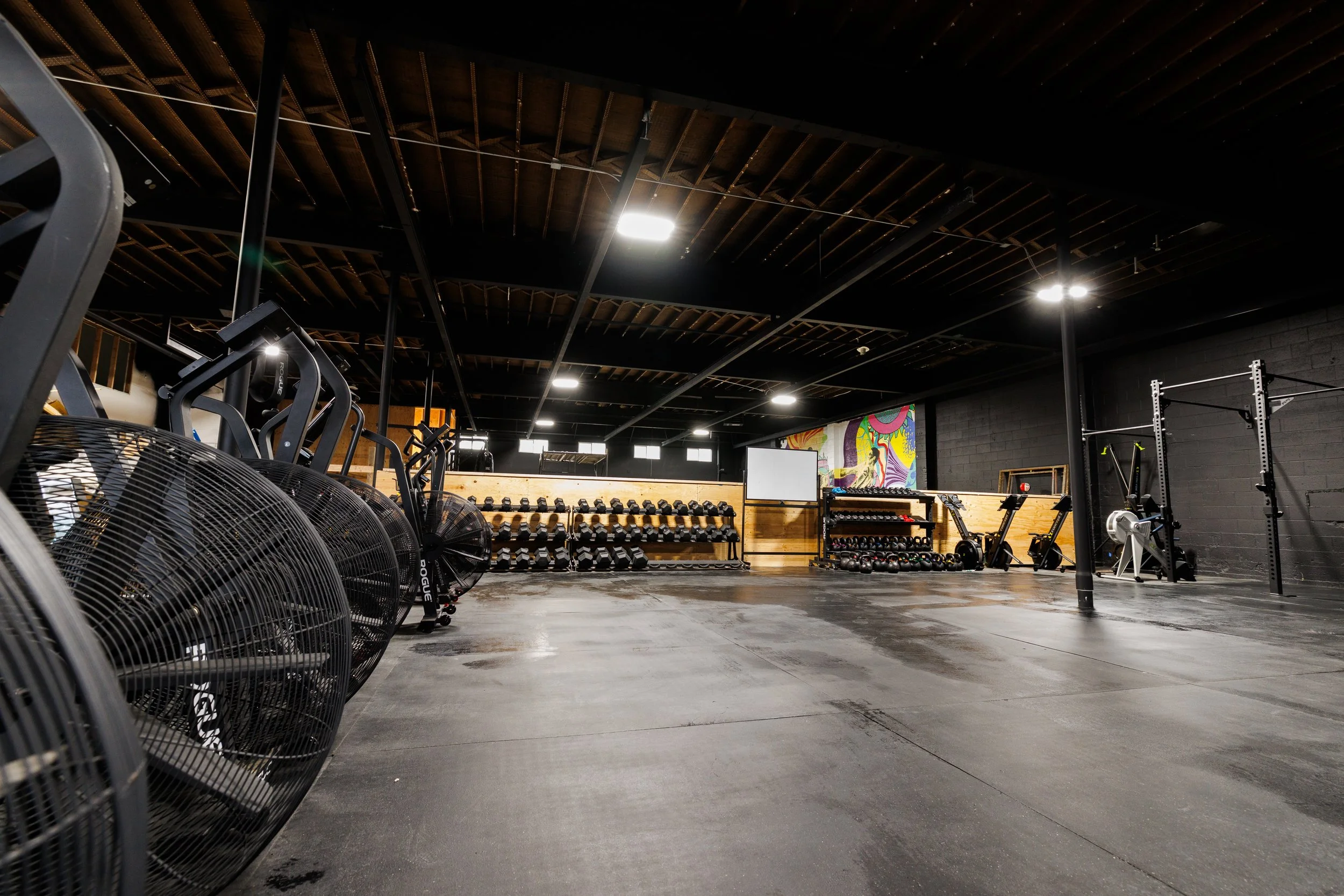
Seattle is a running city. Rain, hills, and all — there is a massive running community here, and it's one of the most committed athletic populations we encounter as coaches. Runners train consistently, often year-round, and take their sport seriously.
What most Seattle runners do not do is lift. The reasons are predictable: fear of getting bulky, fear that it will slow them down, uncertainty about what to do, and — most commonly — the belief that running more will always produce more running improvement. All of these are wrong, and the evidence on this has become difficult to ignore.
This post covers what the research actually shows about strength training for runners, why the common objections don't hold up, and what a practical strength program for a runner looks like — including how to fit it around a running schedule without trashing your legs.
Why Runners Should Lift — The Evidence
The research on this has converged. Multiple systematic reviews and meta-analyses over the past decade have demonstrated consistent benefits of adding strength training to a running program. Three outcomes matter most:
Running economy improves
Running economy — how much energy it costs you to run at a given pace — is one of the strongest predictors of distance running performance, alongside VO2max and lactate threshold. Strength training improves running economy by 2–8% in trained runners. That translates directly into being able to hold a faster pace at the same effort, or the same pace at lower effort. The mechanism is improved neuromuscular coordination and tendon stiffness — your legs produce and transfer force more efficiently per stride.
Injury rates decrease
Running injuries are overwhelmingly overuse injuries — they result from repetitive loading that exceeds tissue capacity. Stronger muscles, tendons, and bones have higher load capacity. A 2018 meta-analysis found that strength training reduced sport-related overuse injuries by approximately 50%. For runners specifically, the most common injuries — runner's knee (patellofemoral pain), IT band syndrome, Achilles tendinopathy, shin splints, and plantar fasciitis — all have hip and lower leg strength deficits as identified risk factors. Build the capacity, reduce the injury.
Performance at the end of races improves
Fatigue-related pace decline in the second half of a race is partly cardiovascular and partly muscular. Stronger muscles fatigue slower under submaximal repetitive loading. Runners who strength train show less pace decline in the final third of endurance events — the part of the race where most people fall apart.
The question is no longer whether runners should strength train. The evidence is clear that they should. The question is what they should do, how much, and how to fit it around a running schedule without creating more fatigue than benefit.
Common Runner Objections — And Why They Don't Hold Up
The type of strength training recommended for runners does not produce meaningful hypertrophy. Heavy, low-rep strength work builds force production without adding mass. Runners who lift do not gain weight unless they are also eating in a significant caloric surplus.
Every meta-analysis examining strength training in runners has found improved performance without significant changes in body mass. The adaptation is neurological and structural — better force production per stride, not bigger muscles.
More running produces more running improvement — up to a point. Beyond that point, additional volume increases injury risk without proportional performance gain. Strength training fills the gap that additional running volume cannot.
Running builds cardiovascular fitness. Strength training builds the musculoskeletal capacity to express that fitness without breaking down. They are complementary, not competing.
Two 30–45 minute sessions per week is sufficient for measurable benefit. That is 60–90 minutes of total weekly time investment. Most runners spend more than that on foam rolling and stretching with less return.
The effective dose is lower than most runners assume. Short, heavy sessions twice a week produce the measurable improvements the research describes. You don't need a bodybuilder's schedule.
The research specifically supports heavy resistance training — meaning loads heavy enough that you can only complete 3–6 reps. Bodyweight work, bands, and yoga have value for mobility and general conditioning, but they do not produce the neuromuscular adaptations that drive running economy improvements.
The strength training that improves running performance involves barbells, dumbbells, and real external load — not the lightweight circuit class. The load matters.
What a Strength Program for Runners Actually Looks Like
This is where most running-adjacent strength content fails — it describes the "why" without addressing the "what." Here is the practical framework we use with runners at Root Strength.
The principles
Heavy, not high-rep. The goal is force production, not muscular endurance. You already have muscular endurance from running. Sets of 3–6 reps at challenging loads produce the neurological and structural adaptations that transfer to running economy. Sets of 15–20 reps at light loads do not.
Lower body dominant, with upper body for balance. Running is a lower body activity. Your strength program should reflect that — roughly 70% lower body, 30% upper body. Upper body work matters for posture, arm drive, and thoracic stability during long efforts, but it is supplementary.
Bilateral and unilateral. Running is a single-leg activity. Your strength program should include both bilateral work (squats, deadlifts) for maximum force development and unilateral work (single-leg deadlifts, split squats, step-ups) for sport-specific transfer and asymmetry correction.
Scheduled around key runs, not the other way around. Strength sessions should land on easy run days or rest days — never before a speed session or long run. The most common mistake runners make with strength training is doing it at the wrong time and then blaming lifting for making them tired on their important runs.
The two-day framework
- Romanian deadlift or trap bar deadlift — 3 sets × 5 reps. The most important exercise for runners. Builds posterior chain capacity that directly protects against hamstring strains and improves hip extension power
- Single-leg Romanian deadlift — 3 sets × 6 each side. Unilateral transfer, balance, and hamstring/glute strength on one leg
- Walking lunges or reverse lunges — 3 sets × 8 each side. Single-leg strength through range
- Calf raises (heavy, slow) — 3 sets × 8. Crucial for Achilles and plantar fascia health
- Plank or pallof press — 2 sets × 30 seconds. Core anti-rotation for trunk stability during running
- Back squat, front squat, or goblet squat — 3 sets × 5 reps. Quad and glute strength under load. See our hip mobility for the squat post if depth is limited
- Step-ups (weighted) — 3 sets × 8 each side. Single-leg quad strength with direct hill-running transfer
- Hip thrust or glute bridge — 3 sets × 8. Glute max strength in a hip-extension position. The primary power muscle for running
- Dumbbell row — 3 sets × 8 each side. Upper back and posture. Prevents the thoracic collapse that happens in the final miles of a long run
- Overhead press or push-ups — 2 sets × 8. Arm drive and shoulder stability
The program above is a framework, not a fixed plan. We modify it based on the runner's injury history, current training phase, race schedule, and what the PT team identifies in assessment. A runner in a base-building phase does different loading than a runner 6 weeks out from a marathon. The principles are the same; the execution changes.
How to Fit Strength Training Around Running
The scheduling question is the practical barrier most runners hit. Here is the framework:
Option A — Lift on easy days. Run easy in the morning, lift in the afternoon or evening. Or reverse the order. The easy run is not a priority session; it can absorb the fatigue from lifting without affecting your training quality.
Option B — Lift on rest days. If you prefer to separate completely, put your two strength sessions on your non-running days.
Option C — Consolidate hard days. Some runners prefer to put all the stress on the same day: run hard in the morning, lift in the afternoon. This creates harder recovery days but also creates truly easy days. This is the model many elite programs use.
The one scheduling rule that does not change: never lift heavy the day before a key session — speed work, tempo run, or long run. The fatigue from lifting will compromise the quality of the run that matters most.
What about race week?
Stop lifting 7–10 days before a goal race. The acute fatigue dissipates, the chronic strength gains remain. You will feel fresh and strong on race day. Resume lifting after recovery from the race — usually 1–2 weeks post-event.
The Runners Who Get Injured the Least
After years of coaching runners alongside our PT team, the pattern is consistent: the runners who get injured the least are the ones who lift consistently and address issues early. Not the ones who run the lowest mileage. Not the ones with the fanciest shoes. Not the ones who stretch the most. The ones who built the capacity to handle the load their running demands.
If you have been running for years and have never touched a barbell — or if you have been dealing with recurring injuries that keep pulling you off the road — this is the missing piece. The research is clear, the dose is manageable, and the return on a 60–90 minute weekly investment is substantial.
For a deeper dive on the beginner side of strength training — including what to learn first, how to find a gym, and the honest first-90-days timeline — see our beginner's guide to strength training in Seattle. For the cost breakdown of different gym tiers, see our gym pricing post.
Run Faster. Break Less.
Two weeks of unlimited access to our coaching-led classes. Real programming, real coaches, and a team that understands how to build strength around a running schedule — not in spite of one.
Start 2-Week Trial →Strength Training for Beginners in Seattle — Where to Actually Start
If you're an adult in Seattle who knows you should be doing some kind of strength training but has never actually started, you're not alone — and you're not behind. Most adults don't lift. The research on long-term health is overwhelming about why this matters, but the path from "I should be doing this" to "I'm doing it consistently" is genuinely difficult to navigate. The internet is full of contradictory advice, gyms are intimidating to walk into, and most beginner programs are written by people who forgot what it was like to be a beginner.
This is the post we wish we'd had when we started. It's about the four things that actually matter when you're beginning, the most common reasons people quit in the first eight weeks, and how to find a starting point in Seattle that matches where you actually are — not where the internet thinks you should be.
Why Most Adults Don't Start (Even When They Want To)
Before getting to the practical stuff, it's worth naming what actually keeps people from starting. The reasons are remarkably consistent across the new members who come through our doors.
"I don't know what to do." The single biggest barrier. Walking into a gym without a plan is genuinely uncomfortable, and the YouTube/Instagram fitness landscape gives you fifty contradictory plans, all of which assume you know what you're doing already.
"I'll embarrass myself." The fear that everyone in the gym will be watching and judging. This fear is universal and almost entirely unfounded — experienced lifters are profoundly uninterested in what beginners are doing — but it's still a real psychological barrier.
"I'm not in good enough shape to start." A category error that makes more sense the more you say it out loud and less sense the more you think about it. You don't get in shape and then start. You start and then get in shape. But people genuinely believe this needs to happen in the other order.
"I'll just hurt myself." The fear of injury. Real, but solvable — and the solution is more guidance, not less activity.
"I tried before and it didn't stick." The most honest reason. People who've quit before are often hesitant to try again. Usually they were in the wrong environment, with the wrong program, doing it for the wrong reasons. The fact that it didn't stick last time is information about the setup, not about the person.
The best gym in the world doesn't help if it's wrong for where you are. The right starting point matches your current reality — not the version of yourself you wish you were already.
The Four Things That Actually Matter When You're Starting
Strip away everything else, and beginner strength training comes down to four pillars. Most beginner failures trace to weakness in one or more of these — not to inadequate program design.
Two times a week is the minimum effective frequency for measurable strength gains in untrained adults. Three times is better. The specific exercises matter much less than whether you actually do them, repeatedly, over a long enough period of time. Most beginners overcomplicate the program and undercomplicate the showing-up.
This is the single most predictive variable for whether someone will still be training in six months. Start with whatever frequency you'll actually maintain — even if that's just twice a week — and let consistency build from there.
For your first 8–12 weeks of training, the goal is not to lift heavy. It's to learn movement patterns — how to squat without your knees collapsing inward, how to deadlift without your lower back doing the work your hips should be doing, how to press without your shoulders shrugging up. These patterns are the foundation. Built well, they let you train hard for decades. Built poorly, they cause the injuries that send people to physical therapy and out of the gym.
This is where coaching attention pays off most. A coach watching you move can correct a hip shift in a squat that you'd never see yourself, and that single correction matters more for your long-term progress than any specific exercise selection.
Strength training works because the body adapts to demands placed on it. When you add a small amount of difficulty over time — slightly heavier weight, one more rep, one more set, slightly slower tempo — your body responds by getting stronger to handle it. Without progression, your body has no reason to change, which is why people who do the same workout indefinitely plateau quickly.
Progressive overload doesn't have to be aggressive. For beginners, adding 5 pounds to a lift every 2–3 weeks is plenty. The point is that the trajectory is upward over time. This is also where most self-coached beginners get stuck — they don't have a system for tracking and progressing, so they just do the same thing week after week.
Strength is built during recovery, not during training. The training session creates the stimulus; the adaptation happens while you sleep, eat, and rest. New lifters frequently train too hard, too often, with too little recovery, and then quit when they feel constantly exhausted and beat-up. This is preventable.
Sleep matters most. Eating enough protein matters next. Spacing your sessions so you're not training maximally three days in a row matters third. None of this is exciting, but it's what separates beginners who progress from beginners who burn out.
The Movements You Should Actually Learn First
Forget program splits, machine vs. free weights, and the bodybuilder vs. powerlifter debate. As a beginner, you'll get the most return on time invested by learning the basic human movement patterns. Master these, and any strength training program in any context will work for you afterwards.
Squat pattern — sit down and stand up under load. Goblet squats, then back squats or front squats. The most important lower-body pattern you'll learn. Hip and ankle mobility matters here — see our companion piece on hip mobility for the squat.
Hinge pattern — bend forward at the hips, not the back. Romanian deadlifts, conventional deadlifts, kettlebell swings. The most important pattern for protecting your lower back over a lifetime, and the one most untrained adults are weakest at.
Push pattern — push something away from you. Push-ups, dumbbell press, bench press, overhead press. Builds chest, shoulders, and triceps. Easy to learn, easy to progress.
Pull pattern — pull something toward you. Rows of all kinds, pull-ups eventually. The pattern most untrained adults are most deconditioned in. Posture, shoulder health, and back strength all live here.
Carry pattern — pick something heavy up and walk with it. Farmer's carries, suitcase carries. Builds grip, core, and full-body integrity. Underrated and excellent for beginners.
These five patterns, performed twice per week with progressive load over months, will produce a stronger, more capable body than any complicated split program ever could for someone in their first year of training.
Common Beginner Myths — And What's Actually True
The amount of bad information aimed at beginners is staggering. The most persistent myths:
You don't. Strength training improves body composition more effectively than cardio alone for most people. Cardio is a supplement to a strength routine, not a prerequisite.
Muscle is metabolically active tissue. Building it improves your resting metabolism, body composition, and long-term health more than running ever will on its own.
Building visible muscle requires years of dedicated training, specific eating, and frequently genetic luck. It does not happen by accident. It does not happen quickly.
Muscle, in moderate amounts, creates the shape people associate with "toned." That look is built through strength training. Cardio alone produces a smaller, softer version.
People in their 60s, 70s, and 80s build measurable strength when they start training. The gains are slower than at 30, but they're real and they meaningfully improve quality of life.
The strongest evidence for the longevity benefits of resistance training is in older adults. Muscle mass and bone density both protect against the things that send older adults into decline. Starting at 50 is not too late. Starting at 70 is not too late.
You can learn what an exercise looks like on YouTube. You cannot learn what it feels like to perform correctly without an experienced eye on your body. Form correction is the difference between a productive squat and a knee injury.
The reps you do without feedback are reinforcing whatever pattern you're producing — including the bad ones. Get coaching attention early, then YouTube becomes useful for refinement. Reverse the order and YouTube actively works against you.
The Three Paths Beginners Actually Choose in Seattle
If you're starting from zero in Seattle, you have roughly three viable paths. None is inherently better than the others — each one matches a different starting reality.
Path 1 — Hire a personal trainer for 8–12 weeks
The fastest path to good form, but the most expensive. A 1-on-1 personal trainer at a Seattle gym will run you $80–$150 per session. Two sessions per week for two months is around $1,500. The advantage is highly personalized attention. The disadvantage is cost, scheduling rigidity, and the fact that you typically don't graduate into a community of training partners — you just stop seeing your trainer when the budget runs out.
Path 2 — Join a coaching-led small-group gym
The path most beginners we see at Root Strength end up choosing. Small classes (typically 6–12 athletes per coach) with structured programming, real coaching attention, and a community of training partners. Cost is meaningfully lower than personal training but still includes coaching. You don't have to design your own workouts. The structure handles consistency for you. This is what we offer, and it's why we wrote this post — but it's the right choice only if your starting reality matches it.
Path 3 — Self-direct at a chain gym
The cheapest path, and a viable option for people who genuinely have the discipline to follow a program independently. Resources like Starting Strength, StrongLifts 5×5, or the r/Fitness wiki are legitimate — they describe sound training. The honest tradeoff: most beginners who try this path don't sustain it. Without external structure, accountability, or feedback, the program tends to drift into "I'll go when I feel like it," and after a few weeks of that, it stops happening. If you have a track record of self-directed exercise, this can work. If you don't, it's likely to be the most expensive path measured by results-per-dollar.
Be honest about which path matches your reality. We tell people during their 2-week trial the same thing: if you're someone who's lifted consistently before and just needs equipment access, our model is overkill for you. If you've quit gyms before, want real progression, and value coaching, we're the right fit. We'd rather be honest about that on day one than collect a membership fee and watch you not show up.
The First 90 Days — What to Actually Expect
Most beginner content sells you on the long-term outcomes — "look like this in a year!" — without describing what the actual process looks like. Here's the honest version of what your first three months will include.
Weeks 1–2 — Discomfort and discovery
The first sessions are uncomfortable. Movements feel awkward, you're sore in ways you didn't know existed, and you'll wonder if this is for you. This is universal. The soreness fades within a week or two as your body adapts. The awkwardness fades with reps. By week 2, most beginners report that they're starting to look forward to sessions instead of dreading the unfamiliarity.
Weeks 3–6 — Visible neurological gains
You'll be able to do more than you could in week one — heavier weights, more reps, better form. This is largely neurological at this stage; your nervous system is learning to recruit muscle more efficiently. The gains feel significant because they are, but they're not yet driven by muscle growth — that takes longer. This is the most motivating phase of beginner training. Use it.
Weeks 6–12 — The plateau and the actual work
Around the 6-week mark, the rapid early gains slow down. This is not a sign that anything is wrong. It's where neurological adaptation has caught up and actual muscle growth begins, which is a slower process. People who quit usually quit here, because the "fast progress" feeling fades. People who continue past this point are the ones who build something that lasts.
Months 3+ — Real change starts to compound
Three months in, the changes are no longer subtle. Body composition shifts visibly, strength improvements are objective and measurable, and — usually most importantly to people — the experience of being in your body changes. Posture, energy, sleep, and resilience all show measurable improvement by this point. This is when most members stop thinking about whether they should be training and start thinking about what they want to train for next.
Full access to our class schedule for two weeks. Real coaching, real programming, real members. The actual product, not an intro class. See our programs first if you want →
Common Mistakes Beginners Make in the First 90 Days
The same handful of mistakes account for most early failures. Knowing them in advance lets you avoid them.
Trying to do too much, too fast. The temptation is to go hard, train every day, and chase results. The result is exhaustion, soreness, and burnout by week 4. Two or three quality sessions per week with adequate recovery beats six rushed sessions every time.
Comparing yourself to people further along. The person next to you who's lifting twice your weight has been training for years. You're not behind. You're at the start. Comparison at this stage is almost always demoralizing and almost never useful.
Skipping warm-ups and mobility work. Beginners often treat warm-ups as wasted time. They're not. Five to ten minutes of warm-up reduces injury risk and improves performance noticeably. Skip them and you'll feel it within a few weeks.
Training through pain. Soreness — especially in muscles — is normal. Joint pain, sharp pain, or pain that gets worse with continued training is not. Beginners frequently push through warning signs that experienced lifters know to address. If something doesn't feel right, get it looked at — our on-site physical therapy team can assess what's happening before it becomes an injury that takes you out for months.
Quitting at the 6-week plateau. Already covered, but worth repeating because this is where most beginners quit. The plateau is real, it's normal, and pushing through it is the single most predictive thing you can do for your long-term success.
Where Root Strength Fits
If you're a beginner in Seattle and you've read this far, you probably have a sense of which path matches your reality. We're a fit for people who:
Want real strength training — not just cardio classes or generic gym access. Have tried self-directed routines and not maintained them. Want coaching attention without the cost of 1-on-1 personal training. Value a community of training partners over training alone. Are okay with a learning curve in exchange for actual long-term progress.
We're not a fit for people who already have the structure and discipline to train alone effectively, or who want a class environment that's primarily about cardio and group energy rather than strength development. Plenty of good options exist for both — they're just not us.
For more on how we compare to other Seattle gyms, see our guide to choosing a gym in Georgetown or our honest breakdown of gym pricing in Seattle.
Ready to Actually Start?
Two weeks of unlimited access. The full schedule. Real coaches, real programming, no sales process. The hardest part of beginner strength training is starting — this trial is built to make starting easy.
Start 2-Week Trial →How Much Does a Gym Cost in Seattle? An Honest Breakdown
Gym pricing is one of the most frustrating things to research in Seattle. Most gyms refuse to publish their rates, the ones that do publish make you decode bundles and add-ons, and the difference between a $20-a-month chain gym and a $250-a-month coaching facility looks — at first glance — completely irrational. It isn't. The price difference is real and it tracks something specific. But you have to know what you're actually paying for.
This post breaks down what gym pricing in Seattle actually looks like across every tier, what's included at each one, and — more importantly — how to figure out which tier matches what you're trying to accomplish. We'll be direct about where Root Strength fits in this landscape and where we don't.
Why Gym Pricing Is So Confusing
Three things make gym pricing harder to compare than it should be.
First, gyms sell different products under the same name. A "gym membership" at Planet Fitness gives you access to equipment in a room. A "gym membership" at a CrossFit affiliate gives you a coach, a programmed workout, a community, and a class schedule. Calling both of these "gym memberships" is technically accurate and practically misleading.
Second, most coaching-tier gyms don't publish their pricing. This is partly a sales tactic — they want you on a phone call where they can explain the value before you see the price — and partly a structural reality, because pricing depends on which programs you use, how often, and what's bundled. The result is that you can't easily comparison shop.
Third, the cost of a gym is not the same as the cost of getting in shape. The monthly membership is one input. The harder questions are: how often will I actually use it, will I make progress, will I get injured, and what does "getting in shape" actually cost me when I factor all of that in. We'll come back to this.
The Four Tiers of Gym Pricing in Seattle
Just about every gym in Seattle falls into one of four tiers. The price differences track the level of guidance, programming, and accountability you receive — not the quality of the equipment.
Access to a facility with equipment. Locker rooms. Sometimes group classes that are mostly cardio-based and run by part-time instructors. No programming, no coaching, no accountability. Examples in Seattle: Planet Fitness, LA Fitness, 24 Hour Fitness, your apartment building gym.
Best for: people who already know exactly what to do, can write their own programs, and stay motivated without external structure. A small fraction of the population.
Group classes — Pilates, yoga, spin, barre, HIIT — with instructors leading scripted workouts. Programming is class-by-class rather than progressive. Cost varies by drop-in vs. unlimited membership. Examples: SoulCycle, Pure Barre, [solidcore], Orangetheory, F45.
Best for: people who want a structured workout without thinking about it, and who enjoy the class-format experience. Cardio and conditioning skews. Strength development is limited at this tier.
Small-group classes (typically 6–15 people) led by coaches who watch your form, modify exercises for your body, and progress you over time. Programming is structured — not random. Coaches know your name, your goals, your history. Examples in Seattle include CrossFit affiliates, MADabolic, and dedicated strength training facilities. Root Strength is in this tier.
Best for: people who want real strength and conditioning progress, want coach attention, and value not having to figure out programming themselves.
A private coach designing a program specifically for you and supervising every rep. Most personalized option. Highest accountability. Highest cost. Typically billed per session rather than monthly. Two sessions per week at $100 each is $800/month.
Best for: people with very specific needs (rehab, sport-specific prep, post-injury return), people who can afford the cost, or people who genuinely won't show up without 1-on-1 accountability.
The right tier is the one that matches what you're actually trying to accomplish — not the cheapest one, and not the most expensive one. Most people who quit the gym in 6 weeks were in the wrong tier from day one.
What Each Tier Actually Costs You — Beyond the Sticker Price
The membership fee is the visible cost. The hidden costs vary by tier, and they often dominate the math.
The hidden cost of Tier 1 (cheap gyms)
The number that doesn't make it onto the marketing materials: roughly 50% of memberships at chain gyms go unused after the first six months. If you're paying $20/month and never going, you're paying $20/month for guilt. The other hidden cost is injury — without coaching, beginners frequently develop technique habits that lead to avoidable injuries, which then cost you in rehab fees, time off, and sometimes a complete restart. A $20/month gym membership is an excellent value if you use it. It's a much worse value if you don't.
The hidden cost of Tier 2 (boutique studios)
Drop-in pricing often makes Tier 2 look comparable to Tier 3 on paper. The hidden cost is per-class pricing models. A $35 drop-in class twice per week is $280/month — and that's at the low end. An unlimited membership at a boutique studio is often $200+ already. The other hidden cost is plateau: most Tier 2 classes don't progress you systematically, which means after the initial 8–12 weeks of fitness gains, your body adapts and you stop changing. People in this tier often switch between studios chasing novelty rather than building cumulative strength.
The hidden cost of Tier 3 (coaching gyms)
The sticker shock is real — paying $200/month is meaningfully different from paying $30. The actual hidden cost here is under-utilization. If your gym offers 100+ classes a month and you go twice a week, you're paying for capacity you're not using. People who get the most out of Tier 3 are people who attend 3–5 times per week. That said, the tradeoff is that Tier 3 typically includes things Tier 1 and Tier 2 don't: a coach who knows your body, programming that builds over time, and (in our case) on-site physical therapy access that prevents and addresses issues before they become injuries.
The hidden cost of Tier 4 (1-on-1)
The visible cost is the per-session fee. The hidden cost is scheduling rigidity — your training is locked to your trainer's availability, and missed sessions are often non-refundable. The other hidden cost: most personal training clients don't actually need 1-on-1 attention. They need some attention, programming structure, and accountability — which Tier 3 provides at a fraction of the cost. 1-on-1 is excellent for specific needs. It's overkill as a default.
What "Worth It" Actually Means
"Is this gym worth it?" is the wrong question. The right question is: does the cost match what I'm actually going to use, given how I actually behave?
Three honest filters that will tell you which tier fits:
If you've signed up at a chain gym in the past and stopped going within three months, the cheapest option is not actually the cheapest option. You're paying for unused capacity. Tier 3 with coach accountability is a better fit even though the monthly is higher.
If yes, Tier 1 might genuinely work — you're paying for equipment access and that's all you need. If no, you'll either flounder at Tier 1 or chase scripted workouts at Tier 2 without making real progress. Tier 3 solves this directly.
"Move my body and feel better" — Tier 1 or 2 is fine. "Get measurably stronger over time" — Tier 3. "Recover from injury or specific sport prep" — Tier 4 or Tier 3 with PT. Pricing without a goal target is just guessing.
If you're new to lifting and unsupervised, the probability of self-coached injury is meaningful. PT visits in Seattle without insurance run $150–$250 each. Six weeks of rehab can cost more than a year of Tier 3 coaching. It's worth doing this math honestly.
Where Root Strength Fits
We're a Tier 3 coaching-led gym in Georgetown Seattle. Our model is built around small-group classes (capped at 12 athletes per coach), structured progressive programming, and on-site physical therapy in the same building. We aren't trying to compete on price with Planet Fitness — we couldn't, and we don't want to. We compete on outcomes: members who get measurably stronger, train consistently, and don't get injured. See our full program list.
What's specifically included in a Root Strength membership:
- – 120+ small-group classes per month — strength training, conditioning, mobility
- – Coaching attention — coaches know your name, your goals, your form
- – Structured programming that progresses over time, not random workouts
- – On-site Root Physical Therapy — most major insurance accepted
- – Member access to Muók Boxing options for cross-training in Muay Thai
- – Free parking — Georgetown, not downtown
For current pricing, see our pricing page. We publish what we charge — there's no phone-call sales process to find out.
The most useful thing we can tell anyone shopping gyms in Seattle: the gym you'll succeed at is not always the cheapest one or the closest one. It's the one whose model actually matches how you train and what you need. If you've quit gyms before, that's data — it usually means you needed more structure than the gym provided. If you've stuck with a routine on your own for years, you might genuinely just need equipment access. Match the tool to the job.
How to Test Before You Commit
Almost every Tier 3 gym in Seattle offers some kind of trial. The reason isn't marketing — it's that the model only works when members actually use what they're paying for, and a trial is the only honest way for both sides to find out.
What to look for during a trial
Do the coaches know your name by the third class? If not, you're at a gym where the coaching attention isn't real. Move on.
Are corrections happening in real time? A coach who watches you do a deadlift and says "good job" without addressing your form is not coaching. They're supervising. Different product.
Is the programming structured? Ask what cycle the gym is currently running and what it's building toward. If the coach can't answer, the programming is improvised — you'll plateau.
How crowded are the classes? 6–12 athletes per coach is the sweet spot. 20+ means coaching attention is diluted. 4 or fewer might mean the gym doesn't have enough members to sustain its model long-term.
Does the trial actually let you try the real product? Some gyms run "intro classes" that don't reflect what real classes are like. A real trial gets you into the actual schedule with the actual members.
Two weeks of unlimited classes. The actual product, on the actual schedule, with the actual members. No phone-call sales process. See our pricing first if you want →
The Bottom Line on Gym Pricing in Seattle
Gym memberships in Seattle range from $20 a month to $300+ a month, and the price difference is real — but it's not about equipment. It's about coaching, programming, accountability, and whether the gym's model matches how you actually behave.
If you're disciplined, can write your own program, and have a track record of showing up consistently without external structure — Tier 1 is fine and probably the best value for you. If you've quit gyms before, want real strength progress, or know you train better with structure — the cost of Tier 3 is meaningfully lower than the cost of cycling through Tier 1 and Tier 2 memberships you don't end up using. And if you have specific needs that warrant 1-on-1, Tier 4 exists for a reason.
The most expensive gym membership in Seattle is the one you don't use. The cheapest one is the one that matches what you actually need.
Want to See What Tier 3 Actually Looks Like?
Two weeks. Full access. The real schedule, the real coaches, the real product. No sales call required to find out the price — see our pricing page first if that's what you'd like.
Start 2-Week Trial →
Beyond the Six-Week Clearance — Clinical Pelvic Health for Active Women
Pelvic floor dysfunction is not a normal consequence of childbirth. It is an exceedingly common one — and the distinction matters clinically, because common does not mean inevitable, and it certainly does not mean untreatable. The International Continence Society has described pelvic floor disorders as a "silent epidemic," and that characterization remains apt: a significant portion of the women who present to our clinic with urinary incontinence, pelvic organ prolapse symptoms, pelvic girdle pain, or diastasis recti have been managing these issues for months or years under the assumption that this is simply what happens after having a baby.
It isn't. Or at least — it doesn't have to be. The evidence base for pelvic floor physical therapy in the prenatal and postpartum periods has grown substantially over the past several years. The 2024 Cochrane Review update on pelvic floor muscle training concluded that structured PFMT significantly reduces the risk of urinary incontinence both in late pregnancy and after delivery, with greater benefit observed in women who began training earlier in their pregnancies. A 2025 systematic review and meta-analysis published in the British Journal of Sports Medicine — developed as part of the evidence base for the Canadian Society for Exercise Physiology's postpartum physical activity guidelines — confirmed that pelvic floor muscle training reduces the odds of postpartum urinary incontinence and pelvic organ prolapse with moderate certainty of evidence.
This post outlines what we assess, what the current evidence supports, and what the rehabilitation timeline actually looks like for women from late pregnancy through return to full activity. For a more accessible overview written for athletes at Muók Boxing Georgetown, see our companion piece: Pelvic Floor Health — Before & After Birth.
The Pelvic Floor in Pregnancy — What's Actually Happening
The pelvic floor is a group of muscles, ligaments, and connective tissue forming the base of the pelvis. It supports the bladder, uterus, and rectum; maintains urinary and bowel continence; contributes to sexual function; and plays a load-transfer role in lumbopelvic stability during movement. During pregnancy, this system is under escalating demand that the healthcare system largely does not prepare women for.
Pregnancy-related changes to the pelvic floor begin in the first trimester and compound through delivery. Relaxin — a hormone that peaks in the first trimester and remains elevated through delivery — increases connective tissue laxity throughout the pelvis and lower extremity. This serves an important mechanical purpose during labor, but the same laxity affects joint stability and pelvic floor coordination months before delivery. As the uterus grows and the center of mass shifts anteriorly, lumbar lordosis typically increases, the diaphragm is elevated, and intra-abdominal pressure dynamics change substantially. The load on the pelvic floor muscles increases with every trimester.
The APTA Pelvic Health Division's 2025 evidence summary cites pregnancy-related low back and pelvic girdle pain in 70–86% of pregnant women in the United States. These are the conditions most commonly referred to PT during pregnancy — but they are the downstream presentation of pelvic floor and lumbopelvic dysfunction, not separate entities. Treating the pain without assessing the pelvic floor is managing the symptom without addressing the system.
What prenatal pelvic floor PT actually addresses
A comprehensive prenatal pelvic floor assessment evaluates pelvic floor muscle strength, endurance, and coordination; the presence of hypertonicity (elevated resting tone is more common in athletic women than is widely recognized and is often the cause of pelvic pain rather than weakness); lumbopelvic alignment and load transfer; diaphragmatic and intra-abdominal pressure coordination; and early signs of diastasis recti abdominis — the midline separation of the rectus abdominis that occurs in varying degrees in the majority of pregnancies.
Insufficient resting tone or strength. Associated with stress urinary incontinence, pelvic organ prolapse symptoms, and reduced support during impact loading. The more commonly discussed presentation.
Elevated resting tone or inability to fully relax. Associated with pelvic pain, painful intercourse, perineal trauma during delivery, and — paradoxically — leakage due to poor coordination rather than weakness.
Inter-recti distance widening at the linea alba. Occurs in the majority of pregnancies; clinically significant when associated with poor load transfer, pain, or difficulty generating abdominal wall tension. Not every DRA requires treatment — function matters more than the measurement.
Posterior pelvic girdle pain, sacroiliac joint pain, and pregnancy-related low back pain are distinct diagnoses requiring differentiated assessment. All have strong PT evidence and often respond faster when treatment begins in the prenatal period. See also: our approach to musculoskeletal pain at Root Strength →
"Referral to physical therapy both in the prenatal and postnatal period is currently not considered standard of care — despite robust evidence that early intervention reduces the prevalence of musculoskeletal pain, diastasis recti, and pelvic floor dysfunction." — International Journal of Sports Physical Therapy, 2022
The Delivery Variable — What Changes Based on Mode of Birth
Pelvic floor sequelae differ meaningfully between vaginal and cesarean delivery — but cesarean section does not protect the pelvic floor from dysfunction, and this is one of the most persistent misconceptions we encounter clinically.
Vaginal delivery
Vaginal delivery, particularly with prolonged second stage, instrumental delivery (forceps or vacuum), and significant perineal tearing, is associated with greater immediate pelvic floor muscle trauma, levator ani injury, and pudendal neuropathy. Obstetric anal sphincter injuries (OASIS) — third and fourth-degree tears — occur in roughly 1–5% of vaginal deliveries and require specific postpartum assessment and rehabilitation. The research on prenatal perineal massage — initiated from 34–36 weeks — shows reduced rates of perineal trauma and perineal pain postpartum, though it does not affect episiotomy rates. This is an area where prenatal PT provides direct, evidence-supported benefit.
Cesarean section
Women who deliver by cesarean section still experience nine months of pelvic floor loading during pregnancy, hormonal ligament laxity, and the full range of prenatal pelvic floor changes — they simply avoid the acute delivery trauma. However, cesarean delivery introduces a surgical scar — the lower uterine segment incision and the layers of abdominal fascial repair — that frequently causes adhesion, restricted mobility, and dysesthetic pain if not treated. C-section scar mobilization is a standard component of our postpartum PT assessment, typically initiated at 6–8 weeks post-delivery once the incision has closed, and the literature supports that early scar treatment reduces long-term mobility restriction and pain.
We assess C-section scars as a standard part of postpartum evaluation regardless of whether the patient mentions scar-related symptoms. Restricted scar mobility can contribute to bladder dysfunction, hip flexor inhibition, lumbopelvic pain, and altered movement mechanics — none of which feel obviously related to the incision site. If you delivered by cesarean and have never had your scar assessed, that assessment is worth having.
The Evidence on Pelvic Floor Muscle Training
Pelvic floor muscle training (PFMT) — structured, progressive exercise targeting the pelvic floor muscles — is the most evidence-supported conservative intervention for both prevention and treatment of pelvic floor dysfunction across the prenatal and postpartum periods. The evidence on what PFMT actually does, and at what dose, has become substantially more precise.
Prenatal PFMT — prevention and preparation
A 2024 systematic review and meta-analysis published in Acta Obstetricia et Gynecologica Scandinavica evaluated the effect of PFMT during pregnancy on urinary incontinence, episiotomy rates, and perineal tearing. The analysis found that PFMT begun in early pregnancy — before symptoms develop — reduces the incidence of urinary incontinence in late pregnancy. A separate 2024 systematic review in Neurourology and Urodynamics found that aerobic and resistance exercise combined with PFMT during prenatal care was effective for both prevention and treatment of urinary incontinence. The evidence for starting PFMT earlier in pregnancy is consistently stronger than for initiating it in the third trimester or postpartum.
Equally important: the research supports a significant reduction in the duration of the second stage of labor in women who performed structured PFMT during pregnancy. A pelvic floor that has been trained to contract, coordinate, and — critically — fully relax, is better positioned to facilitate fetal descent than a floor that is either weak or hypertonic.
Postpartum PFMT — treatment and rehabilitation
The 2025 meta-analysis in the British Journal of Sports Medicine, conducted as part of the evidence base for the Canadian Society for Exercise Physiology's postpartum guidelines, analyzed data from seven randomized controlled trials involving 1,930 participants and found that PFMT reduced the odds of postpartum urinary incontinence by 37%. Pelvic organ prolapse odds were similarly reduced. These findings carry moderate certainty of evidence — which, in a clinical context involving a non-pharmacological intervention with no meaningful adverse event profile, represents a strong basis for clinical recommendation.
The practical implication: PFMT is first-line treatment for postpartum urinary incontinence and pelvic organ prolapse. It is not a supplement to other treatment — it is the treatment. The question is not whether to do it but how to program it correctly for an individual patient's presentation, which varies considerably and is why a PT assessment informs the program rather than a generic exercise sheet.
Our PT team provides comprehensive prenatal and postpartum pelvic floor assessment and rehabilitation. Internal and external assessment available. No referral required in Washington State. Learn about our PT department →
The Postpartum Return-to-Activity Framework
The standard postpartum clearance model — a single 6-week OB/GYN visit followed by a blanket "cleared for activity" — is not functionally adequate for most women and is particularly insufficient for athletes or active individuals. The assessment at 6 weeks does not include pelvic floor muscle evaluation, load transfer testing, or movement screen. A woman can receive clearance at 6 weeks while having clinically significant diastasis recti, a hypertonic pelvic floor, and an incompletely healed perineal repair — all of which will be exacerbated by returning to running or lifting without appropriate progression.
The following framework is adapted from the evidence in postpartum rehabilitation literature, including the Maximizing Recovery in the Postpartum Period commentary published in the International Journal of Sports Physical Therapy and the return-to-running framework from the postpartum elite athlete literature (PMC, 2025).
- Pelvic floor muscle awareness and gentle activation — not strengthening. The goal is neuromotor reconnection, particularly after epidural or significant perineal trauma that may cause temporary proprioceptive impairment
- Diaphragmatic breathing coordinated with pelvic floor — foundational for all subsequent rehabilitation
- Light walking as tolerated; perineal care following vaginal delivery or incision care following cesarean
- No abdominal loading, no impact, no resistance training
- Edema management and positioning as indicated
- Structured PFMT progressing from endurance holds (10-second contractions) to quick-flick recruitment (10 rapid contractions) — both domains are necessary for complete continence function
- Postural correction and lumbopelvic alignment — anterior pelvic tilt and ribcage flare are common postpartum postures that compromise pelvic floor mechanics
- Diastasis recti assessment and management — coning or doming with any loaded exercise indicates inadequate linea alba tension management; those movements should be modified until control is established
- Gentle lower body loading: bridge progressions, clamshells, lateral band walks — coordinated with breath and pelvic floor
- C-section scar mobilization beginning at 6–8 weeks, once the incision has closed
- Walking progression — duration and pace increasing as tolerated without symptom provocation
- Resistance training reintroduction — squats, deadlifts, pressing — at reduced load from pre-pregnancy baseline, with attention to intra-abdominal pressure management and pelvic floor response
- Anti-rotation and anti-extension core progressions replacing early-postpartum stability work
- Hip and gluteal strengthening — the hip abductors and external rotators are critical load-transfer partners for the pelvic floor and are frequently de-conditioned postpartum
- Functional movement patterns under load: carries, step-ups, single-leg progressions. The principles here mirror those we apply in any return-to-training after injury — graduated load, monitored response
- No running, jumping, or impact activities until pelvic floor can manage the load criteria below
- Run/walk intervals progressing to continuous running — the specific progression timeline depends on Phase 3 readiness, not gestational age alone
- Impact monitoring: urinary leakage, pelvic heaviness or pressure, lumbopelvic pain, and pelvic floor fatigue are all signals to reduce load and reassess
- Sport-specific loading reintroduced after foundational running tolerance is established
- Athletes returning to high-impact, high-intensity activity — including Muay Thai at Muók Boxing, weightlifting, and CrossFit — require individualized progression. The 12-week threshold is a floor, not a clearance date. For Muay Thai athletes specifically, return to sparring involves criteria beyond running tolerance; see our companion guide for that full framework
- Nutritional considerations: bone density, RED-S risk, and energy availability are particularly relevant for breastfeeding athletes returning to high-volume training
What We Assess at Root Strength
A pelvic floor assessment at Root Strength is not a questionnaire and a printed Kegel instruction sheet. Our Doctors of Physical Therapy conduct a full clinical evaluation that includes external and, where clinically appropriate and consented, internal assessment of pelvic floor muscle function. The internal assessment — where the clinician evaluates muscle tone, strength, coordination, and tender points through vaginal or rectal examination — is the only way to definitively characterize whether a pelvic floor is hypotonic, hypertonic, or coordinating correctly. Many women who have been told their pelvic floor is "weak" have never had an internal assessment and have been programmed to do Kegel exercises — which are contraindicated in hypertonicity and will worsen the presentation.
Pelvic health assessments at Root Strength are led by Dr. Lorrainne, a Doctor of Physical Therapy currently completing an orthopedic residency in pursuit of board-certification in orthopedic physical therapy. Lorrainne has extensive experience working with women navigating pelvic floor dysfunction across the prenatal and postpartum spectrum — and a particular focus on active women and athletes who want to return to training after having a baby. If you've been hesitant to book because you weren't sure who would be seeing you: it's Lorrainne, and she's the right fit for exactly this kind of care. Book with Lorrainne →
Prenatal assessment
We recommend a prenatal pelvic floor assessment for any woman who is planning to continue or resume physical training during pregnancy, who has a history of pelvic floor symptoms, who is preparing for delivery and wants to optimize the mechanical conditions for labor, or who has any of the musculoskeletal conditions associated with pregnancy (pelvic girdle pain, pubic symphysis dysfunction, round ligament pain). Ideally, this occurs in the second trimester — early enough that training has time to be meaningful before delivery. Book a prenatal assessment →
Postpartum assessment
We recommend a postpartum pelvic floor assessment for all women at 6–8 weeks following delivery, regardless of symptom status. Asymptomatic does not mean the pelvic floor has recovered — it means symptoms haven't yet been provoked. Many women present to us at 3–6 months postpartum with incontinence that developed after returning to running that had been symptom-free in the early postpartum period. Earlier assessment and earlier appropriate loading prevents that outcome. Our PT department accepts most major insurance and requires no physician referral in Washington State.
The following symptoms at any point during pregnancy or postpartum require clinical evaluation before returning to exercise: any urinary or fecal leakage; a sensation of heaviness, pressure, or bulging in the vagina (possible prolapse); pelvic pain that affects daily activities or sexual function; ongoing perineal or scar-related pain beyond 8 weeks; or any incontinence that persists beyond 12 weeks postpartum despite exercise. Washington State has direct access to PT — no physician referral is required to book an assessment.
Pelvic Floor Health and the Athletic Postpartum Patient
The postpartum elite athlete literature — including a 2025 PMC review on return to running for postpartum elite and sub-elite athletes — is consistent on one point: current evidence is insufficient to guide highly active women through postpartum return, and the absence of guidance has led to inconsistent protocols, unnecessary delays, and preventable injury. The same gaps exist in the recreational athlete population, who receive even less individualized guidance.
At Root Strength, a meaningful portion of our postpartum PT patients are active women — members of Muók Boxing, recreational runners, CrossFit athletes, and gym-based strength trainees — who want to return to training and lack a clear, clinically grounded framework for doing so. The return-to-sport timeline for these patients is not determined by gestational age or a 6-week OB clearance. It is determined by objective clinical criteria: pelvic floor function under load, lumbopelvic stability, diastasis recti management, and the absence of provoked symptoms during graduated activity progression. The principles are the same whether someone is returning to Muay Thai for fitness or competitive sparring.
We work directly with the coaching team at Muók Boxing to ensure that members who are pre- or postpartum have a training plan that is safe and appropriately progressive for where they are clinically. That coordination — between the PT assessment and the coaching environment — is what makes the difference between a safe return and one that creates a setback. Our approach to postpartum return mirrors the framework we apply to concussion return-to-sport and injury rehabilitation broadly: criteria-driven, not calendar-driven.
Ready for a Pelvic Health Assessment?
Dr. Lorrainne sees patients on-site at Root Strength Georgetown. No referral required. Most major insurance accepted. She'll evaluate your pelvic floor function, screen for diastasis and lumbopelvic dysfunction, and build a return-to-activity plan built around where you are right now — and where you want to get back to.
Book with Lorrainne →- Beamish NF, Davenport MH, Ali MU, et al. Impact of postpartum exercise on pelvic floor disorders and diastasis recti abdominis: a systematic review and meta-analysis. British Journal of Sports Medicine. 2025;59(8):562–575. doi:10.1136/bjsports-2024-108619
- Woodley S, Dumoulin C. Pelvic floor muscle training for preventing and treating urinary incontinence during pregnancy and after childbirth: A Cochrane Review. Cochrane Database of Systematic Reviews. 2024;(1):CD012279.
- Zhang R, et al. Influence of pelvic floor muscle training alone or as part of a general physical activity program during pregnancy on urinary incontinence, episiotomy and third- or fourth-degree perineal tear: Systematic review and meta-analysis. Acta Obstetricia et Gynecologica Scandinavica. 2024;103:1015–1027. doi:10.1111/aogs.14744
- Stephenson R, Cathcart D. Physical Therapy Examination, Evaluation, and Treatment of Musculoskeletal Disorders during Pregnancy and Postpartum. In: The Physical Therapist's Guide. Routledge: New York. 2025.
- Deering RE, Donnelly GM, Brockwell E, et al. Return to running postpartum: updated guidelines for medical professionals. British Journal of Sports Medicine. 2025. doi:10.1136/bjsports-2024-109104
- Donnelly GM, Moore IS, Brockwell E, et al. Reframing return-to-sport postpartum: the 6 Rs framework. British Journal of Sports Medicine. 2022;56(5):244–245.
- Maximizing recovery in the postpartum period: a timeline for rehabilitation from pregnancy through return to sport. International Journal of Sports Physical Therapy. 2022. doi:10.26603/001c.37863
- Return to running for postpartum elite and subelite athletes. PMC. Published 2025 May–Jun. PMID: 11569573
- Santos AC, et al. Effectiveness of group aerobic and/or resistance exercise programs associated with pelvic floor muscle training during prenatal care for the prevention and treatment of urinary incontinence. Neurourology and Urodynamics. 2024;43(1):205–218. doi:10.1002/nau.25309
- APTA Pelvic Health Division. Pregnancy & Postpartum Physical Therapy — Evidence Highlight. 2025. aptapelvichealth.org
Concussion — Assessment, Management & Return to Sport

Concussion management has undergone more significant evidence-based revision in the past five years than in the preceding two decades. The publication of the 6th International Consensus Statement on Concussion in Sport — the Amsterdam Statement — in the British Journal of Sports Medicine in June 2023, following the October 2022 conference, represents the current gold standard for concussion identification, assessment, and management. Several of its recommendations represent meaningful departures from earlier guidelines that remain in widespread clinical use.
This post summarizes the current state of the evidence as it applies to our patient population at Root Strength — primarily active individuals and combat sports athletes — and outlines the clinical framework our PT team applies when assessing and managing concussive injury.
Definition and Pathophysiology
The Amsterdam 2022 Consensus Statement defines sport-related concussion (SRC) as a traumatic brain injury caused by a direct blow to the head, neck, or body, in which an impulsive force is transmitted to the brain. The injury results in a range of clinical symptoms and signs that may or may not involve loss of consciousness, and which cannot be explained by drug, alcohol, or medication use, other injuries, or comorbid conditions.
Critically, concussion does not demonstrate abnormalities on standard structural neuroimaging — MRI and CT are typically normal. This is not because the injury is minor; it reflects the nature of the pathophysiology. Concussion produces a neurometabolic cascade: ionic flux across neuronal membranes, release of excitatory neurotransmitters, impaired mitochondrial oxidative metabolism, reduced cerebral blood flow, and axonal dysfunction. The brain's energy demand increases at the same time its capacity to generate energy is compromised — a cellular energy crisis that manifests as the clinical syndrome we recognize as concussion.
This metabolic vulnerability is why the period immediately following concussion carries elevated risk. A second impact during this window — before neurometabolic recovery is complete — can produce disproportionately severe consequences. Second-impact syndrome, while relatively rare, is associated with rapid catastrophic cerebral edema and remains a serious concern in return-to-sport decision-making.
Clinical Presentation — Symptom Domains
Concussion symptoms span four domains. A thorough assessment addresses all four, not just the most visible physical symptoms.
Headache (most common), pressure in the head, nausea, vomiting, visual disturbance, photosensitivity, phonosensitivity, balance disturbance, dizziness, fatigue, sleep disruption.
Feeling "in a fog," slowed processing speed, difficulty concentrating, memory impairment (particularly anterograde), difficulty with word-finding, reduced academic or occupational performance.
Irritability, emotional lability, anxiety, low frustration tolerance, depression. Often underreported, particularly in competitive athletes. The Amsterdam Statement emphasizes the importance of mental health assessment as part of the concussion evaluation.
Hypersomnia (sleeping more than usual), hyposomnia (difficulty sleeping), or disrupted sleep architecture. Sleep disturbance both reflects and compounds other concussion symptoms, and often requires specific management.
The following presentations require emergency evaluation before any further assessment: loss of consciousness (any duration), seizure or tonic posturing, repeated vomiting, progressively worsening headache, focal neurological deficit (weakness, numbness, double vision, slurred speech), deteriorating conscious state, or Glasgow Coma Scale below 15. These presentations may indicate intracranial hemorrhage or other structural injury requiring imaging and emergency intervention.
Assessment Tools — Current Best Practice
The Amsterdam 2022 Statement introduced updated versions of the primary concussion assessment tools. These replace earlier versions and are now the recommended standard.
Sideline assessment — CRT6 and SCAT6
The Concussion Recognition Tool 6 (CRT6) is designed for non-medical personnel — coaches, parents, and athletes themselves — to identify when a concussion may have occurred. The Sport Concussion Assessment Tool 6 (SCAT6) is the current clinical sideline tool for healthcare providers, including elements of symptom assessment, cognitive evaluation, and balance testing. Both tools are most effective within the first 72 hours post-injury. The SCAT6 and CRT6 replace their previous versions and should not be used interchangeably with SCAT5 or older iterations.
Subacute office assessment — SCOAT6
The Sport Concussion Office Assessment Tool 6 (SCOAT6) — a new tool introduced at Amsterdam 2022 — is designed for the clinical follow-up assessment beyond 72 hours. It incorporates multimodal evaluation: symptom scales, balance measures, cognitive testing, oculomotor and vestibular assessment, mental health screening, and sleep assessment. This comprehensive approach reflects the growing recognition that concussion is not a single-domain injury and that adequate assessment requires evaluating all affected systems.
What we assess at Root Strength
Our PT team's concussion assessment protocol includes symptom inventory across all four domains, cervical spine assessment (cervicogenic headache and neck pain frequently co-occur with SRC and require differentiation), vestibular and oculomotor screening, balance and postural control evaluation, and a graded exertion test where clinically appropriate. We work collaboratively with referring physicians and, for athletes, with their coaching staff at Muók Boxing to ensure assessment findings directly inform the return-to-sport timeline.
"Strict rest until complete symptom resolution is no longer supported by the evidence. The current literature supports early sub-threshold aerobic exercise as both safe and beneficial for recovery when properly supervised." — Amsterdam Consensus Statement, 2023
Management — What the Current Evidence Supports
The most clinically significant update in the Amsterdam 2022 Statement concerns rest recommendations. Earlier guidelines universally recommended complete physical and cognitive rest until all symptoms resolved. The evidence has shifted substantially from this position.
The relative rest period — 24 to 48 hours
A brief period of relative rest — reduced physical and cognitive demands without complete isolation — is still recommended immediately post-injury. This is not indefinite. After 24–48 hours, the evidence supports gradual reintroduction of light activity rather than continued rest.
Early sub-threshold aerobic exercise
Research published in JAMA Pediatrics demonstrated that individualized sub-threshold aerobic exercise — activity calibrated to stay below the heart rate threshold that exacerbates symptoms — prescribed as early as two days after SRC safely accelerated recovery and reduced the incidence of persistent post-concussion symptoms compared to strict rest. A systematic review and meta-analysis published in the British Journal of Sports Medicine (Leddy et al., 2023) confirmed these findings across multiple populations.
The clinical implication: the post-concussion period is not a period of complete inactivity for most patients. It is a period of carefully managed, symptom-guided progressive activity. The threshold concept is central — any activity that provokes symptoms is too much; activity that does not provoke symptoms is generally appropriate and often beneficial.
Cervicovestibular rehabilitation
The Amsterdam Statement introduced a new recommendation for cervicovestibular rehabilitation for athletes presenting with neck pain, headache, dizziness, or balance disturbance following SRC. Evidence supports that cervical and vestibular dysfunction frequently co-occur with concussion and contribute significantly to symptom burden and prolonged recovery. Early vestibular rehabilitation — initiated within the first week post-injury — has been associated with faster recovery in athletes compared to delayed initiation. This is an area where physical therapy has a direct, evidence-supported role in concussion management.
Our PT team provides cervicovestibular assessment and rehabilitation as part of our concussion management protocol — one of the most evidence-supported interventions for reducing recovery time. Learn about our PT department →
The 6-Step Return-to-Sport Protocol — Amsterdam 2023
The structured return-to-sport (RTS) protocol from the Amsterdam Consensus Statement is the current evidence-based framework for progression from rest to full athletic participation. Each step requires a minimum of 24 hours. Athletes experiencing concussion-related symptoms during Steps 4–6 should return to Step 3 and re-establish full symptom resolution before progressing. Written medical clearance is required before Step 5.
- Normal activities of daily living permitted — light walking, basic self-care
- Reduced screen time, reduced academic or occupational cognitive load
- No sport participation of any kind
- This phase ends at 24–48 hours, not upon symptom resolution — a critical departure from older guidelines
- Stationary cycling, light walking, or easy swimming
- No resistance training, no body contact, no head movement risk
- Amsterdam 2022 introduced the sub-categorization of Step 2 into 2A (light, ≤55% HR max) and 2B (moderate, ~70% HR max) — a refinement of the earlier single aerobic step
- Mild symptom exacerbation (<2 points on 0–10 scale, resolving within 1 hour) is acceptable; significant or prolonged exacerbation is not
- Moderate jogging, brief running, moderate-intensity stationary cycling
- Moderate-intensity weightlifting at reduced load from baseline
- Body and head movement introduced but no contact risk
- Symptom monitoring throughout and for 24 hours following each session
- Running drills, agility work, sport-specific conditioning
- For Muay Thai athletes: shadow boxing, heavy bag work, footwork drills — no partner contact
- Full intensity of non-contact sport-specific training
- Cervicovestibular rehabilitation continues in parallel if indicated
- Pad work, partner drilling at controlled intensity, clinch technique with cooperative partners
- Full training intensity on non-contact elements of the sport
- Amsterdam 2022 introduced an explicit medical clearance requirement before Step 4 — this step requires clinician assessment confirming symptom resolution with exertion
- Cognitive function and other clinical findings must also have normalized — not just symptom absence
- Full sparring at graduated intensity — light technical contact before full intensity
- Requires written determination of readiness from a healthcare provider
- Ongoing symptom monitoring — any return of concussion symptoms requires return to Step 3
- For Muay Thai athletes, this includes return to clinch sparring and checked kicks — monitoring for symptom provocation with each session
- Unrestricted return to all sport activities including competition
- Maintained symptom-free status with all levels of exertion
- Neuromuscular training and neck strengthening maintained as ongoing prevention measures
- Athletes with a history of multiple concussions: individualized discussion regarding retirement from contact sport, as recommended by the Amsterdam Statement
Persistent Post-Concussion Symptoms
Most adults recover from sport-related concussion within 10–14 days. When symptoms persist beyond four weeks, the term persistent post-concussion symptoms (PPCS) is applied. The Amsterdam 2022 Statement notes that PPCS should be approached through a multidisciplinary lens — the symptoms frequently have multiple contributing drivers rather than a single pathophysiological cause.
The most common drivers of PPCS identified in current research include vestibular and visual dysfunction, cervical musculoskeletal dysfunction, autonomic dysregulation (particularly exercise intolerance), sleep disturbance, and psychological factors including anxiety and depression. Each of these requires specific targeted management rather than continued general rest.
For patients presenting with PPCS, our PT team conducts a systematic assessment to identify the primary drivers and address them directly — vestibular rehabilitation, cervical treatment, graded aerobic exercise protocols, and coordination with mental health providers where indicated. This is one of the most clear clinical applications of physical therapy in concussion management, supported by the Amsterdam 2022 recommendations.
Long-Term Risk and the CTE Question
Concerns about the long-term neurological consequences of repeated head trauma — including chronic traumatic encephalopathy (CTE) — are legitimate and deserve an honest clinical discussion. The Amsterdam 2022 Statement acknowledges that current evidence is insufficient to establish a definitive causal relationship between sport-related concussion and CTE at the population level. CTE remains a post-mortem neuropathological diagnosis and cannot be clinically diagnosed in living individuals.
What the evidence does support is that proper management of individual concussions — immediate removal, structured graduated return, no return while symptomatic — meaningfully reduces cumulative head trauma exposure. Research published in the British Journal of Sports Medicine (Eliason et al., 2023) demonstrated that structured concussion management programs were associated with a 63% reduction in recurrent concussion rates. The individual concussion that is well-managed represents a fundamentally different exposure than the same injury trained through.
For athletes training at Muók Boxing or in our Root Strength programs, this is the practical takeaway: how you manage each concussion is the variable within your control. The cumulative risk reduction from consistent proper management over a training career is substantial.
Need a Concussion Assessment?
Our Doctors of Physical Therapy conduct concussion assessments on-site at Root Strength Georgetown. No referral required. Most major insurance accepted. We'll evaluate your symptoms, assess vestibular and cervical function, and build a return-to-sport plan grounded in the current evidence.
Book an Assessment →- Patricios JS, Schneider KJ, Dvorak J, et al. Consensus statement on concussion in sport: the 6th International Conference on Concussion in Sport–Amsterdam, October 2022. British Journal of Sports Medicine. 2023;57(11):695–711. doi:10.1136/bjsports-2023-106898
- Broglio SP, Harezlak J, Rowson S, et al. Bridge statement: management of sport-related concussion. Journal of Athletic Training. 2024;59(3):225–242. doi:10.4085/1062-6050-0046.22
- Leddy JJ, Burma JS, Toomey CM, et al. Rest and exercise early after sport-related concussion: a systematic review and meta-analysis. British Journal of Sports Medicine. 2023;57(11):762–770.
- Leddy JJ, Mannix R, Willer B, et al. Early subthreshold aerobic exercise for sport-related concussion: a randomized clinical trial. JAMA Pediatrics. 2019;173(4):319–325. doi:10.1001/jamapediatrics.2018.4397
- Anderson M, et al. Early vestibular rehabilitation initiation is associated with faster recovery after sport-related concussion. Journal of Science and Medicine in Sport. 2025;28(3):222–227.
- Eliason PH, Galarneau JM, Kolstad AT, et al. Prevention strategies and modifiable risk factors for sport-related concussions and head impacts: a systematic review and meta-analysis. British Journal of Sports Medicine. 2023;57(12):749–761.
- Hallaçeli H, Davut S, Özbek A, et al. Epidemiological analysis of athlete injuries in Muay Thai in-ring matches. Injury Epidemiology. 2025;12:28. doi:10.1186/s40621-025-00569-x
- Doherty CS, Barley OR, Fortington LV. Incidence of health problems in Australian MMA and Muay Thai competitors: a 14-month study. Sports Medicine – Open. 2025;11:60. doi:10.1186/s40798-025-00880-3
- Kaguturu N, et al. Advancing sports-related concussion management: evidence-based protocols and emerging diagnostics. Journal of Integrated Primary Care. 2025;2(1):Art.3.
- CDC HEADS UP. Returning to sports. Updated September 15, 2025. Centers for Disease Control and Prevention. cdc.gov/heads-up