Shoulder Pain — Why It Happens, What It Means, and How to Get Rid of It
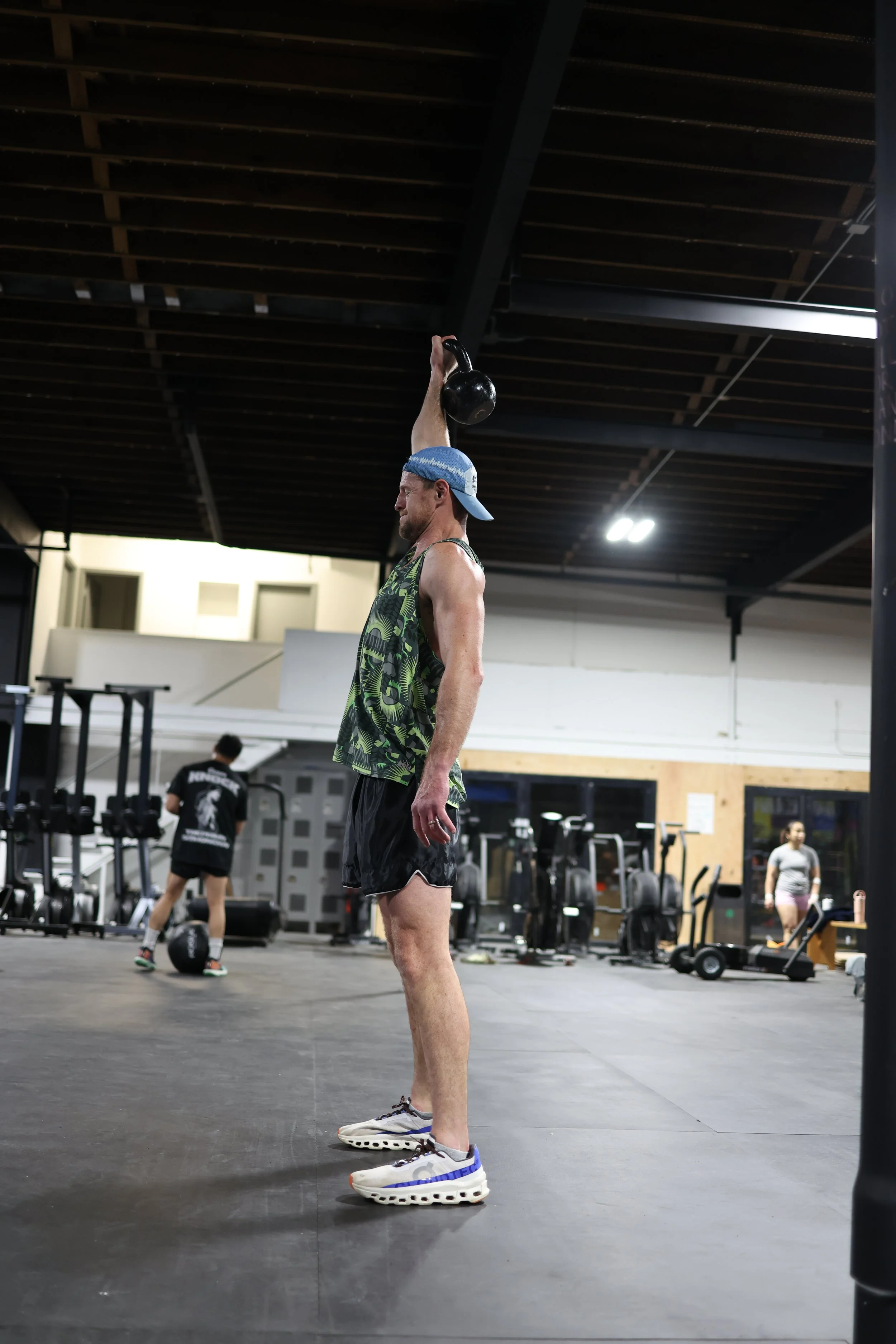
Shoulder pain has a way of making everything harder. Reaching for something on a high shelf. Putting on a jacket. Rolling over in bed. Lifting anything overhead at the gym. It shows up in the most ordinary moments, and once it's there, it's hard to ignore.
It's also one of the most common things we treat at Root Strength. We see it in people who lifted too heavy too fast, in people who spend all day at a desk with their shoulders rounded forward, in people who slept on it wrong and woke up unable to raise their arm, and in people who genuinely have no idea when or how it started — just that it's been bothering them for weeks and they've been hoping it would go away on its own.
Sometimes it does. Often it doesn't. And the longer you wait, the more compensation patterns develop around it — and those take longer to undo than the original problem.
Here's what we see most often, why it happens, and what the path back to a pain-free shoulder actually looks like.
Shoulder pain rarely comes from one dramatic moment. Most of the time it builds quietly — from repetitive load, poor positioning, or simply asking a joint to do more than the muscles around it are prepared to support.
Where Shoulder Pain Usually Comes From
The shoulder is the most mobile joint in the body — it can move in more directions than any other joint you have. That mobility comes at the cost of stability. The shoulder relies almost entirely on the surrounding muscles to keep it in place and moving correctly, which means when those muscles are weak, fatigued, or imbalanced, the joint starts taking load in ways it wasn't designed to handle.
Weight training — the most common culprit we see
Bench press, overhead press, lateral raises, pull-ups — all of these are excellent exercises, and all of them have the potential to irritate the shoulder when volume increases too fast, technique breaks down under fatigue, or the muscles responsible for stabilizing the joint aren't strong enough to support the load being asked of them. The rotator cuff — four small muscles that hold the ball of the shoulder in its socket — is almost universally undertrained relative to the larger pushing and pulling muscles most people focus on. That imbalance is the underlying driver of the majority of gym-related shoulder problems we see.
Desk work and posture
Sitting at a computer for eight hours with your shoulders rounded forward doesn't feel like much in the moment. Over months and years, it changes the resting position of the shoulder blade, tightens the front of the shoulder, and weakens the muscles at the back. When you then go to the gym and push or pull overhead, the joint isn't starting from a neutral position — it's already compromised. This is why so many people who "don't lift that heavy" still end up with shoulder pain. The problem isn't what they're doing in the gym. It's what eight hours of desk posture did to the shoulder before they got there.
Repetitive overhead work
Painters, electricians, construction workers, people who stock shelves — any job that involves repeated overhead reaching places sustained demand on the rotator cuff and the structures around it. Unlike a single heavy lift, the problem here is volume over time. The tissue doesn't get injured in one session; it accumulates stress session after session until it crosses a threshold and starts to complain.
Sleeping position
Sleeping on the same shoulder every night compresses the joint for hours at a time. For a shoulder that's already irritated or vulnerable, this is often what tips it over the edge from "occasionally sore" to "can't raise my arm without pain." Waking up with a stiff or painful shoulder after sleeping on it is a signal the joint isn't tolerating that load well — not something to push through.
Doing nothing — the underrated cause
Sedentary shoulders get weak. Weak shoulders get injured more easily. A large proportion of the shoulder problems we see aren't from overuse — they're from a shoulder that hasn't been asked to do enough for long enough, and then suddenly is. Starting a new workout program, picking up a new sport, or just moving into a house and doing a weekend of heavy lifting are all common triggers when the shoulder musculature hasn't been maintained.
The Most Common Diagnoses — What They Mean in Plain Language
If you've seen a doctor for shoulder pain, you may have heard one of these terms. Here's what they actually mean and what they feel like.
The most common shoulder diagnosis. Pain on the outside or front of the shoulder when you raise your arm — especially between 60 and 120 degrees of elevation. Often feels like a pinch or catch. Worse after overhead lifting or pressing. Usually develops from rotator cuff weakness and poor scapular positioning.
Irritation or degeneration of one or more of the rotator cuff tendons — typically the supraspinatus. Aches during and after lifting. Often worse the morning after a heavy session. Develops when load increases faster than the tendon can adapt. Responds very well to progressive loading when managed correctly.
Pain at the very top of the shoulder where the collarbone meets the shoulder blade. Tender to direct pressure. Aggravated by reaching across your body and by heavy pressing. Common in people who bench press frequently without balancing with posterior shoulder work.
Progressive stiffness and pain that limits motion in all directions — not just one. Often develops after a period of immobility or following an injury that wasn't mobilized properly. Recovers fully in most cases but takes longer than other shoulder conditions and requires a specific approach.
If your shoulder pain wakes you from sleep, if you have significant weakness without proportional pain, if pain followed a specific traumatic incident, or if it has not improved at all after two weeks of reduced load — these are signals that warrant an assessment before you continue loading the joint. Come in and let us take a look before it becomes a longer problem.
Why Rest Alone Usually Doesn't Fix It
The instinct when something hurts is to rest it and wait for it to heal. For some injuries, that's the right call. For most shoulder problems, it's not — and here's why.
The majority of shoulder pain develops because the muscles supporting the joint aren't strong enough or positioned correctly enough to handle the demands being placed on them. Rest reduces the load temporarily, which reduces the pain. But it doesn't build the strength that was missing. When you return to the same activities — lifting, working, sleeping on it — the same weakness is still there, and the problem returns.
The athletes and patients who resolve shoulder pain quickly and keep it from coming back are the ones who use the period of reduced load to build what was missing in the first place. That's the core of what good shoulder rehabilitation looks like.
The 4-Phase Rehab Approach Our PT Team Uses
- Identify and temporarily remove the specific activities driving the pain — overhead pressing, heavy bench, repetitive reaching — without stopping all activity
- Modify your gym routine around the shoulder: lower body training, core work, and cardio can all continue unmodified
- If you work a desk job, address workstation positioning — monitor height, arm support, chair setup — because this is often contributing more than people realize
- Begin gentle range of motion work: pendulum swings, wall slides, and supported elevation to maintain mobility while reducing active load
- Ice for acute flares (first 48–72 hours of a new flare): 15–20 minutes on the painful area, cloth between ice and skin
- Rotator cuff strengthening: side-lying external rotation, banded external rotation, internal rotation with band — these are the exercises that address the most common deficit driving shoulder pain
- Scapular stabilization: prone Y-T-W raises, face pulls, band pull-aparts — essential for restoring the shoulder blade positioning that creates room for the rotator cuff to function without impingement
- Posterior shoulder stretching: cross-body stretch and sleeper stretch to address the tightness that develops from sustained desk posture and pressing-heavy training programs
- Postural retraining: if desk work is a contributing factor, specific exercises to strengthen the mid-back and retrain resting shoulder position
- Begin returning to gym work with modified loading: lighter weight, adjusted angles, and emphasis on technique over volume
- Reintroduce previously painful exercises at reduced load: begin at 50–60% of previous working weight and increase no more than 10% per week
- Overhead pressing: return with dumbbell variation before barbell — greater freedom of movement reduces shoulder stress during the reload phase
- Address technique issues identified during assessment: bar path on bench, shoulder positioning on overhead press, elbow angle on lateral raises — small mechanical changes make a significant difference in long-term shoulder health
- Continue Phase 2 strengthening throughout — this is now maintenance, not just rehab
- For work-related shoulder pain: graded return to full repetitive task load with regular position changes and rest periods
- Return to previous training loads and activities fully — including exercises that were previously painful
- Establish a permanent shoulder maintenance routine: 10 minutes of rotator cuff and scapular work twice per week, integrated into warm-up or cool-down
- Pre-session warm-up for pressing days: band pull-aparts, external rotation circles, face pulls before any overhead or horizontal pressing
- Monitor training volume spikes — the most common trigger for shoulder pain returning is adding too much too fast after feeling recovered
- If strength training is new or inconsistent for you, a structured program builds the shoulder resilience that prevents injury from recurring — see below
Our coached strength programs are designed by Doctors of Physical Therapy — so the programming accounts for shoulder health, movement quality, and long-term resilience, not just how much you can lift. If you're recovering from a shoulder injury or want to prevent the next one, this is where to start.
What Most People Skip — and Why It Matters
The single most consistent finding in people who come to us with recurring shoulder pain is that they've never done consistent rotator cuff and scapular strengthening. They've done chest, back, arms, legs — but the small stabilizing muscles that keep the shoulder joint healthy under load have been neglected for years. Once those get strong and stay strong, the shoulder becomes a remarkably durable joint. Without that foundation, it stays vulnerable no matter how carefully you manage everything else.
The second most consistent finding is that people stop doing the maintenance work the moment the pain goes away. Pain is not a reliable indicator of tissue health. The shoulder can feel completely fine while still being several weeks away from having the capacity to handle full training loads safely. The athletes and active people who stay injury-free long-term are the ones who keep the maintenance going after the pain has resolved — not just until it does.
A shoulder that's been through proper rehab and maintained correctly is often more durable than one that was never injured. The process builds something that passive rest never could.
The Connection Between Strength Training and Shoulder Health
One of the most valuable things you can do for your shoulder — whether you're recovering from an injury or trying to prevent one — is build a consistent, well-designed strength training practice. Not the kind that caused the problem in the first place, but the kind that's built around movement quality, progressive load, and attention to the muscles that keep the joint healthy.
This is the foundation of what we do at Root Strength. Our strength and conditioning programs are designed by the same Doctors of Physical Therapy who run our PT department — which means your training program and your injury management are built from the same clinical understanding of how the body works under load. If you've been dealing with a shoulder issue and have been hesitant to return to lifting because you're not sure how to do it safely, that's exactly the environment we've built for.
For those curious about what serious training looks like when it's coached well, our team also coaches Muay Thai at Muók Boxing — in the same building. The discipline of learning to use your body correctly carries over into how we think about every aspect of physical training.
No referral needed for Washington State residents. Most major insurance accepted — Premera, Regence, BCBS, Aetna, Anthem. We'll identify what's driving your shoulder pain, differentiate it accurately, and build a return-to-life plan around you. Learn more about our PT department →
Frequently Asked Questions
Can I keep going to the gym with shoulder pain?
Usually, yes — with modifications. The goal is to identify which specific activities are provocative and reduce or temporarily eliminate those, while keeping everything else going. A complete stop is rarely necessary and often counterproductive. Our PT team will tell you exactly what to keep doing and what to pull back on, rather than just saying "stop everything."
How long will it take to get better?
Most shoulder conditions resolve fully within 8–14 weeks of proper management. The range is wide because it depends on how long the problem has been developing, how early you start addressing it, and how consistently you do the work between sessions. Conditions caught and addressed early resolve in 4–6 weeks. Conditions that have been building for months take longer — but they do resolve.
Do I need a referral to see a physical therapist?
No. Washington State has direct access to physical therapy — you can book an appointment without a referral from a doctor. We'll assess you, give you a clinical picture of what's going on, and let you know if imaging is warranted. Most insurance covers PT directly.
Will I need surgery?
The large majority of shoulder conditions we see — including rotator cuff tears — do not require surgery. Research consistently shows that conservative management produces outcomes equivalent to surgery for most rotator cuff and impingement pathologies. Surgery is typically reserved for full-thickness tears causing significant functional limitation, or conditions that have genuinely failed an adequate course of conservative care. We'll give you an honest assessment of where you fall.
Ready to Get Your Shoulder Right?
Book a PT session with our Doctors of Physical Therapy at Root Strength Georgetown. No referral needed. Most insurance accepted. We'll assess what's happening, explain it clearly, and build a plan that fits your life.
Book a PT Session →