Muok Boxing Muok Boxing

Shoulder Pain — Why It Happens, What It Means, and How to Get Rid of It

Shoulder injury rehab at Root Strength Physical Therapy Georgetown Seattle
Physical Therapy · 2026 · Root Strength · 8 min read
Shoulder Pain — Why It Happens, What It Means, and How to Get Rid of It
Whether it started in the gym, at work, or just gradually appeared one day — shoulder pain is one of the most common reasons people come see us. Here's what's actually going on and what to do about it.

Shoulder pain has a way of making everything harder. Reaching for something on a high shelf. Putting on a jacket. Rolling over in bed. Lifting anything overhead at the gym. It shows up in the most ordinary moments, and once it's there, it's hard to ignore.

It's also one of the most common things we treat at Root Strength. We see it in people who lifted too heavy too fast, in people who spend all day at a desk with their shoulders rounded forward, in people who slept on it wrong and woke up unable to raise their arm, and in people who genuinely have no idea when or how it started — just that it's been bothering them for weeks and they've been hoping it would go away on its own.

Sometimes it does. Often it doesn't. And the longer you wait, the more compensation patterns develop around it — and those take longer to undo than the original problem.

Here's what we see most often, why it happens, and what the path back to a pain-free shoulder actually looks like.

Shoulder pain rarely comes from one dramatic moment. Most of the time it builds quietly — from repetitive load, poor positioning, or simply asking a joint to do more than the muscles around it are prepared to support.

26%
of adults experience shoulder pain at any given time — it's the third most common musculoskeletal complaint
90%
of shoulder conditions resolve fully with conservative management when addressed early
longer recovery on average when people wait more than 6 weeks before seeking treatment

Where Shoulder Pain Usually Comes From

The shoulder is the most mobile joint in the body — it can move in more directions than any other joint you have. That mobility comes at the cost of stability. The shoulder relies almost entirely on the surrounding muscles to keep it in place and moving correctly, which means when those muscles are weak, fatigued, or imbalanced, the joint starts taking load in ways it wasn't designed to handle.

Weight training — the most common culprit we see

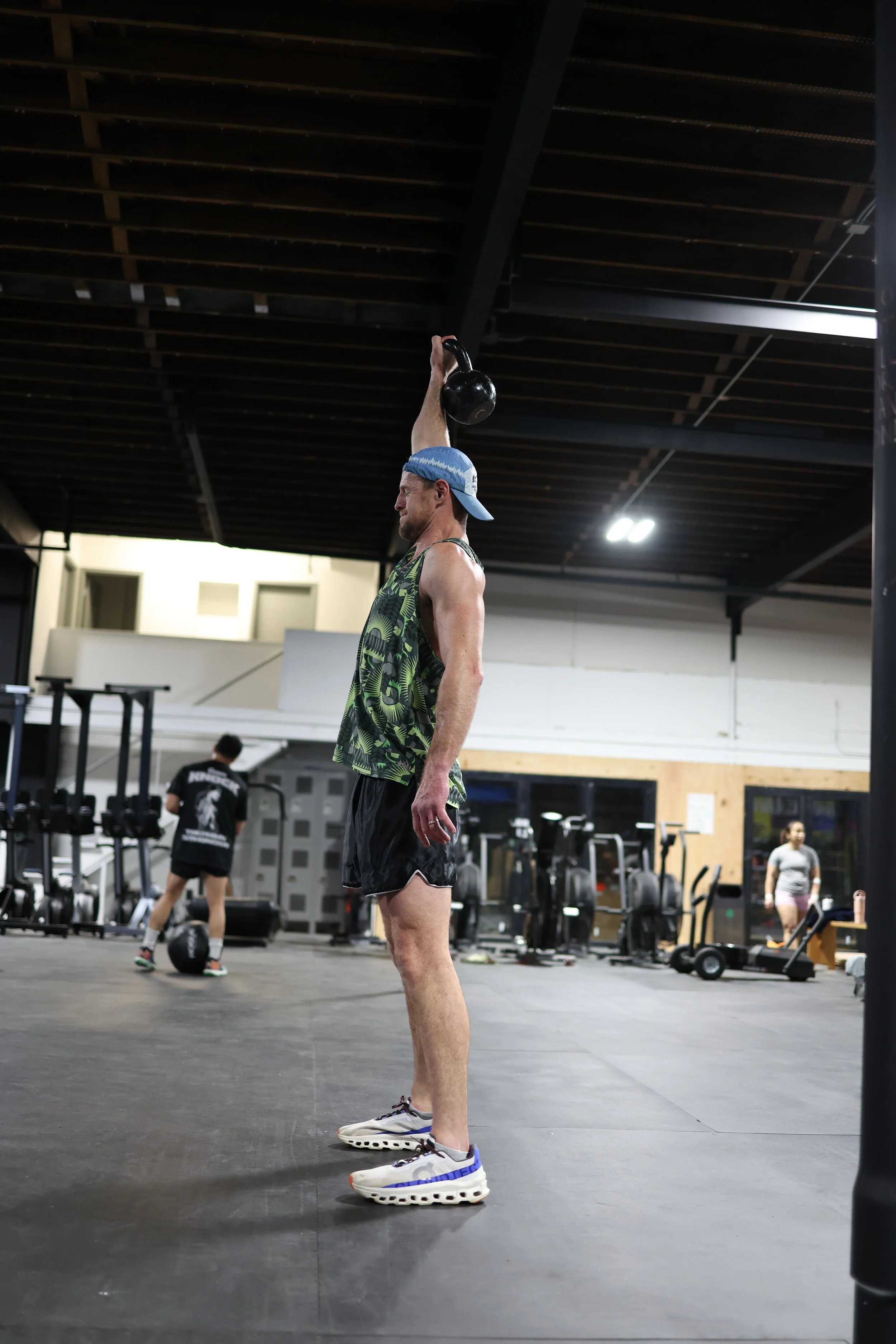
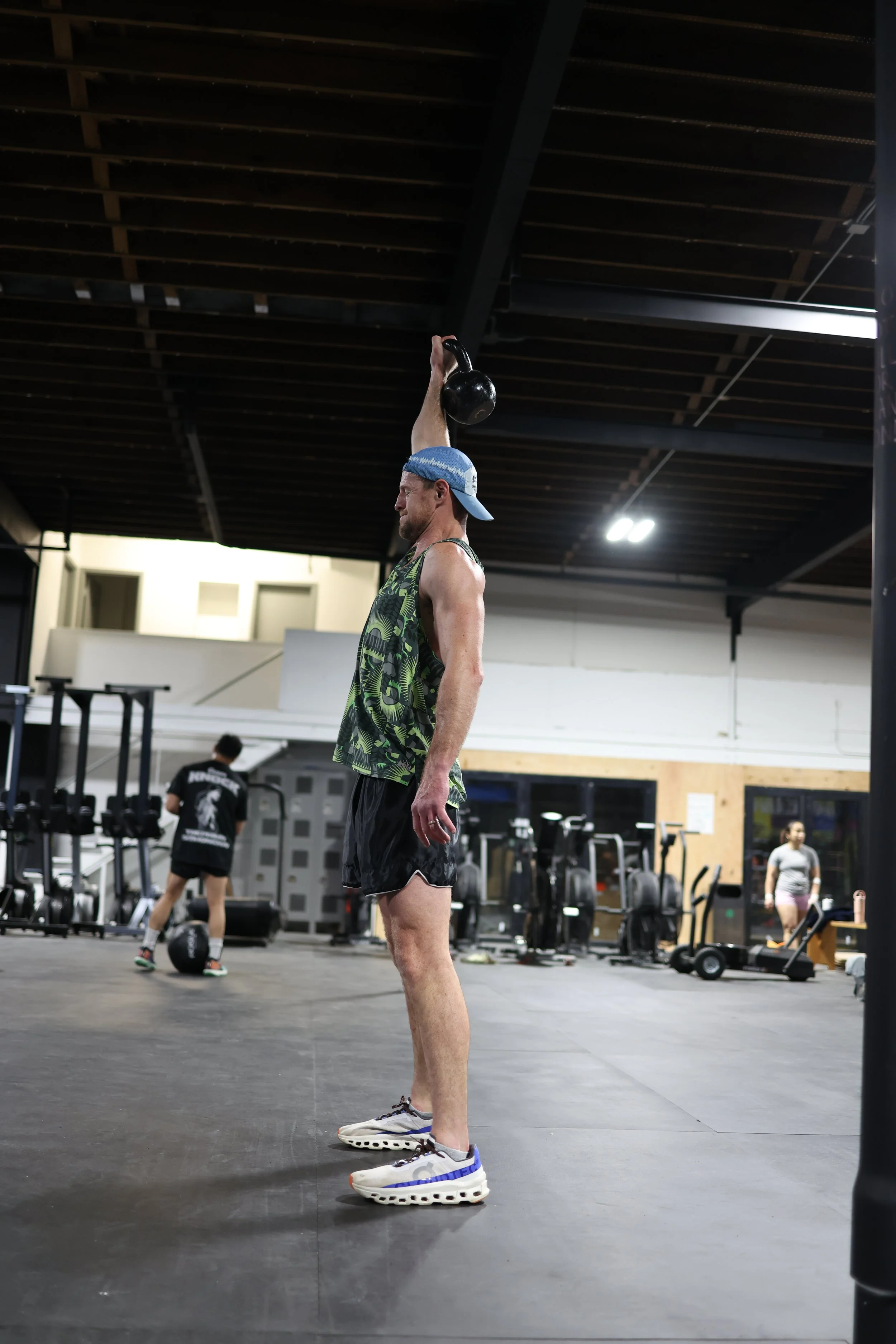
Bench press, overhead press, lateral raises, pull-ups — all of these are excellent exercises, and all of them have the potential to irritate the shoulder when volume increases too fast, technique breaks down under fatigue, or the muscles responsible for stabilizing the joint aren't strong enough to support the load being asked of them. The rotator cuff — four small muscles that hold the ball of the shoulder in its socket — is almost universally undertrained relative to the larger pushing and pulling muscles most people focus on. That imbalance is the underlying driver of the majority of gym-related shoulder problems we see.

Desk work and posture

Sitting at a computer for eight hours with your shoulders rounded forward doesn't feel like much in the moment. Over months and years, it changes the resting position of the shoulder blade, tightens the front of the shoulder, and weakens the muscles at the back. When you then go to the gym and push or pull overhead, the joint isn't starting from a neutral position — it's already compromised. This is why so many people who "don't lift that heavy" still end up with shoulder pain. The problem isn't what they're doing in the gym. It's what eight hours of desk posture did to the shoulder before they got there.

Repetitive overhead work

Painters, electricians, construction workers, people who stock shelves — any job that involves repeated overhead reaching places sustained demand on the rotator cuff and the structures around it. Unlike a single heavy lift, the problem here is volume over time. The tissue doesn't get injured in one session; it accumulates stress session after session until it crosses a threshold and starts to complain.

Sleeping position

Sleeping on the same shoulder every night compresses the joint for hours at a time. For a shoulder that's already irritated or vulnerable, this is often what tips it over the edge from "occasionally sore" to "can't raise my arm without pain." Waking up with a stiff or painful shoulder after sleeping on it is a signal the joint isn't tolerating that load well — not something to push through.

Doing nothing — the underrated cause

Sedentary shoulders get weak. Weak shoulders get injured more easily. A large proportion of the shoulder problems we see aren't from overuse — they're from a shoulder that hasn't been asked to do enough for long enough, and then suddenly is. Starting a new workout program, picking up a new sport, or just moving into a house and doing a weekend of heavy lifting are all common triggers when the shoulder musculature hasn't been maintained.

The Most Common Diagnoses — What They Mean in Plain Language

If you've seen a doctor for shoulder pain, you may have heard one of these terms. Here's what they actually mean and what they feel like.

Rotator Cuff Impingement

The most common shoulder diagnosis. Pain on the outside or front of the shoulder when you raise your arm — especially between 60 and 120 degrees of elevation. Often feels like a pinch or catch. Worse after overhead lifting or pressing. Usually develops from rotator cuff weakness and poor scapular positioning.

Rotator Cuff Tendinopathy

Irritation or degeneration of one or more of the rotator cuff tendons — typically the supraspinatus. Aches during and after lifting. Often worse the morning after a heavy session. Develops when load increases faster than the tendon can adapt. Responds very well to progressive loading when managed correctly.

AC Joint Irritation

Pain at the very top of the shoulder where the collarbone meets the shoulder blade. Tender to direct pressure. Aggravated by reaching across your body and by heavy pressing. Common in people who bench press frequently without balancing with posterior shoulder work.

Frozen Shoulder (Adhesive Capsulitis)

Progressive stiffness and pain that limits motion in all directions — not just one. Often develops after a period of immobility or following an injury that wasn't mobilized properly. Recovers fully in most cases but takes longer than other shoulder conditions and requires a specific approach.

When to get it seen immediately

If your shoulder pain wakes you from sleep, if you have significant weakness without proportional pain, if pain followed a specific traumatic incident, or if it has not improved at all after two weeks of reduced load — these are signals that warrant an assessment before you continue loading the joint. Come in and let us take a look before it becomes a longer problem.

Why Rest Alone Usually Doesn't Fix It

The instinct when something hurts is to rest it and wait for it to heal. For some injuries, that's the right call. For most shoulder problems, it's not — and here's why.

The majority of shoulder pain develops because the muscles supporting the joint aren't strong enough or positioned correctly enough to handle the demands being placed on them. Rest reduces the load temporarily, which reduces the pain. But it doesn't build the strength that was missing. When you return to the same activities — lifting, working, sleeping on it — the same weakness is still there, and the problem returns.

The athletes and patients who resolve shoulder pain quickly and keep it from coming back are the ones who use the period of reduced load to build what was missing in the first place. That's the core of what good shoulder rehabilitation looks like.

The 4-Phase Rehab Approach Our PT Team Uses

Phase 1 — Settle It Down Weeks 1–2
Reduce what's irritating it. Keep everything else moving.
  • Identify and temporarily remove the specific activities driving the pain — overhead pressing, heavy bench, repetitive reaching — without stopping all activity
  • Modify your gym routine around the shoulder: lower body training, core work, and cardio can all continue unmodified
  • If you work a desk job, address workstation positioning — monitor height, arm support, chair setup — because this is often contributing more than people realize
  • Begin gentle range of motion work: pendulum swings, wall slides, and supported elevation to maintain mobility while reducing active load
  • Ice for acute flares (first 48–72 hours of a new flare): 15–20 minutes on the painful area, cloth between ice and skin
Criteria to Progress Resting pain 0/10. Daily activities — reaching, dressing, sleeping — manageable without significant pain.
Phase 2 — Build the Foundation Weeks 2–6
Strengthen the muscles that weren't doing their job.
  • Rotator cuff strengthening: side-lying external rotation, banded external rotation, internal rotation with band — these are the exercises that address the most common deficit driving shoulder pain
  • Scapular stabilization: prone Y-T-W raises, face pulls, band pull-aparts — essential for restoring the shoulder blade positioning that creates room for the rotator cuff to function without impingement
  • Posterior shoulder stretching: cross-body stretch and sleeper stretch to address the tightness that develops from sustained desk posture and pressing-heavy training programs
  • Postural retraining: if desk work is a contributing factor, specific exercises to strengthen the mid-back and retrain resting shoulder position
  • Begin returning to gym work with modified loading: lighter weight, adjusted angles, and emphasis on technique over volume
Criteria to Progress Full pain-free range of motion restored. Able to perform daily activities and modified gym work without pain.
Phase 3 — Reload Progressively Weeks 6–10
Return to the activities that caused the problem — this time with the capacity to handle them.
  • Reintroduce previously painful exercises at reduced load: begin at 50–60% of previous working weight and increase no more than 10% per week
  • Overhead pressing: return with dumbbell variation before barbell — greater freedom of movement reduces shoulder stress during the reload phase
  • Address technique issues identified during assessment: bar path on bench, shoulder positioning on overhead press, elbow angle on lateral raises — small mechanical changes make a significant difference in long-term shoulder health
  • Continue Phase 2 strengthening throughout — this is now maintenance, not just rehab
  • For work-related shoulder pain: graded return to full repetitive task load with regular position changes and rest periods
Criteria to Progress Full gym training at moderate load pain-free for two consecutive weeks. No symptom return in the 24 hours following sessions.
Phase 4 — Full Return & Long-Term Maintenance Weeks 10–14+
Back to full capacity — and the habits that keep it that way.
  • Return to previous training loads and activities fully — including exercises that were previously painful
  • Establish a permanent shoulder maintenance routine: 10 minutes of rotator cuff and scapular work twice per week, integrated into warm-up or cool-down
  • Pre-session warm-up for pressing days: band pull-aparts, external rotation circles, face pulls before any overhead or horizontal pressing
  • Monitor training volume spikes — the most common trigger for shoulder pain returning is adding too much too fast after feeling recovered
  • If strength training is new or inconsistent for you, a structured program builds the shoulder resilience that prevents injury from recurring — see below
Full Return Criteria All previous activities pain-free for four consecutive weeks. Strength symmetrical within 10% side-to-side. Maintenance routine established.
At Root Strength · Georgetown
Build a Shoulder That Doesn't Break Down

Our coached strength programs are designed by Doctors of Physical Therapy — so the programming accounts for shoulder health, movement quality, and long-term resilience, not just how much you can lift. If you're recovering from a shoulder injury or want to prevent the next one, this is where to start.

See Programs →

What Most People Skip — and Why It Matters

The single most consistent finding in people who come to us with recurring shoulder pain is that they've never done consistent rotator cuff and scapular strengthening. They've done chest, back, arms, legs — but the small stabilizing muscles that keep the shoulder joint healthy under load have been neglected for years. Once those get strong and stay strong, the shoulder becomes a remarkably durable joint. Without that foundation, it stays vulnerable no matter how carefully you manage everything else.

The second most consistent finding is that people stop doing the maintenance work the moment the pain goes away. Pain is not a reliable indicator of tissue health. The shoulder can feel completely fine while still being several weeks away from having the capacity to handle full training loads safely. The athletes and active people who stay injury-free long-term are the ones who keep the maintenance going after the pain has resolved — not just until it does.

A shoulder that's been through proper rehab and maintained correctly is often more durable than one that was never injured. The process builds something that passive rest never could.

The Connection Between Strength Training and Shoulder Health

One of the most valuable things you can do for your shoulder — whether you're recovering from an injury or trying to prevent one — is build a consistent, well-designed strength training practice. Not the kind that caused the problem in the first place, but the kind that's built around movement quality, progressive load, and attention to the muscles that keep the joint healthy.

This is the foundation of what we do at Root Strength. Our strength and conditioning programs are designed by the same Doctors of Physical Therapy who run our PT department — which means your training program and your injury management are built from the same clinical understanding of how the body works under load. If you've been dealing with a shoulder issue and have been hesitant to return to lifting because you're not sure how to do it safely, that's exactly the environment we've built for.

For those curious about what serious training looks like when it's coached well, our team also coaches Muay Thai at Muók Boxing — in the same building. The discipline of learning to use your body correctly carries over into how we think about every aspect of physical training.

Root Physical Therapy · On-Site
Get Your Shoulder Assessed by a Doctor of Physical Therapy

No referral needed for Washington State residents. Most major insurance accepted — Premera, Regence, BCBS, Aetna, Anthem. We'll identify what's driving your shoulder pain, differentiate it accurately, and build a return-to-life plan around you. Learn more about our PT department →

Book a Session →

Frequently Asked Questions

Can I keep going to the gym with shoulder pain?

Usually, yes — with modifications. The goal is to identify which specific activities are provocative and reduce or temporarily eliminate those, while keeping everything else going. A complete stop is rarely necessary and often counterproductive. Our PT team will tell you exactly what to keep doing and what to pull back on, rather than just saying "stop everything."

How long will it take to get better?

Most shoulder conditions resolve fully within 8–14 weeks of proper management. The range is wide because it depends on how long the problem has been developing, how early you start addressing it, and how consistently you do the work between sessions. Conditions caught and addressed early resolve in 4–6 weeks. Conditions that have been building for months take longer — but they do resolve.

Do I need a referral to see a physical therapist?

No. Washington State has direct access to physical therapy — you can book an appointment without a referral from a doctor. We'll assess you, give you a clinical picture of what's going on, and let you know if imaging is warranted. Most insurance covers PT directly.

Will I need surgery?

The large majority of shoulder conditions we see — including rotator cuff tears — do not require surgery. Research consistently shows that conservative management produces outcomes equivalent to surgery for most rotator cuff and impingement pathologies. Surgery is typically reserved for full-thickness tears causing significant functional limitation, or conditions that have genuinely failed an adequate course of conservative care. We'll give you an honest assessment of where you fall.

Ready to Get Your Shoulder Right?

Book a PT session with our Doctors of Physical Therapy at Root Strength Georgetown. No referral needed. Most insurance accepted. We'll assess what's happening, explain it clearly, and build a plan that fits your life.

Book a PT Session →
Read More
Muok Boxing Muok Boxing

Shin Splints in Athletes: Injury Mechanism & Rehab Protocol

Root Strength Physical Therapy Georgetown Seattle — Shin Splints MTSS Guide
Physical Therapy · 2026 · Root Strength · 8 min read
Shin Splints in Athletes: Injury Mechanism & Rehab Protocol
A Doctor of Physical Therapy guide to medial tibial stress syndrome — why it happens, how to diagnose it, and the evidence-based rehab protocol athletes need to return to full training.

If you train consistently — whether you're a runner, a soccer player, a CrossFit-style athlete, or anyone doing high-volume impact work — there's a good chance you've felt it: a dull, diffuse ache along the inner edge of your shinbone that starts during a workout and lingers for days. You take a week off, it quiets down, you return to training, and it comes back.

That cycle is the defining experience of medial tibial stress syndrome (MTSS). And the reason it keeps repeating isn't that you're not resting enough — it's that rest alone doesn't fix the underlying problem.

This post covers what MTSS actually is at the tissue level, why it happens, how to tell it apart from a stress fracture, and what a complete evidence-based rehab protocol looks like from day one through full return to sport. If you train Muay Thai or combat sports, MTSS is one of the most common lower-leg injuries you'll encounter — and one of the most mismanaged.

13–20%
Incidence rate in runners — among the most common overuse injuries in sport
35%
Prevalence in military recruits and high-load training athletes
~50%
Of all lower leg injuries in runners are attributed to MTSS

What Is Medial Tibial Stress Syndrome?

MTSS is an overuse injury that arises from repetitive axial loading of the lower extremity, producing microtrauma to muscles and tendons in the anterior compartment and irritation of the tibial periosteum. (Larson et al., StatPearls, Dec 2025) The primary muscles involved are the soleus, tibialis posterior, and flexor digitorum longus — all of which exert tension on the tibial periosteum with every stride. The result is localized periosteal inflammation, diffuse tenderness along the posteromedial tibial border, and exercise-induced pain that can range from a background ache to a symptom that stops training entirely.

Critically, MTSS sits on a continuum of tibial stress injuries. On one end is periosteal irritation — the early, manageable phase most athletes experience. Left unmanaged, it can progress through periosteal edema and marrow involvement to a full cortical stress fracture. Where you are on that continuum changes your timeline, your protocol, and whether you need imaging before returning to load.

From Our PT Team · Root Physical Therapy

The most common mistake we see is athletes treating MTSS like a soft tissue injury — stretching, foam rolling, and waiting for it to calm down. MTSS is a bone stress response. That distinction changes everything about how you manage load during rehab and what "ready to run" actually means. For more on returning to training after injury, see our full guide.

The Injury Mechanism: Why Shin Splints Actually Happen

MTSS is not simply the result of doing too much, too fast — though training load errors are a major contributing factor. It is a multifactorial condition involving biomechanical disorders at the ankle and foot, muscular fatigue patterns, and bone remodeling capacity that compound over time. The core mechanical theory is periosteal traction: repeated muscular contraction from the soleus and tibialis posterior creates tensile forces on the tibial periosteum. When cumulative load exceeds the bone's remodeling capacity, microtrauma accumulates faster than it can heal.

Amplified foot pronation compounds this mechanism. (Saad et al., Cureus, Mar 2025) Excessive dynamic pronation during the loading phase of gait increases peak soleus activity, which elevates tensile strain on the tibia. This is why ankle mechanics and foot posture are central to both the injury and its correction — not just a footnote. Athletes in high-impact sports like Muay Thai are particularly vulnerable given the repetitive rotational ground-force demands of kicking — the same hip-and-ankle chain described in the biomechanics of Muay Thai kicks.

Intrinsic Risk Factors

Previous MTSS

The strongest individual predictor — recurrence is high without correcting root causes

Female Sex

Women account for 55.3% of MTSS cases — hormonal and bone density factors contribute (Bhusari & Deshmukh, 2023)

Excessive Foot Pronation

Increased navicular drop and dynamic hyperpronation elevate tibial strain during impact loading

Limited Ankle Dorsiflexion

Restricted range shifts compensatory load proximally up the kinetic chain to the tibia

Hip Weakness

Reduced hip abductor and external rotator strength alters lower leg mechanics under load — a key reason strength and conditioning matters beyond aesthetics (Hamstra-Wright et al., BJSM 2015)

High BMI

Greater body mass increases tibial bending forces per step — particularly relevant in newer runners

Extrinsic Risk Factors

On the training side, the most consistent triggers are a sudden spike in weekly mileage or jump-load volume, hard running surfaces (concrete being highest risk), worn-out footwear, and rapid introduction of hill work. Shoes lose up to 40% of their shock-absorbing capacity after 250–500 miles — a detail most athletes don't track. (Physiopedia, 2022) Any combination of these in an athlete who already carries intrinsic risk is a near-certain path to MTSS. Combat sports athletes are at particular risk due to the high-repetition, barefoot impact work in Muay Thai training compounded with running or gym-floor conditioning.

How to Tell MTSS from a Stress Fracture

This distinction matters and shouldn't be glossed over. Both conditions cause shin pain in athletes, but a stress fracture requires a much more conservative management approach — and missing one can turn a 6-week injury into a 3-month setback or worse.

MTSS Typically Presents With

Diffuse, dull tenderness along the posteromedial tibial border covering 5 cm or more. Pain that begins with activity, may warm up mid-run, and lingers afterward. Onset is gradual. Percussion and tuning fork tests are generally negative.

A Stress Fracture Typically Presents With

Point-specific tenderness over a focal area — often 1–2 cm or less. The hop test is positive (single-leg hopping reproduces pain). Pain often occurs earlier in activity and doesn't warm up. The fulcrum test may reproduce symptoms at the exact site. (StatPearls, 2025)

From Our PT Team · Root Physical Therapy

If you have point tenderness, a positive hop test, or pain that worsens with any load rather than improving with relative rest, get imaging before you reintroduce running. MRI is the gold standard — it has 88% sensitivity compared to CT at 42%. (Ciszewski et al., 2025) This is a conversation to have with your PT before starting any return-to-run protocol.

The Rehab Protocol: Phases, Goals, and Criteria

The key principle underlying all phases of MTSS rehab: relative rest is not passive rest. The goal is to reduce tibial stress below the injury threshold while maintaining fitness, correcting contributing factors, and progressively restoring load tolerance. During rehabilitation, athletes can benefit from low-impact cross-training — pool running, swimming, elliptical, or stationary cycling. (Galbraith & Lavallee, 2009) Prolonged rest without addressing root causes produces athletes who return pain-free but no more prepared to handle training load than before they got hurt.

Phase 1 — Acute Management Weeks 1–2
Reduce load. Don't stop moving.
  • Eliminate running and high-impact activity — replace with pool running, cycling, or elliptical
  • Ice or cold therapy 15–20 minutes post-activity for symptom management
  • NSAIDs as directed for acute inflammation — short-term only, not a long-term strategy
  • Begin daily calf stretching (gastrocnemius and soleus) — not just pre-workout
  • Assess and address footwear — replace if over 400 miles; consider orthotics for hyperpronators
  • Initial gait assessment: identify overstride, excessive pronation, or hip drop patterns
Criteria to Progress Pain-free with all activities of daily living. No tenderness with direct palpation at rest.
Phase 2 — Load Tolerance Building Weeks 2–6
Address the contributing factors. Build tissue capacity.
  • Eccentric calf raises: the most widely supported intervention in MTSS literature — progress isometric → concentric → eccentric, then add load (Galbraith & Lavallee, 2009)
  • Tibialis anterior strengthening: resisted dorsiflexion with band, toe walking
  • Hip strengthening: clamshells, side-lying abduction, bridges, banded hip thrusts — hip stability directly influences tibial mechanics
  • Core stabilization: anti-rotation and anti-lateral flexion patterns (Pallof press, side plank progressions). Our coached strength classes integrate all of these patterns into every session
  • Single-leg balance and proprioception training — progress to unstable surfaces
  • Anti-pronation exercises in functional positions: chops, lunges with arm reaches; progress to running stance
  • Begin walk-to-run intervals once pain-free at a brisk walking pace
Criteria to Progress Pain-free during and 24 hours after 30 minutes of brisk walking. Single-leg calf raise ≥ 25 reps without pain.
Phase 3 — Return to Running Weeks 4–10
Progressive reloading with gait retraining.
  • Run-walk protocol: begin with 1-minute run / 2-minute walk intervals; increase run duration no more than 10% per week
  • Gait retraining: increase step rate by 5–10% (reduces tibial stress), increase step width, eliminate overstriding (Crimson Publishers, 2024)
  • Continue all Phase 2 strengthening — increase resistance and volume progressively
  • Progress to single-leg exercises in running stance positions
  • Train on varied surfaces: grass and track before road; avoid exclusive use of concrete
  • Monitor: if symptoms exceed 2/10 on any run, reduce distance 25% and reassess
Criteria to Progress Pain-free continuous running for 20–30 minutes. No delayed-onset shin pain in the 24 hours after a run.
Phase 4 — Return to Sport Weeks 8–14+
Sport-specific loading, plyometrics, full reintegration.
  • Plyometric progression: two-leg jumping → single-leg hopping → sport-specific cutting and landing mechanics
  • Hill running reintroduction: short, gradual inclines before sustained climbing
  • Sport-specific training: begin at 50–60% of pre-injury load and build over 3–4 weeks
  • Maintain strengthening program at minimum 2x/week: calf, hip, and core work
  • Ongoing gait monitoring — video analysis if symptoms recur or volume spikes significantly
Criteria for Full Return Completing sport-specific training at full load for two consecutive weeks with zero pain during or after sessions.
From Our PT Team · Root Physical Therapy

The biggest gap in most MTSS rehab is Phase 3. Athletes get cleared to run, return to their previous volume in 2–3 weeks because they feel fine, and re-injure themselves before the bone has fully remodeled. Tissue tolerance and pain are not the same thing. Pain resolves faster than structural adaptation. The protocol above is conservative on purpose.

Prevention: What to Do When You're Not Injured

The evidence on MTSS prevention is consistent. Building mileage gradually, maintaining hip and calf strength, replacing footwear regularly, and training on varied surfaces all reduce incidence. Gait retraining — specifically increasing step rate and reducing overstride — has been shown to reduce tibial loading and MTSS incidence in athletic populations. (Sharma et al., Med Sci Sports Exerc, 2014) Research also shows that evidence-based strength training produces measurable reductions in lower-extremity injury risk by improving the neuromuscular control that protects bone under load.

The 10% rule for weekly mileage increases remains a reasonable guideline, though more important than the raw number is monitoring how you feel in the 24 hours after training. Delayed-onset shin aching is an early warning sign that load is exceeding your current capacity — not a reason to push through. For athletes running high volumes, periodic movement screening with a Doctor of Physical Therapy and a standing lower-leg strengthening program are among the highest-value preventive investments available.

How Root Physical Therapy Approaches MTSS

At Root Physical Therapy — our in-house PT department at Root Strength Georgetown — we don't treat MTSS as an isolated lower leg problem. We treat it as a whole-athlete problem: a combination of training load errors, movement mechanics, tissue capacity, and sometimes nutritional factors like calcium and vitamin D that compound over time. (Tenforde et al., PMR, 2010)

Because our DPT providers coach your classes and do your PT in the same building, we can watch you run, observe your movement under load, and build a rehab protocol coordinated with your actual training program — not a generic template for an unknown athlete. Your return-to-sport isn't a handoff. It's supervised, progressive, and tracked by the same team throughout. This is why athletes choose a gym with physical therapy on-site over the traditional separate-clinic model.

If you also train at Muók Boxing, Root Physical Therapy is now fully operational at our Georgetown location — staffed by the same Doctors of Physical Therapy who coach Muay Thai and understand the demands of combat sports on the lower extremities. Most major insurance plans are accepted: Premera, Regence, Blue Cross Blue Shield, and Aetna. Most members pay little to nothing out of pocket. No referral required for Washington residents.

Dealing With Shin Pain That Won't Go Away?

Book a PT consultation with our Doctors of Physical Therapy at Root Physical Therapy. We'll assess your mechanics, rule out stress fracture, and build a return-to-training plan built around you — not a generic protocol.

Book a Physical Therapy Session →
  1. Larson A, McClure CJ, May T, et al. Medial Tibial Stress Syndrome. StatPearls [Internet]. Updated December 30, 2025.
  2. Saad MA, Jamal JM, Aldhafiri AT, Alkandari SA. Medial Tibial Stress Syndrome: A Scoping Review. Cureus. 2025 Mar;17(3):e81463.
  3. Bhusari N, Deshmukh M. Shin Splint: A Review. Cureus. 2023 Jan;15(1):e33905.
  4. Ciszewski P, Drelichowska A, Azierski M. Shin Splints — a hidden epidemic among runners and athletes. Discovery Journals. 2025.
  5. Galbraith RM, Lavallee ME. Medial tibial stress syndrome: conservative treatment options. Curr Rev Musculoskeletal Med. 2009;2(3):127–133.
  6. Hamstra-Wright KL, Bliven KC, Bay C. Risk factors for medial tibial stress syndrome in physically active individuals. Br J Sports Med. 2015;49(6):362–369.
  7. Rehabilitation Management of Medial Tibial Stress Syndrome. Crimson Publishers. RISM.000744.10(4).2024.
  8. Naderi A, et al. Effects of integrating lower-leg exercises on MTSS management. Orthop J Sports Med. 2025 Feb;13(2).
  9. Ramteke SU, et al. Physical Therapy Perspectives for MTSS in a Novice Runner. Cureus. 2024 Aug;16(8):e67647.
  10. Sharma J, et al. Gait retraining and incidence of MTSS in army recruits. Med Sci Sports Exerc. 2014;46(9):1684–1692.
Read More
Muok Boxing Muok Boxing

Our Physical Therapy Department Is Ready for More Patients

Root Strength Physical Therapy Georgetown Seattle
Physical Therapy · 2026 · Root Strength · 5 min read
Our Physical Therapy Department Is Ready for More Patients
Root Physical Therapy — our on-site PT department — is fully operational and now accepting new patients. If you've been waiting to start, now is the time.

If you've been a member at Root Strength for any amount of time, you already know that physical therapy is part of what we do here. Our coaches hold Doctorates in Physical Therapy. Our programming is built around movement quality and long-term health. Injury prevention has always been woven into how we train.

What's changed is capacity. Our physical therapy department — Root Physical Therapy — is now fully operational and actively taking on new patients. The PT room is staffed, the schedule is open, and if you've been dealing with something you've been putting off, this is your sign to come in.

This isn't a referral to somewhere else. It's your own team, in your own gym, ready to take care of you.

The biggest gap in most athletic rehab isn't the quality of the PT — it's the disconnect between PT and the training environment. At Root Strength, those two things have always been the same program. Now we have the capacity to take on more of you.

What Root Physical Therapy Actually Is

Root Physical Therapy is our in-house PT department — not a separate business, not a clinic down the street. It's part of Root Strength, staffed by the same Doctors of Physical Therapy who coach your classes, design your programs, and understand your training inside and out.

That distinction matters. When your PT is also your coach — or works directly alongside them — there's no translation layer between what happens in a session and what happens on the gym floor. Your treatment plan isn't built around a generic athletic profile. It's built around you specifically: the weights you lift, the movements you do, and the goals you're working toward.

Same team, same building
Your PT is the same person — or works directly alongside the person — who coaches your classes. No handoff, no context lost between clinic and gym floor.
Training-informed care
Because our PTs know your program, your treatment plan is built around what you actually do — not what a generic "active person" does.
Keep training when you can
Injury doesn't always mean full stop. Because PT and coaching are coordinated, we can often modify your training while you recover — so you don't lose momentum.
1-on-1 every session
Every PT session is yours entirely. You will never be double-booked or seen alongside another patient.
Long-term performance
The goal isn't just pain-free. It's full capacity — strength, resilience, and a return to training that's built to last.
Insurance accepted
Most members pay little to nothing out of pocket. We verify your benefits before your first visit so there are no surprises.

How It Works When PT and Coaching Are the Same Program

The standard rehab experience goes like this: you get injured, you go to an outside PT clinic, you do your exercises, you get discharged, and then you try to figure out on your own when it's safe to go back to training. That gap — between discharge and full return — is where most re-injuries happen.

At Root Strength, that gap doesn't exist. Here's what the process looks like when you come in as a PT patient:

  • 01
    Assessment and coordination
    Your PT evaluates what's happening and immediately coordinates with your coaches — what's safe, what isn't, and what modifications make sense right now. Everyone is aligned from day one.
  • 02
    Modified training continues where possible
    Because your PT and your coaches are working from the same information, we can often keep you training — with adjustments — throughout your recovery. You stay active, maintain your conditioning, and don't lose the progress you've built.
  • 03
    Progressive return to full training
    As you recover, PT and coaching work together to gradually reintroduce full training. A clear, coordinated plan — not a generic discharge note and a wish of good luck.
  • 04
    Back at full capacity — and staying there
    You return stronger and better informed about your body. And because your PT team is in the building with you, long-term support doesn't stop at discharge.

Insurance We Accept

We verify your benefits before your first appointment so there are no surprises. Most members end up paying little to nothing out of pocket.

Premera Blue Cross Regence Blue Cross Blue Shield Aetna Anthem Cash Pay

Don't see your insurance listed? Reach out — we may still be able to help, or arrange a cash-pay rate that works for you.

Your Physical Therapy Team

Our PT department is staffed by four providers — all on-site, all part of the Root Strength team, each bringing a different clinical specialty.

Dr. Joe Rellora PT DPT Root Strength Physical Therapy Seattle
Joe Rellora
PT, DPT · Lead Physical Therapist
10+ years experience. Coaches strength classes and runs PT — your recovery plan is built around how you actually train.
Dr. Lorrainne Dizon PT DPT Root Strength Physical Therapy Seattle
Lorrainne Dizon
PT, DPT
Orthopedic residency in progress. Pelvic health, trauma background, competitive powerlifter. Integrates pain neuroscience into every treatment plan.
Dr. Andy Le PT DPT Root Strength Physical Therapy Seattle
Andy Le
PT, DPT
Doctor of PT with 10+ years of Muay Thai coaching. Specializes in combat sports rehab and return-to-sport programming.
Bobby Green PTA Root Strength Physical Therapy Seattle
Bobby Green
PTA · DPT Bridge Program
Licensed PTA since 2019. MET, PRI & PNF certified. Also coaches Muay Thai — so he understands your training from both sides of the equation.

Who Should Book an Appointment

You've been managing something for a while

A lot of members train through nagging injuries — the shoulder that flares on overhead press, the knee that complains after heavy leg days. If you've been tolerating something instead of resolving it, a proper assessment can identify what's actually going on and build a plan that fixes it.

You're recovering from something acute

A sprain, a strain, something that happened in training or outside the gym. The faster you start proper rehab, the faster you return to full training. And because your PT is in the same building as your coaches, that return is coordinated — not guessed at.

You want to stay ahead of injury

You don't need to be injured to work with our PT team. Movement screening, mobility work, and proactive care are some of the most valuable things you can invest in as an athlete who trains hard. If you're serious about longevity, this is part of the program.

Root Strength · Georgetown, Seattle
Ready to Come In?
Reach out and we'll verify your insurance, answer your questions, and get you on the schedule. It takes about 5 minutes — and you don't need a referral.
On-site at 6332 6th Ave S Georgetown
Most major insurance accepted
1-on-1 every session — never double-booked
PT coordinated with your coaching team
No referral needed for WA residents
Cash pay always available
Book an Appointment →
Read More
andy le andy le

Is a Gym Membership Worth It in Seattle? An Honest Breakdown

MembershipApril 20266 min read

Is a Gym Membership Worth It in Seattle? An Honest Breakdown

Is a gym membership worth it Seattle - Root Strength Georgetown

If you’re asking whether a gym membership in Seattle is worth it, you’re probably already doing the math. Seattle gym memberships range from $30/month at a big-box chain to $200+ at boutique studios. The question isn’t whether you can afford a gym — it’s whether the gym you join will actually deliver enough value to justify the cost.

This is an honest breakdown from our team of Doctors of Physical Therapy and coaches at Root Strength Georgetown. We’ll tell you when a gym membership is genuinely worth it, when it isn’t, and how to think about the value of different types of gyms in Seattle.

When a Gym Membership Is NOT Worth It

A gym membership is a bad investment if:

  • You don’t use it consistently. The most expensive gym is the one you pay for but don’t attend. A $30/month membership used twice is more expensive per session than a $170/month membership used 16 times.
  • You have no programming. A gym with equipment but no coaching leaves most people wandering around doing the same three exercises. The training effect is minimal and the injury risk is higher than people realize.
  • The schedule doesn’t fit your life. A gym with two class times a week will never stick for a working professional. If missing one class means missing a week, the habit doesn’t build.
  • You get injured and stop. A gym that doesn’t have recovery support built in is a gym where injuries end memberships. Without on-site PT or thoughtful programming, minor issues become major ones.

When a Gym Membership IS Worth It

A gym membership delivers clear ROI when:

  • The coaching quality removes the guesswork and ensures progressive results
  • The schedule has enough options that you can make it work 3–4 times per week consistently
  • The community creates accountability that makes showing up easier than skipping
  • Recovery support is available so injuries don’t derail 3-month blocks of progress
  • The facility allows you to train and clean up without going home first — making it compatible with a professional schedule

Seattle Gym Membership Costs: What You Get at Each Level

Type
Cost/Month
What You Actually Get
Big-Box Chain
$30–$60
Equipment access, no coaching, no programming, no community
Boutique Fitness Studio
$150–$250
Classes with varying coaching quality, limited schedule, no recovery support
Personal Training
$400–$800
1-on-1 coaching, high quality, limited to 2–3 sessions per week, expensive
Root Strength ($170–$220)
$170–$220
28 coached classes/week, open gym, sauna, showers, on-site PT

From our PT team: The hidden cost of a cheap gym membership is the injury that follows poor programming and no coaching. We see it consistently — members who trained without guidance for years arrive with movement problems that take months to correct. The right gym membership is injury prevention.

Root Strength’s Membership Options — No Hidden Fees

Root Strength in Georgetown Seattle is transparent about pricing because we’re confident in the value:

  • 2-Week Trial: $39.99 — full access, no commitment
  • Unlimited Classes: $170/month — all 28 weekly strength classes, no daily limits
  • Unlimited + Open Gym: $220/month — everything above plus open gym access Monday–Friday 6AM–8PM, sauna, showers
  • Unlimited + Muok Boxing: $300/month — Root Strength plus 17 Muay Thai and boxing classes per week

No enrollment fees. No cancellation fees. No long-term contracts. Month-to-month, cancel online anytime with standard 30-day notice.

Finding a Gym Near SoDo, Georgetown, and South Seattle

Root Strength is at 6332 6th Ave S Unit A, Georgetown, Seattle 98108 — half a mile off I-5. If you work or live in SoDo, Georgetown, Columbia City, Beacon Hill, Rainier Valley, or West Seattle, Root Strength is one of the most accessible coached strength training facilities in South Seattle. Free street parking eliminates the friction that kills gym habits in busier parts of the city.

TRY IT BEFORE YOU COMMIT

2-week trial. Full access. $39.99. No enrollment fees, no contract.

Start Your 2-Week Trial — $39.99
Read More
andy le andy le

Strength and Conditioning Seattle: What It Means and Where to Train

TrainingApril 20266 min read

Strength and Conditioning Seattle: What It Means and Where to Train

Strength and conditioning Seattle - Root Strength Georgetown gym

If you’ve been searching for strength and conditioning in Seattle, you’ve probably encountered a range of different interpretations of what that actually means. Some gyms use it to mean CrossFit-style workouts. Others use it to describe personal training programs. Some just use it because it sounds more athletic than “fitness classes.”

This guide — from our team of Doctors of Physical Therapy and coaches at Root Strength Georgetown — explains what strength and conditioning actually is, who it’s for, and what separates well-programmed S&C training from the kind that leaves people injured and burned out.

What Strength and Conditioning Actually Means

Strength and conditioning (S&C) is a training methodology originally developed for athletes that has become one of the most effective approaches to fitness for anyone who wants to perform better physically — not just look different.

True S&C training develops four things in an integrated way:

Strength

The ability to produce force against resistance. Built primarily through compound barbell and loaded movements with progressive overload over time.

Power

The ability to produce force quickly. Developed through explosive movements, carries, and rate-of-force-development work.

Conditioning

Cardiovascular and metabolic capacity — how efficiently your body sustains and recovers from intense effort. Built through interval work, MetCon, and sustained output training.

Movement Quality

The foundation everything else is built on. Without good mechanics, strength and conditioning work creates injury rather than performance.

The key word in S&C is “and.” A program that only builds strength without conditioning leaves you strong but gassed. A program that only builds conditioning without strength leaves you fit but fragile. The best results — and the lowest injury rates — come from developing both deliberately and in balance.

Who Strength and Conditioning Is For

S&C was originally designed for athletes, but the principles apply to anyone who wants to perform better in their physical life. At Root Strength in Georgetown, our members include:

  • People in their 30s, 40s, and 50s who want to maintain the physical capacity to do what they love as they age
  • Working professionals who want efficient, high-quality training that delivers real results in limited time
  • Combat sports athletes using S&C to build the strength and conditioning base that supports their Muay Thai or boxing training
  • Beginners who want to build a genuine fitness foundation — not just get tired in a class
  • People returning from injury who need progressive, well-supervised reloading

From our PT team: The clinical case for S&C training is strong across every population we work with. Building both strength and cardiovascular fitness reduces injury risk, improves recovery from illness, supports mental health, and is the most evidence-backed approach to long-term physical function we have.

How Root Strength Programs S&C in Georgetown Seattle

Root Strength’s weekly programming is built around S&C principles:

  • Root Strength classes focus on compound strength movements — squat, hinge, push, pull, carry — with progressive loading week over week
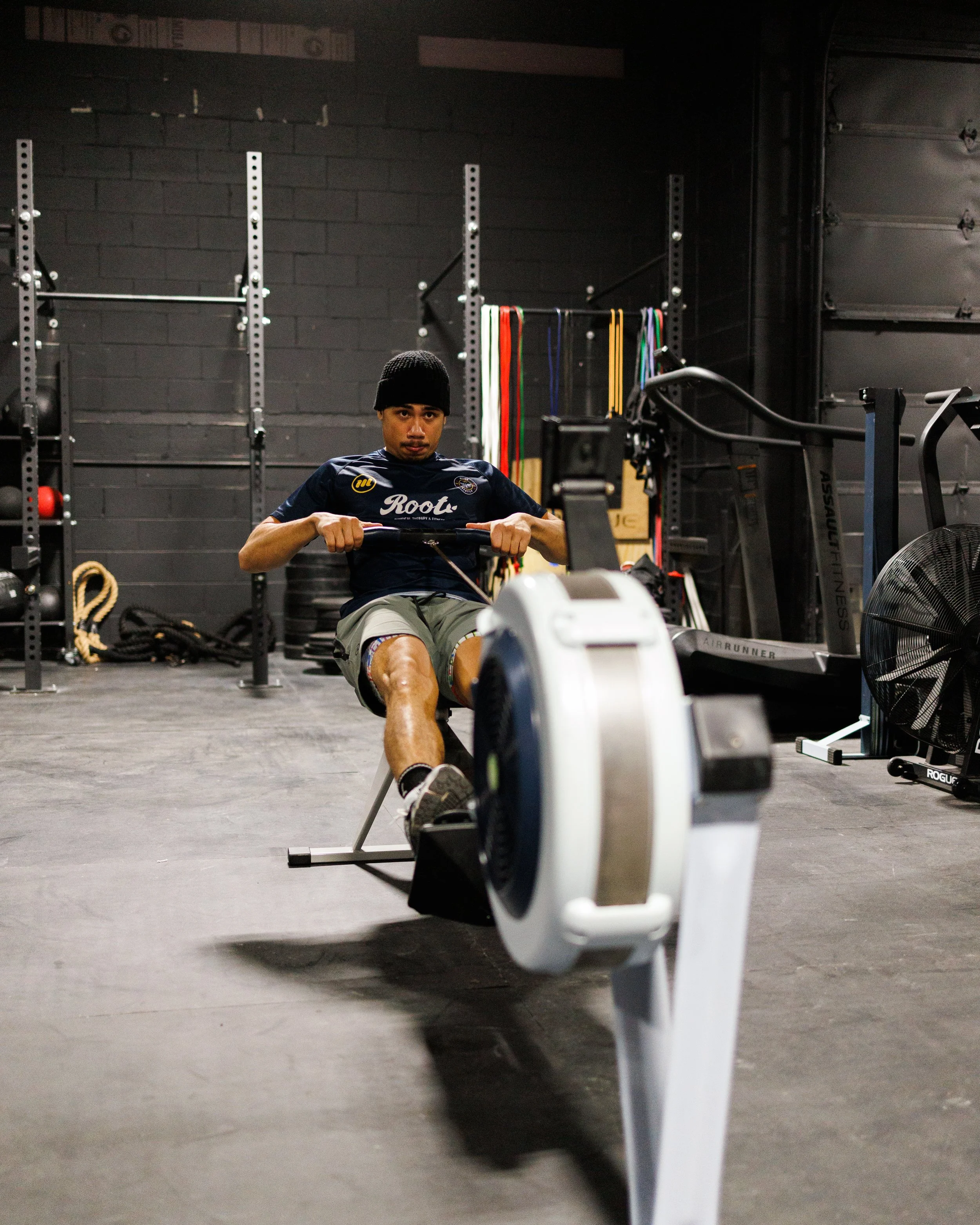
  • MetCon classes build metabolic conditioning using functional movements, rowers, and Assault bikes at controlled intensities
  • HIIT classes develop the high-intensity interval capacity that improves VO2 max and metabolic efficiency
  • Power Training introduces rate-of-force development work for members ready to build explosive capacity

All programming is reviewed by our team of Doctors of Physical Therapy to ensure movement loads are appropriate, injury risk is managed, and the balance between strength and conditioning work supports recovery rather than competing with it.

Getting Started With S&C Training in Seattle

The 2-week trial at $39.99 gives you full access to every Root Strength class for two weeks. Try a strength class and a MetCon on consecutive days — that combination will give you a clear sense of how the programming works and how your body responds to genuine S&C training.

Root Strength is at 6332 6th Ave S, Georgetown, Seattle — 0.5 miles off I-5 with free street parking, accessible from SoDo, Columbia City, Beacon Hill, and South Seattle.

START YOUR S&C JOURNEY

28 coached classes per week. PT support on-site. All levels welcome.

Start Your 2-Week Trial — $39.99
Read More