A lot of fitness content aimed at people over 50 is either condescending or just wrong. It either treats you like you're made of glass, or it ignores the real physiological differences that come with training at this stage of life and tells you to just push through.
This post is an honest take. What actually changes after 50, what the research says about strength training for older adults, and what you should look for in a gym in Seattle if you're serious about training well for the long haul.
What Actually Changes After 50
There are real physiological changes that happen with age that affect how you should train. Ignoring them doesn't make you tougher — it just increases your injury risk. Understanding them lets you train smarter.
Recovery takes longer
Not dramatically — but you'll notice that back-to-back hard sessions hit differently than they did at 35. Muscle protein synthesis slows slightly, connective tissue takes longer to adapt to new load, and your nervous system needs more time between peak efforts. This isn't weakness. It's biology. And it means programming needs to be more intentional about rest and recovery windows.
Body composition changes require more deliberate training
After 50, the hormonal environment shifts — lower testosterone in men, estrogen changes in women — and this affects body composition, energy, and the rate at which you build or maintain muscle. The research is clear that resistance training is the single most effective intervention for counteracting these changes. But the programming has to account for them, not pretend they don't exist.
Connective tissue needs more attention
Tendons and ligaments adapt more slowly than muscle at any age, but this gap widens after 50. Loading too fast — even when the muscle feels ready — can create tendon issues that take months to resolve. A good coach accounts for this with appropriate progression rates and movement quality standards.
The bottom line on what changes: Recovery, adaptation rate, and hormonal context. These are real. But none of them mean you can't build significant strength, improve body composition, and perform at a high level well into your 60s and beyond.
What Doesn't Change
Here's what remains completely true regardless of age:
Still works
- Progressive overload
- Compound movements (squat, hinge, push, pull, carry)
- Consistency over intensity
- Coaching and technique work
- Community accountability
- Adequate protein intake
Still true
- You can build muscle at 50, 60, and beyond
- Strength training reduces injury risk
- Movement quality beats heavy load
- Consistency beats heroic effort
- Older athletes are often more coachable
- The results follow sustained effort
And here's something that consistently surprises people new to strength training over 50 in Seattle: older athletes are often more coachable, more consistent, and more focused than younger ones. They've stopped trying to prove something and started trying to actually get better. The results follow.
The Biggest Risk for Older Athletes — and How to Manage It
The biggest risk for athletes over 50 isn't overtraining or lifting heavy. It's training without proper movement assessment, ignoring early warning signs, and not having access to recovery support when things start to feel off.
Most standard gyms in Seattle — even good ones — aren't equipped to handle this. You train, something starts to bother you, and you either push through it or stop entirely. Neither is the right answer.
At Root Strength, our on-site physical therapist Dr. Joe Rellora, PT, DPT works specifically with aging athletes. He coaches strength classes and provides PT in the same building. That means:
- Small issues get caught before they become injuries
- Your training program accounts for your movement history and limitations
- When something flares up, you get guidance the same day — not three weeks from now
- You don't have to stop training to get treatment
What Good Strength Training Over 50 Actually Looks Like
A well-designed program for an athlete over 50 in Seattle looks like this:
- 3-4 sessions per week with appropriate recovery between hard efforts
- Emphasis on movement quality before load — your squat pattern matters more than your squat weight
- Compound movements as the foundation — squat, hinge, push, pull, carry — because these build the most functional strength with the lowest injury risk per hour of training
- Conditioning work that supports cardiovascular health without crushing recovery capacity
- A coach watching your movement — not because you can't figure it out yourself, but because an outside eye catches things you can't
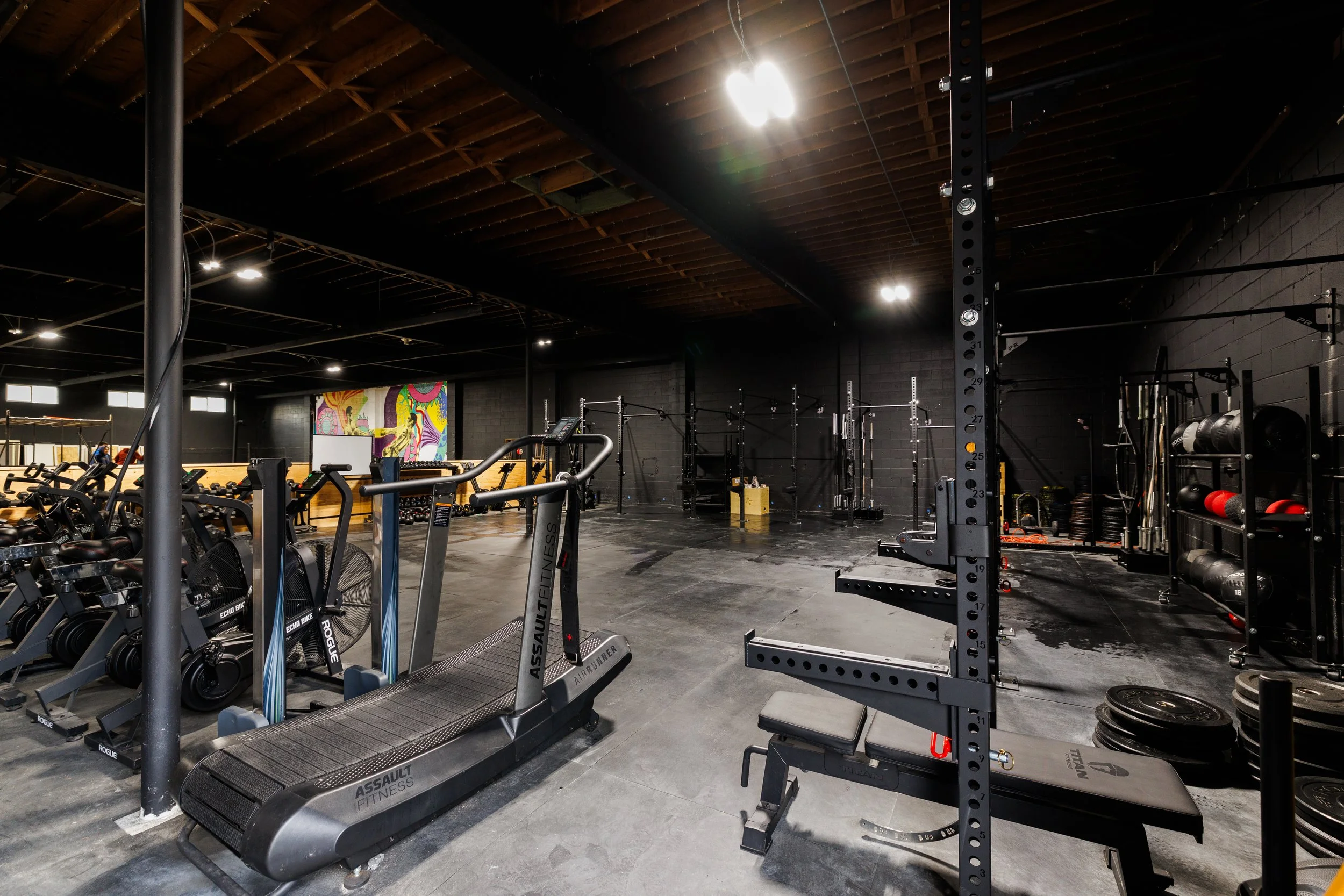
This is exactly what Root Strength's weekly program is built around. Classes run 7 days a week across multiple time slots — early morning, noon, and evening — so fitting training into a professional schedule is straightforward.
Starting at Root Strength Over 50
The easiest entry point is the 2-week trial for $39.99. Come to several classes across the two weeks — try a morning MetCon, a noon Root Strength class, a Saturday Rise n Grind. Get a feel for how the coaching works and how your body responds.
If you have specific movement concerns, a history of significant injury, or haven't trained in years, book a PT consultation with Dr. Rellora before or alongside starting classes. Most insurance plans cover it. Getting a baseline assessment is one of the highest-value things you can do at the start of a new training program.
Root Strength is at 6332 6th Ave S, Georgetown, Seattle — easy access from SoDo, Beacon Hill, Columbia City, Rainier Valley, and most of South Seattle.